
Blog
[Asakusa] Sumo Experience at Asakusa Sumo Club: A Sumo Wrestling Show with Chanko Nabe
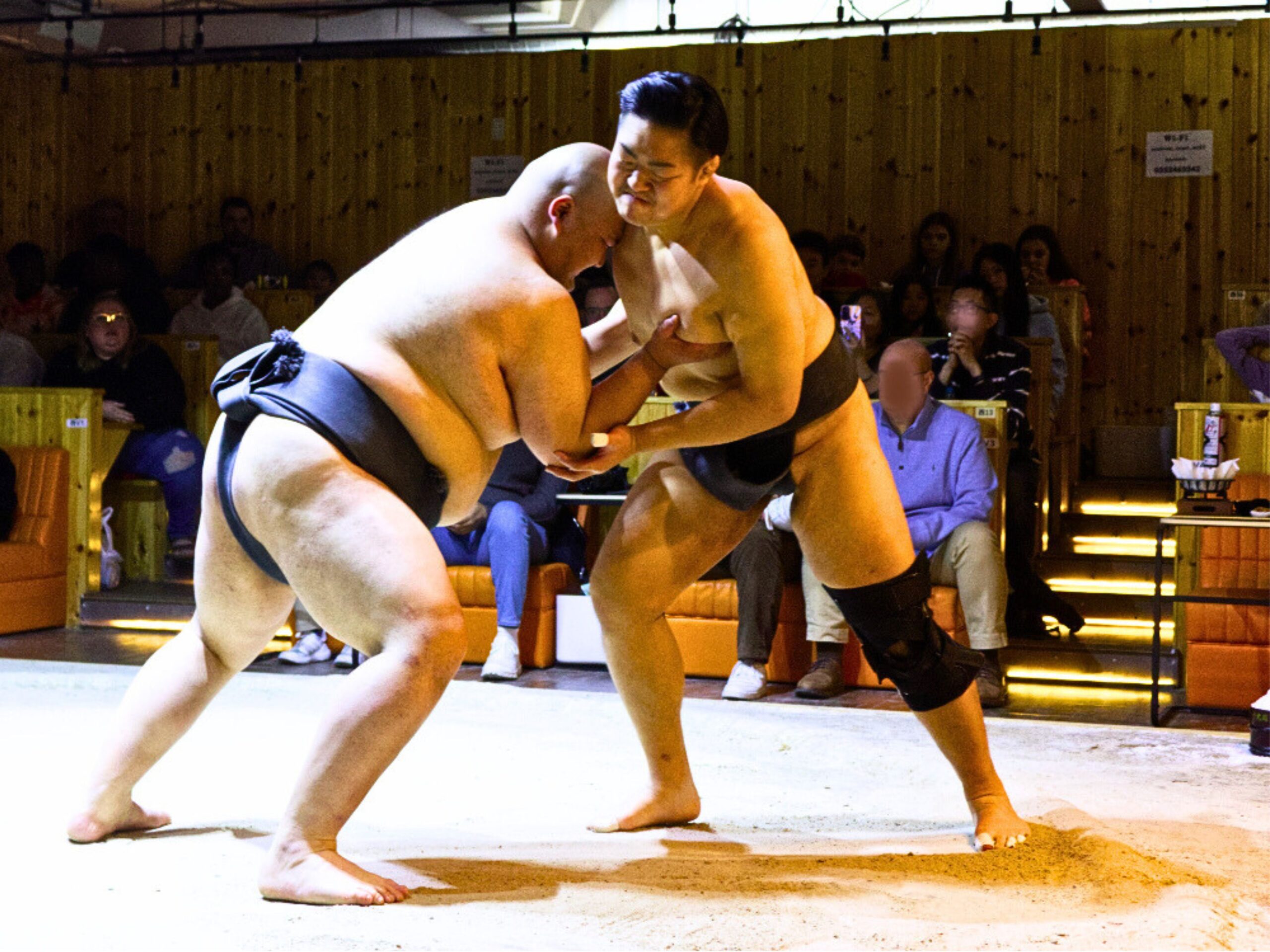
If you’re staying in Asakusa and want an approachable way to learn about Japan’s national sport, Asakusa Sumo Club offers an engaging introduction to sumo wrestling without the formality of a training stable. Instead of sitting silently for hours on a tatami floor, visitors can watch demonstrations by former professional wrestlers, step into the ring themselves, and enjoy a hearty chanko nabe dinner in a relaxed, friendly setting. It’s an excellent option for travelers who want to experience sumo up close while keeping things comfortable and fun.
Content
Asakusa Sumo Club: One of Tokyo’s Most Welcoming Sumo Restaurants
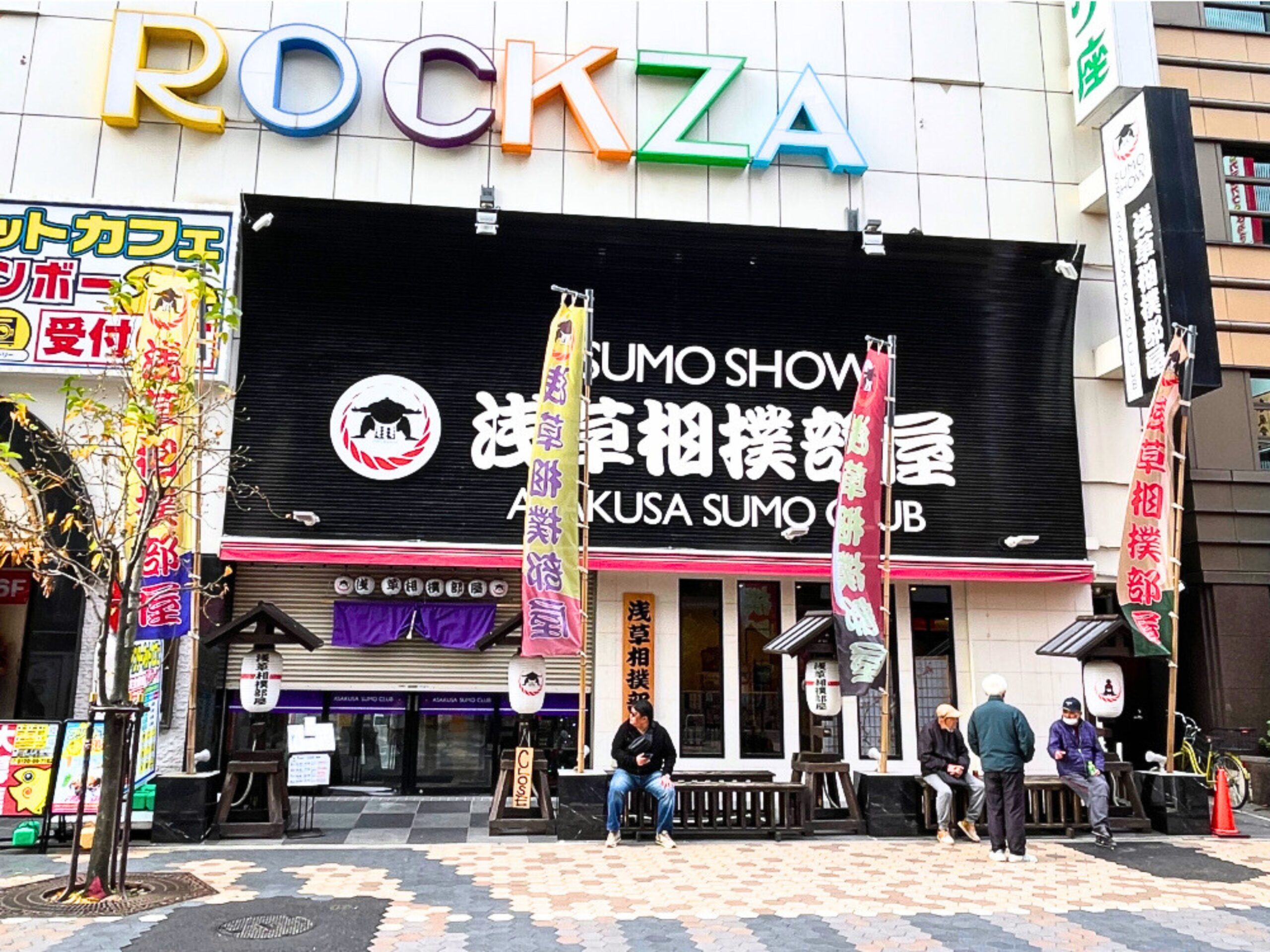
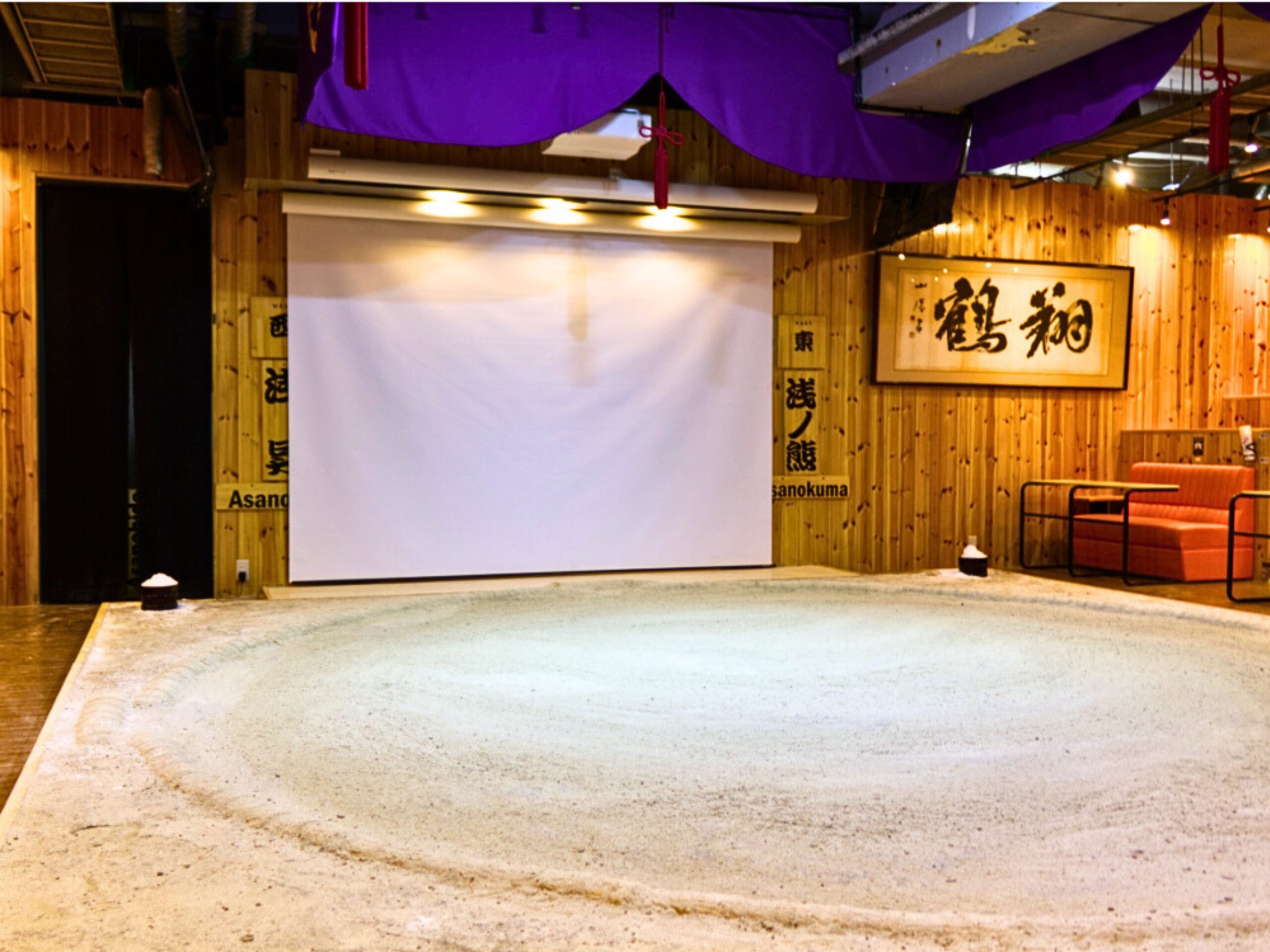
Interest in sumo continues to grow, but attending a tournament or visiting a traditional stable can feel intimidating for newcomers. Asakusa Sumo Club was created as a more accessible option, inspired by the Edo-period custom of exhibition tours, when wrestlers performed for everyday audiences during the off-season. The venue, just a few steps from Tsukuba Express Asakusa Station and HOTEL TAVINOS Asakusa, seats around 80 people and offers four performances a day, making it easy to fit into a sightseeing schedule.
⏰Time schedule:
1st show: 12:00 pm – 2:00 pm
2nd show: 3:00 pm – 5:00 pm
3rd show: 6:00 pm – 8:00 pm
4th show: 8:30 pm – 10:30 pm
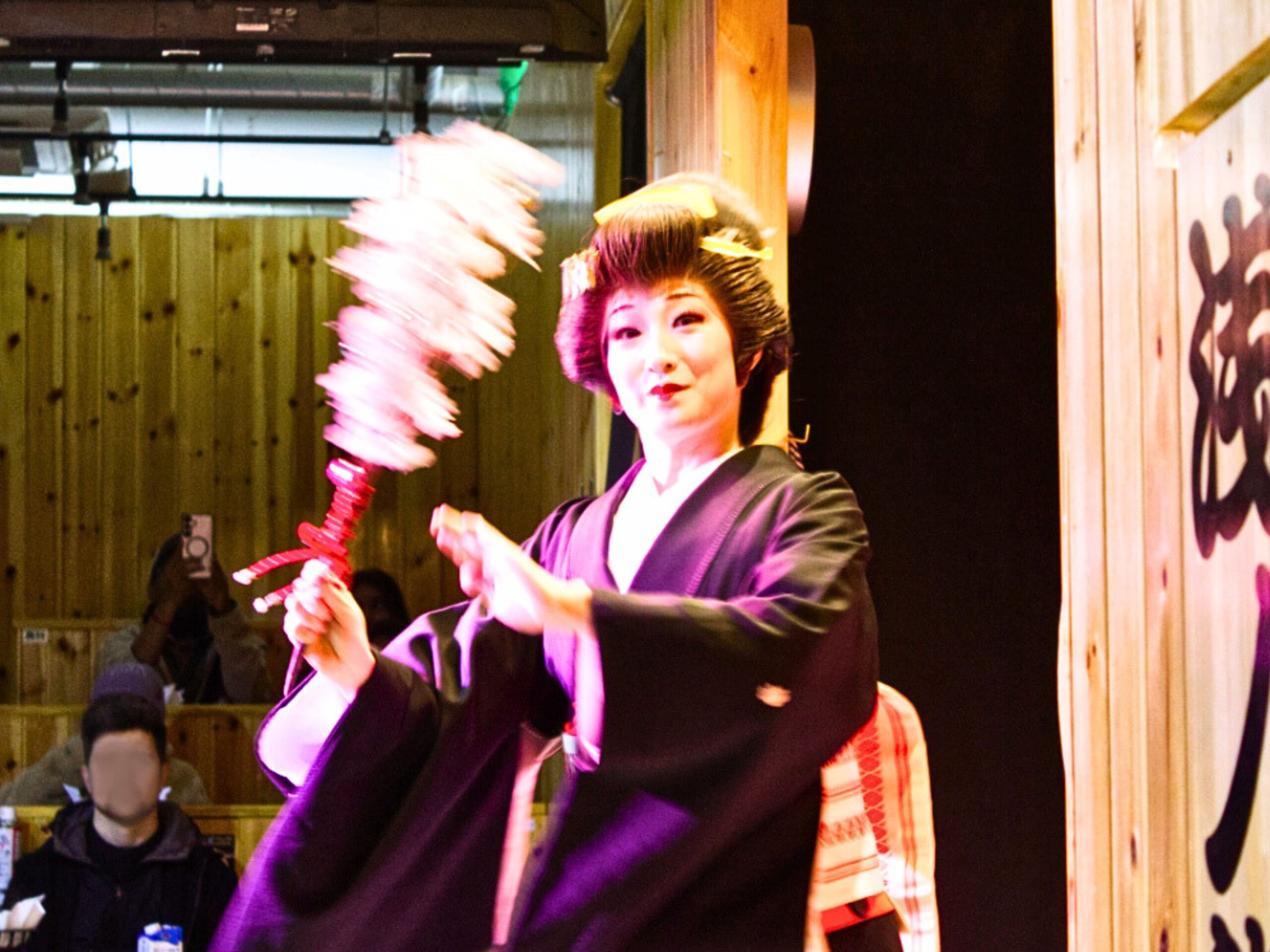
The show begins with a short dance performance by Misono, dressed in a traditional kimono. Her graceful movements create a quiet, elegant opening that contrasts with the energy of the ring. From there, a bilingual MC guides the audience through the history and customs of sumo, including rituals such as salt purification, foot stamping to drive away bad spirits, and the symbolic significance of the ring itself. The explanations are clear and engaging, helping visitors appreciate the cultural foundations behind every movement.
How Sumo Wrestlers Train: Power, Precision, and Practice
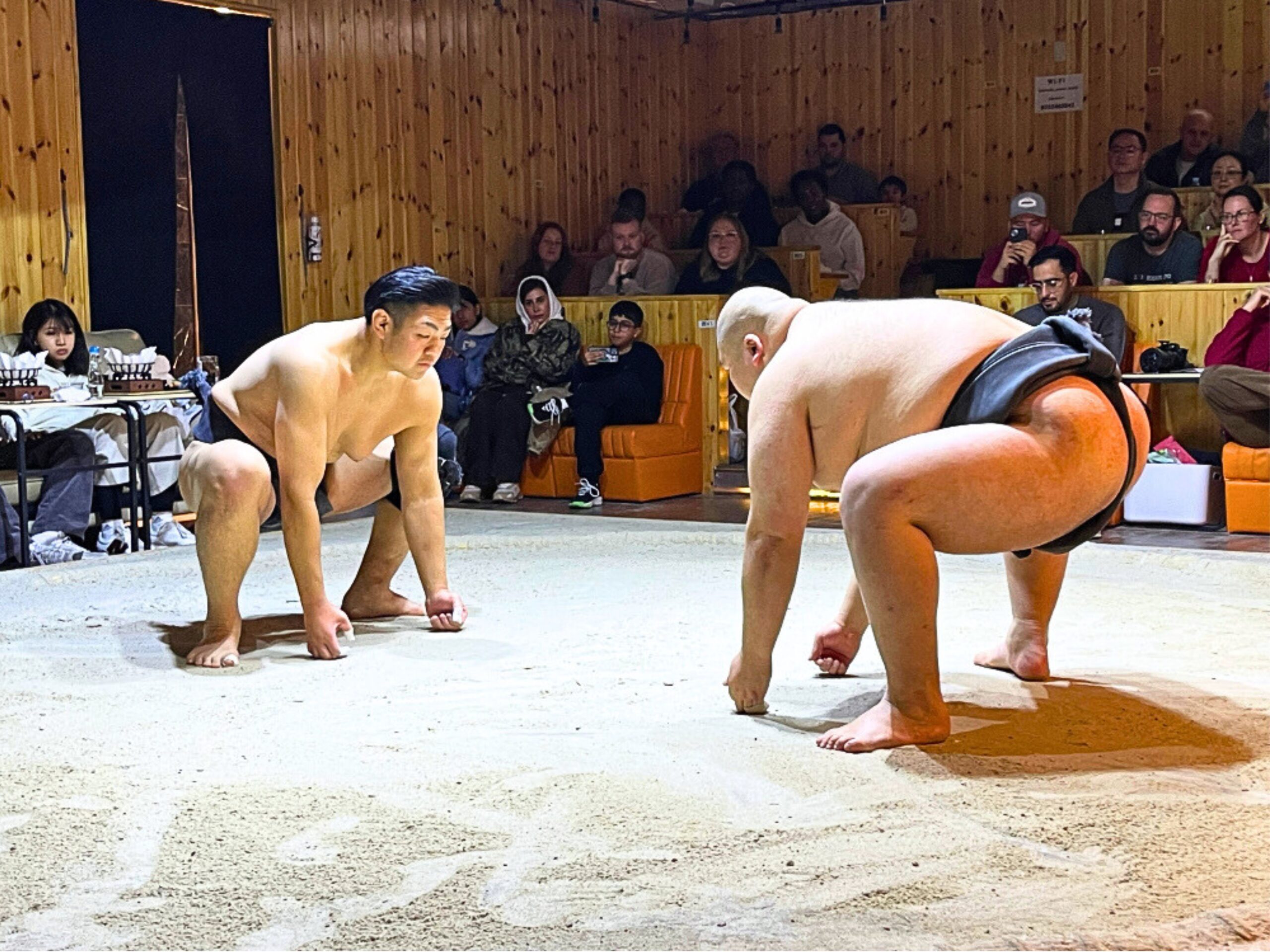
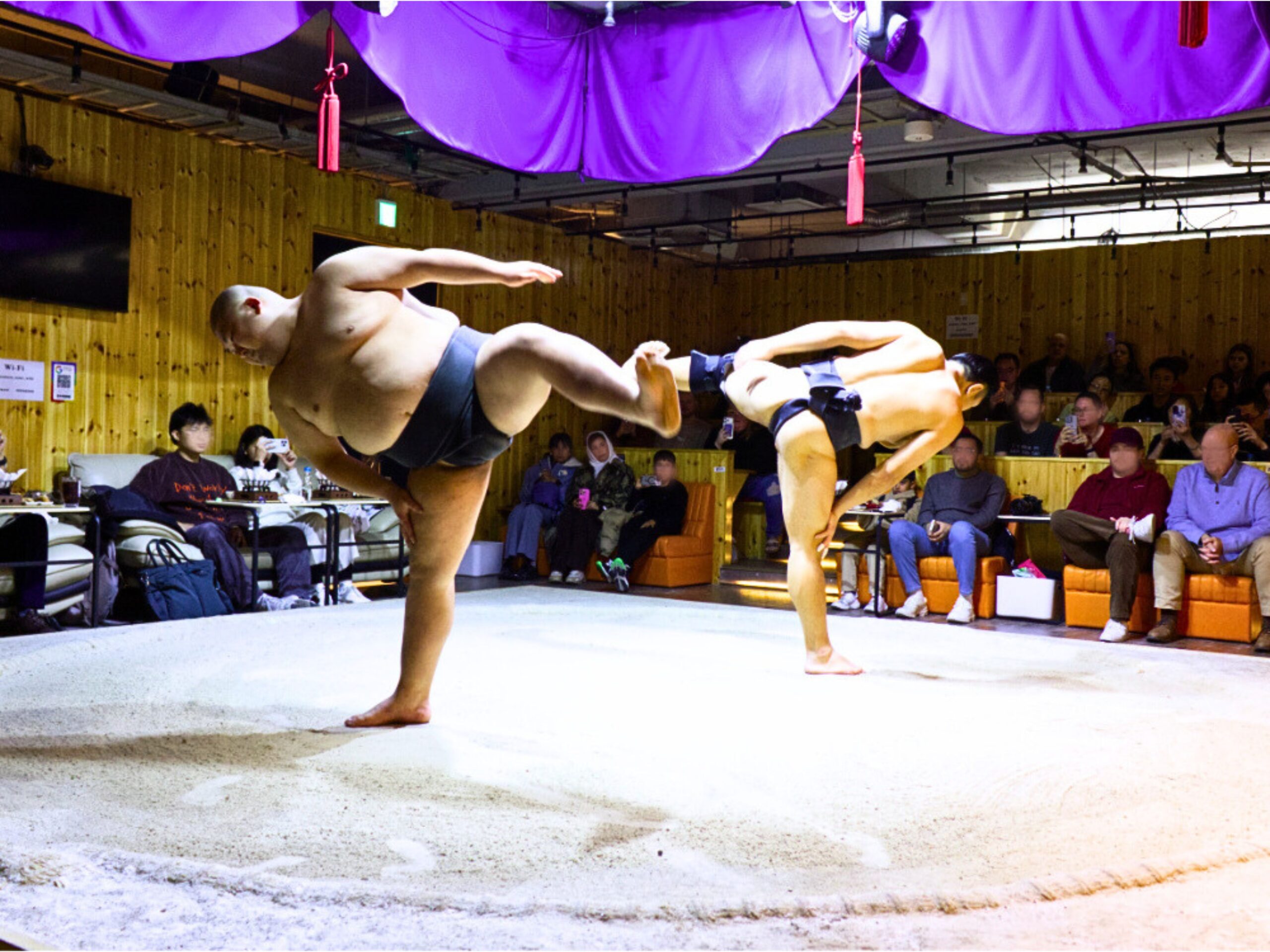
The first part of the program focuses on how wrestlers train, giving guests a sense of the athleticism behind the sport. The wrestlers begin with warm-up movements and stretches to show how they build flexibility and balance. From there, they move into shiko, the powerful leg stomps that strengthen the lower body, improve stability, and play an essential role in traditional rituals.
They also demonstrate suri-ashi, the gliding footwork used to stay grounded while pushing an opponent. Even at a slow pace, it’s clear how much precision and muscle control this movement requires. Light impact drills follow, offering a glimpse into how wrestlers build explosive strength for short, decisive bouts.
A fun moment comes when the wrestlers present exaggerated examples of moves that are not allowed. Hair-pulling, punching, eye-poking—none of these are legal in sumo, but the playful demonstrations help the audience remember the rules while keeping the atmosphere relaxed and humorous.
Meet the Sumo Wrestlers Bringing Sumo to Life
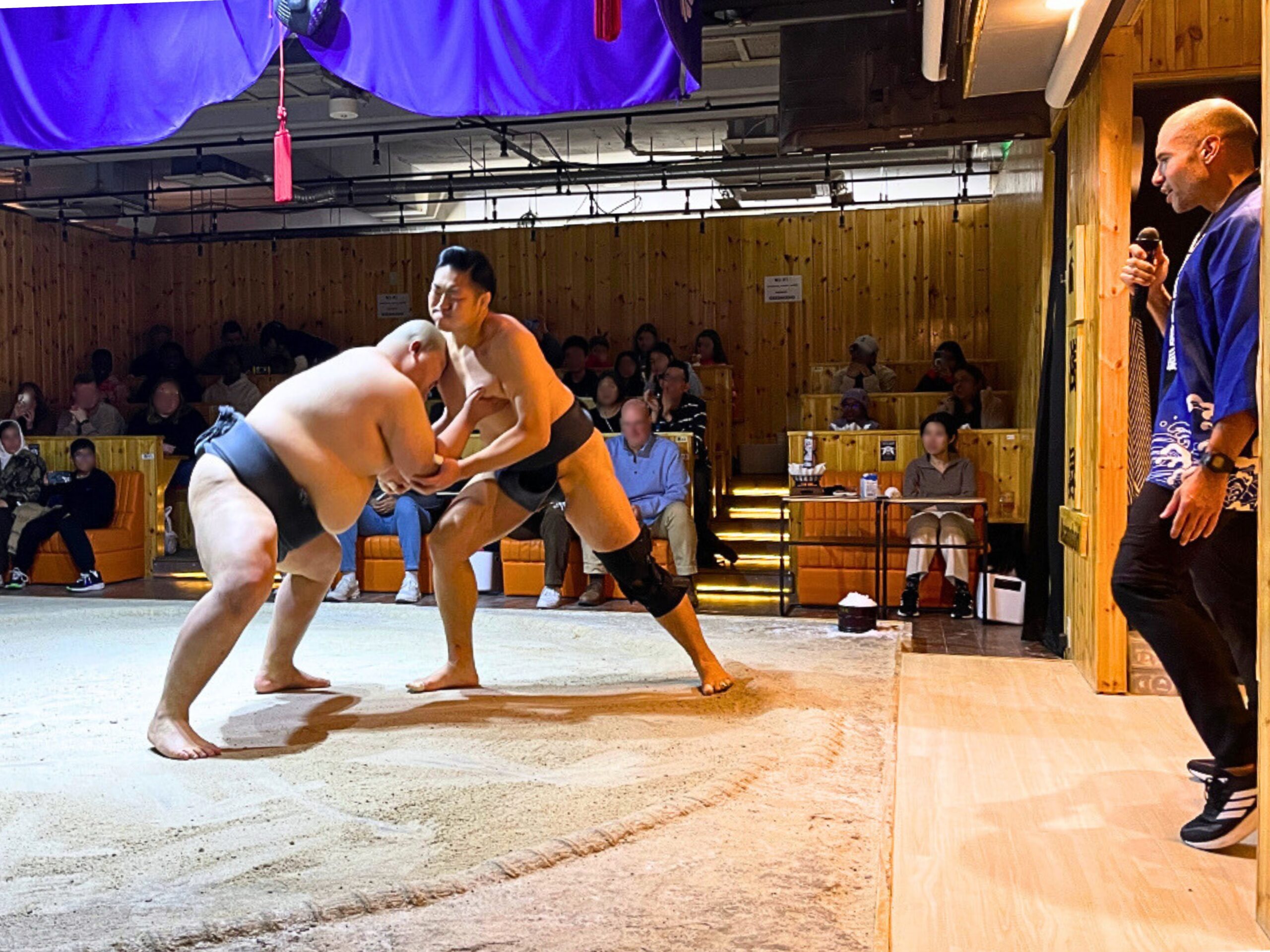
Once the training segment wraps up, the tone shifts as the wrestlers prepare for real bouts. The performers during our visit were Asanokuma and Asanobori, both former professionals with distinct personalities.
Asanokuma, who wrestled professionally for five years and has been retired for nine, is a natural showman. Broader in build and clean-shaven, he’s flexible, quick, and highly attuned to the audience, adding light touches of humor without taking away from the athleticism of the sport. Asanobori, from Niigata Prefecture, spent eleven years as a professional and brings a contrasting presence to the ring. Slimmer in build with a full head of hair, he carries himself with calm focus, his movements controlled and deliberate—an effective counterpoint to Asanokuma’s playful energy.
When they face each other, the room becomes noticeably more focused. Matches are brief but explosive, showcasing the power, timing, and balance that define sumo. Even in demonstration-style bouts, you can feel the impact of each charge and see how quickly momentum can shift at the edge of the ring.
Your Moment in the Ring: The Sumo Challenge
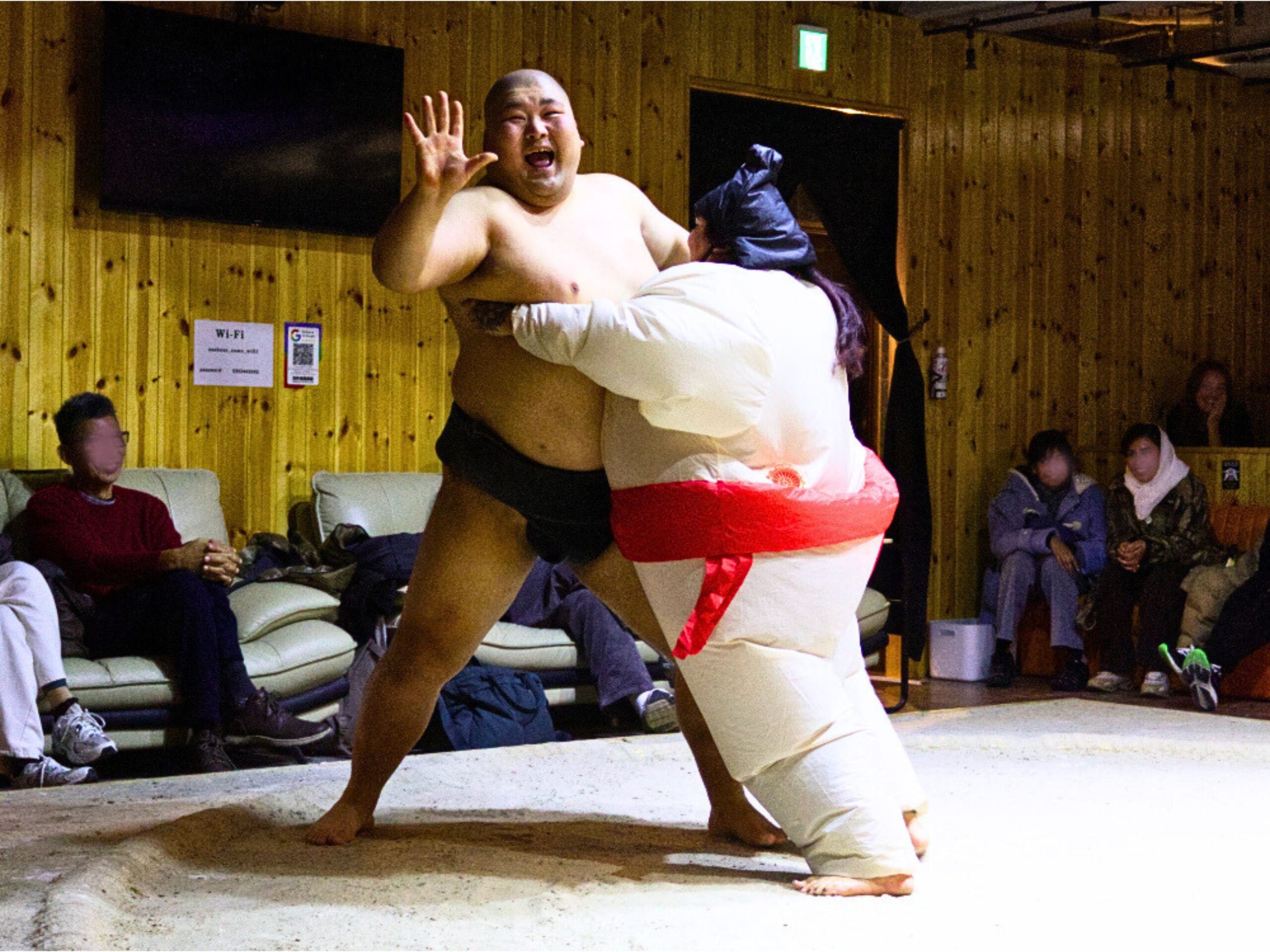
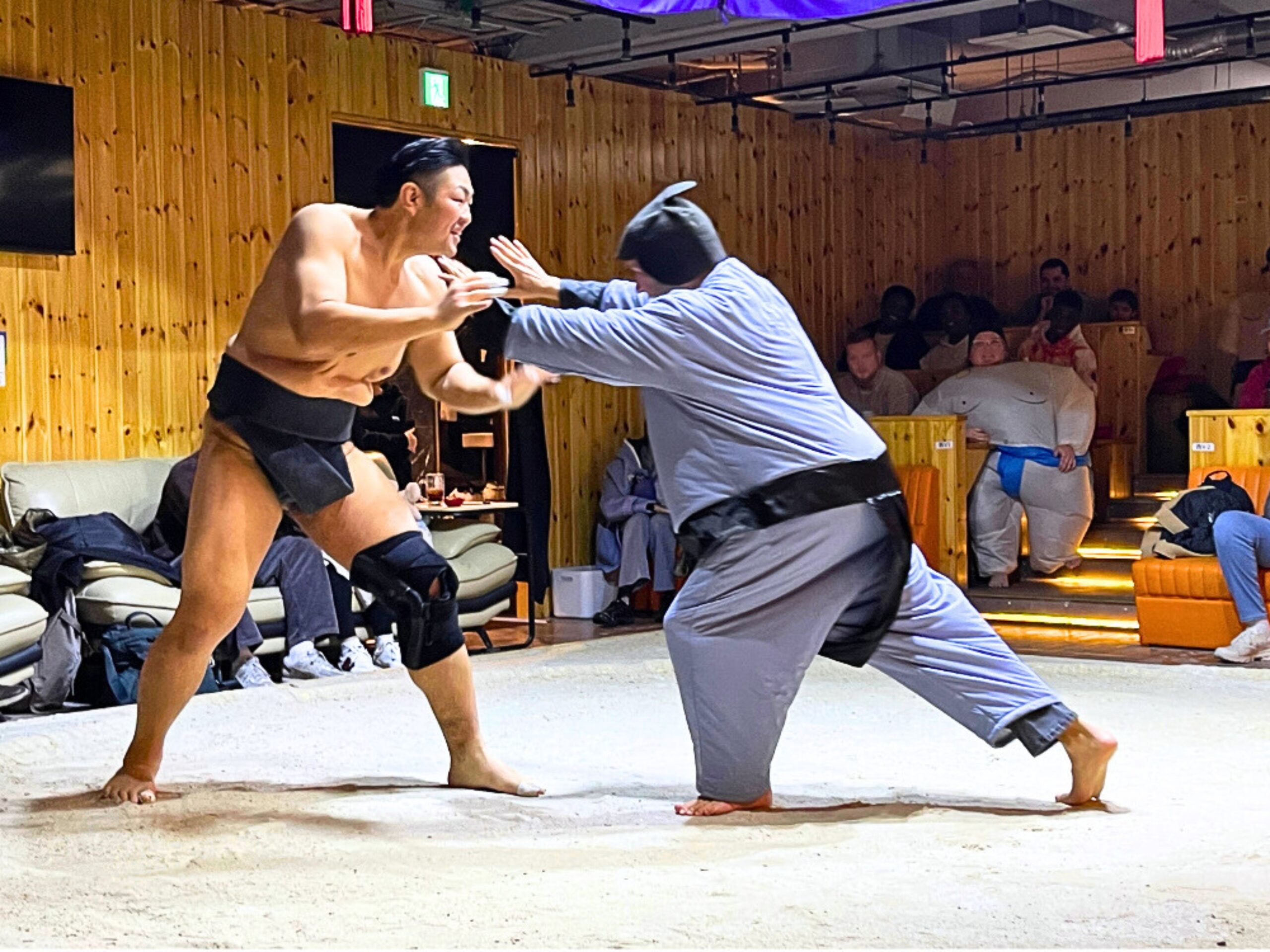
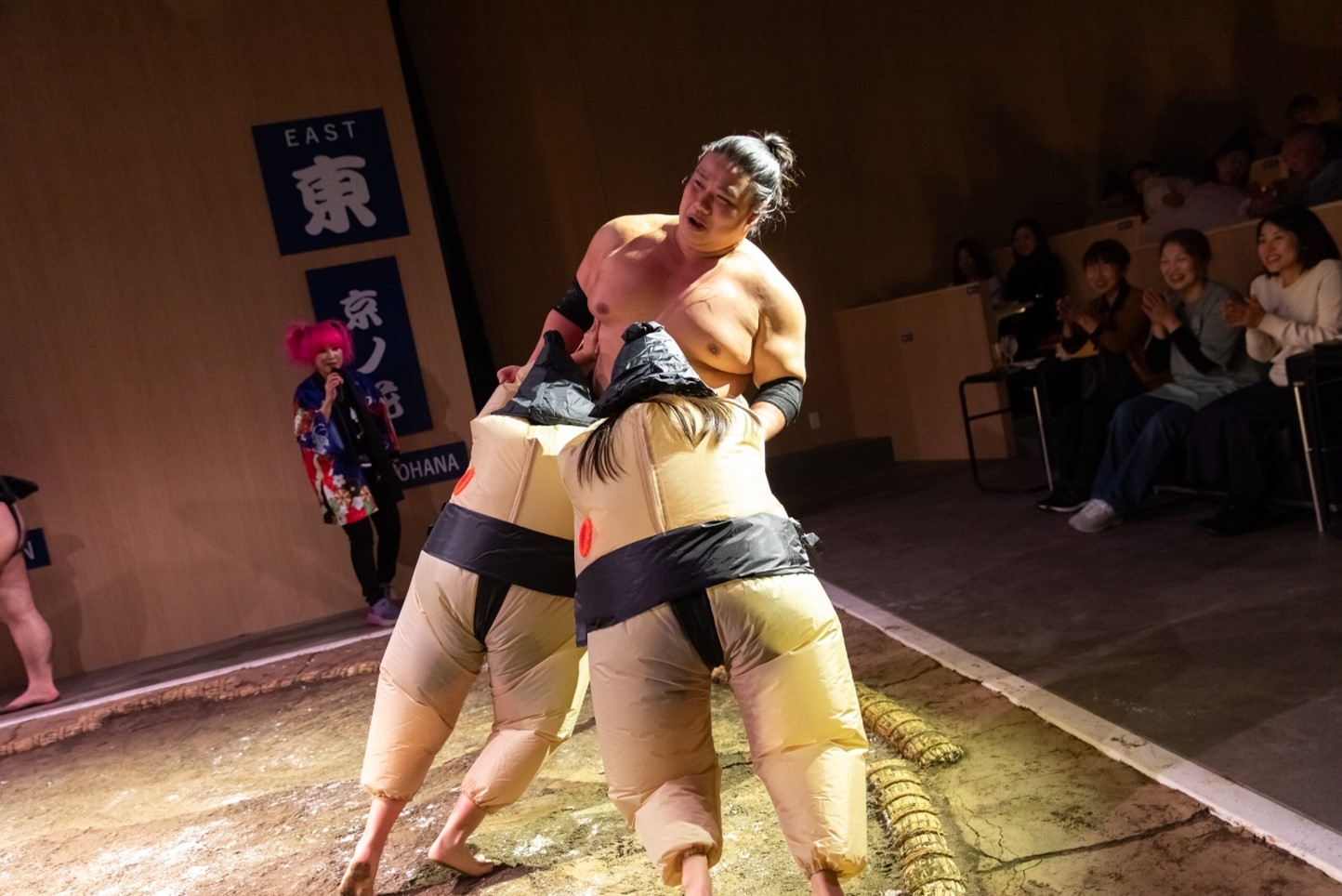
One of the most memorable parts of the experience is the chance for visitors to enter the ring themselves. Participants draw lots for a turn, put on a cushioned costume, and face off against the wrestler of their choice. Children, adults, and older guests all enjoy taking part, and the audience cheers enthusiastically for each challenger. Results are unpredictable—some challengers put up impressive resistance, while others are swept right out of the ring with good humor.
While the challengers prepare, the wrestlers answer questions from the audience. Topics range from daily training life to their diets, which can reach 10,000 calories a day since the sport has no weight classes. One question that often comes up is about ring names. Naming traditions vary by stable; some follow patterns or prefixes—such as the “Asa” used here—while others allow wrestlers to choose freely. The Q&A often includes a few lighthearted moments as well, such as questions about whether wrestlers have fans or admirers.
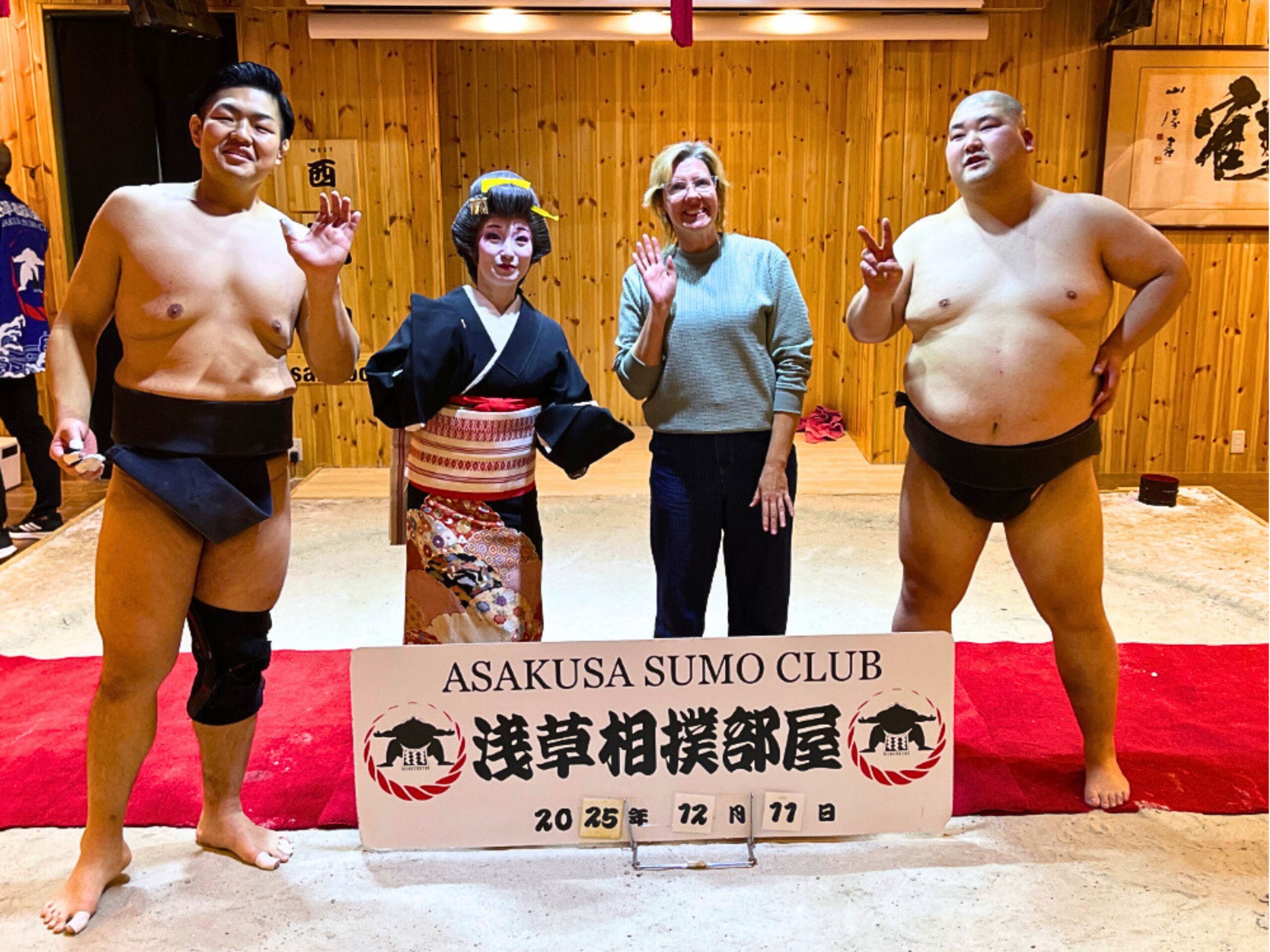
After the challenge, guests can take photos with the wrestlers using their own devices. The staff also takes a commemorative photo, which is printed and handed to each guest at the end of the show along with a small souvenir set.
Dinner Like a Rikishi: The Flavors of Chanko Nabe
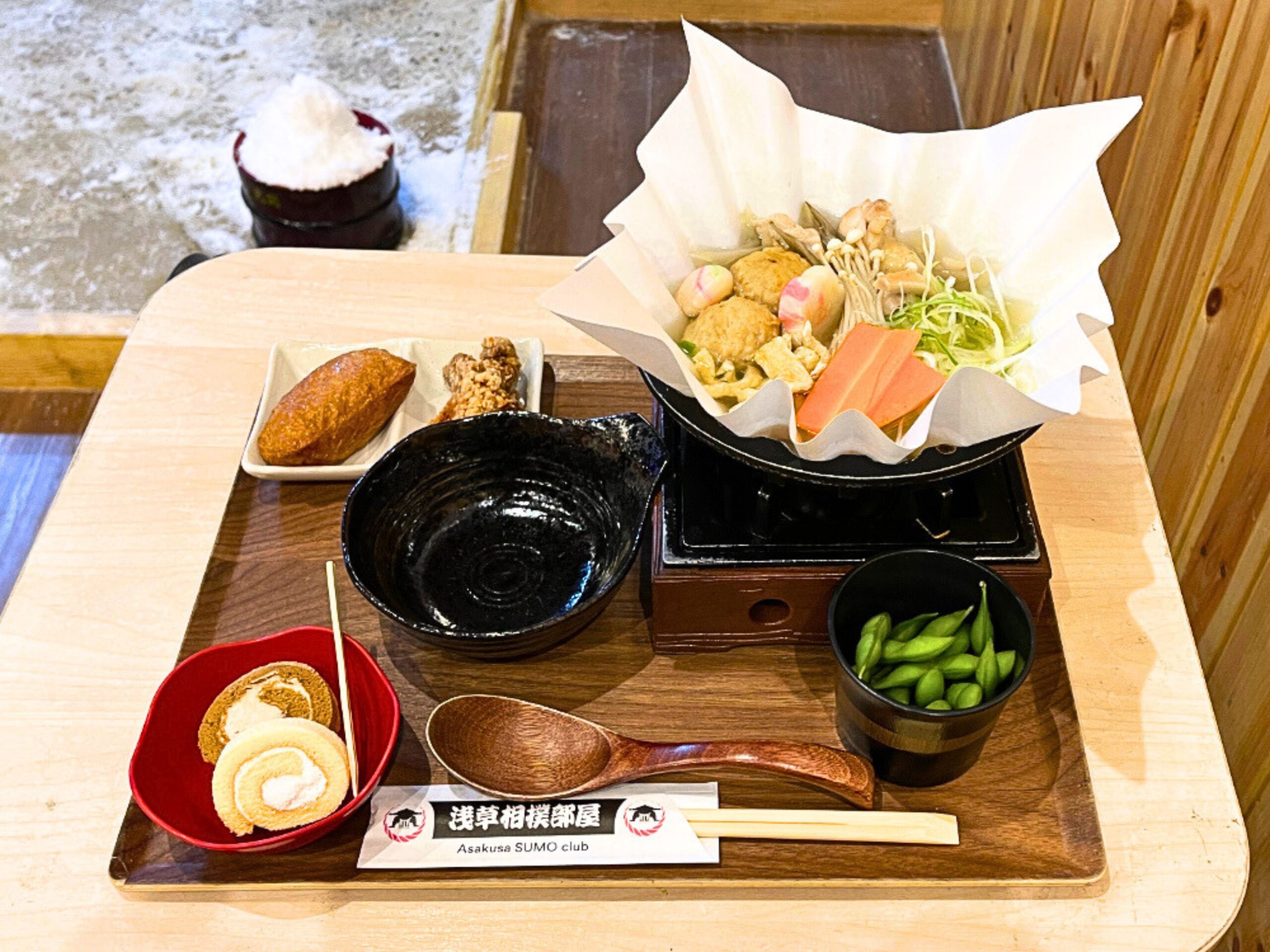
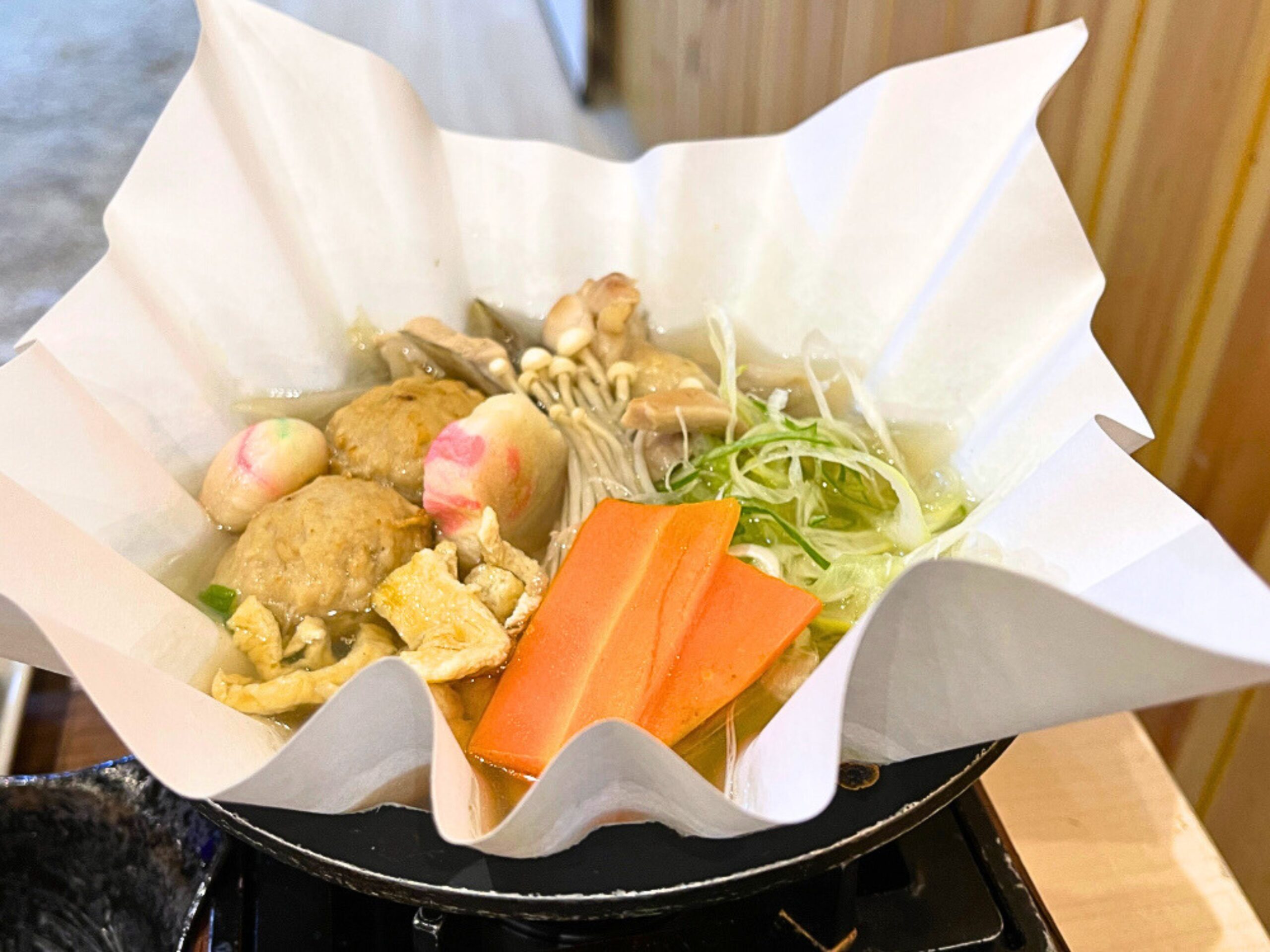
A central part of sumo culture is food, and chanko nabe is the dish most closely associated with wrestlers. The hot pot served at Asakusa Sumo Club is supervised by a former wrestler and features a soy-sauce–based broth made from chicken, bonito flakes, kelp, and shiitake mushrooms. Guests can enjoy as much as they like, along with inarizushi (sushi wrapped in fried tofu), karaage fried chickens, edamame (young soybeans), and small desserts such as Swiss roll cakes. The combination makes for a warm, satisfying meal that reflects the hearty diet wrestlers rely on for strength.
One drink is included with the meal, with options ranging from soft drinks to sake, plum wine, shochu, and white wine. Vegetarian and vegan meals can be prepared if requested during reservation. Gluten-free options, however, are not available. Guests may order additional servings of food at no extra charge, while extra drinks are available for a fee using the QR code provided at each table. Free Wi-Fi is available throughout the venue, making ordering quick and convenient.
Asakusa Sumo Club Ticket Options and What They Include
The standard course costs ¥16,000 for adults and ¥12,000 for children under 12. It includes the show, demonstrations, matches, the challenge segment, the chanko nabe dinner, one drink, and the photo and souvenir set. VIP ringside seating bumps up the price to about ¥20,000, but offers you eye-level views of all the action.
Asakusa Sumo Club Annex: The Premium Sumo Experience
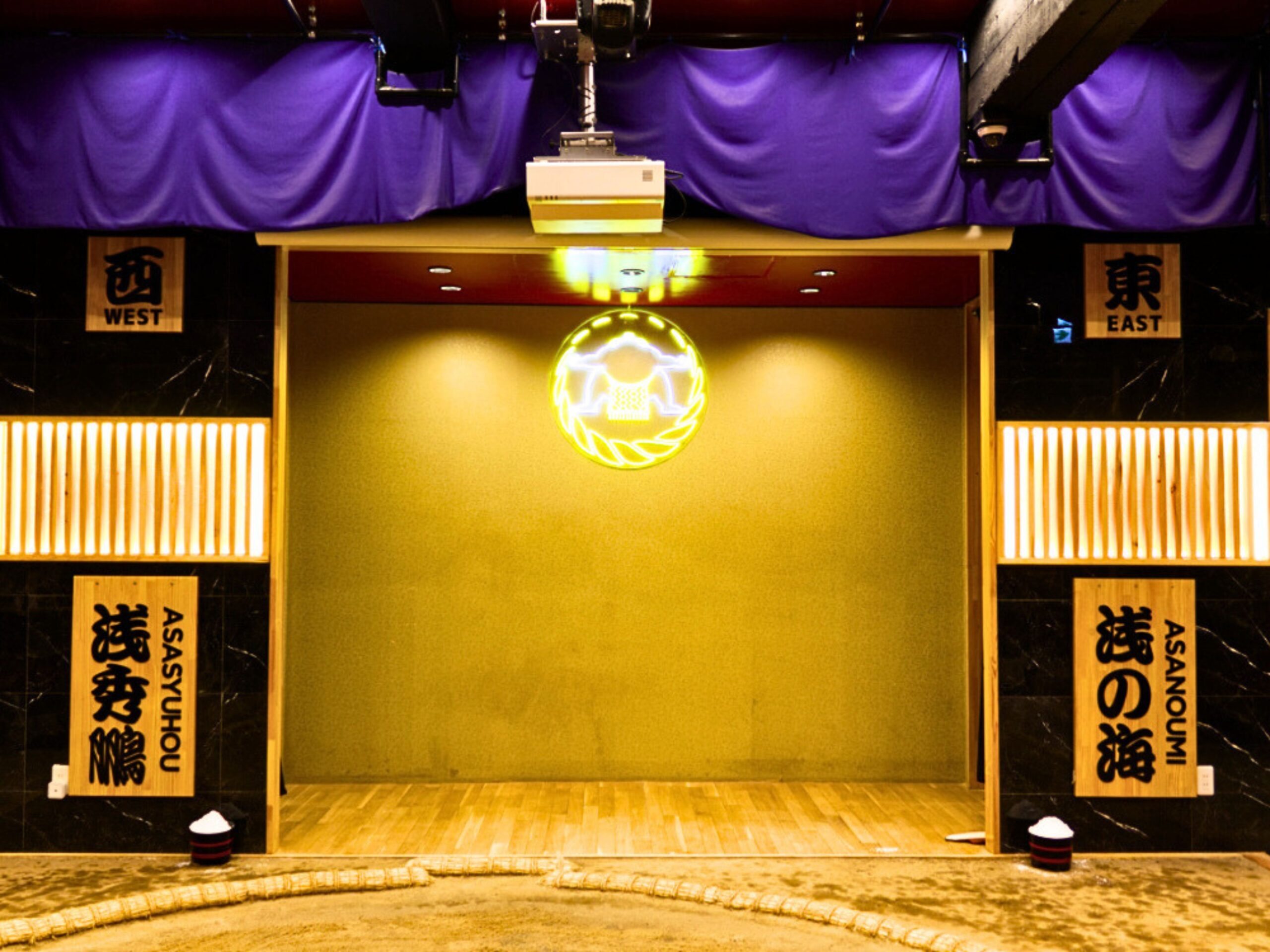
For a more premium experience, the Asakusa Sumo Club Annex, opened in February 2025, offers upgraded seating and an expanded dining program. Guests can enjoy a full-sized sumo ring, the same four daily performances, and additional hands-on activities such as salt-throwing rituals, basic training practice, an original mawashi loincloth experience, and posing in a ceremonial kesho-mawashi.
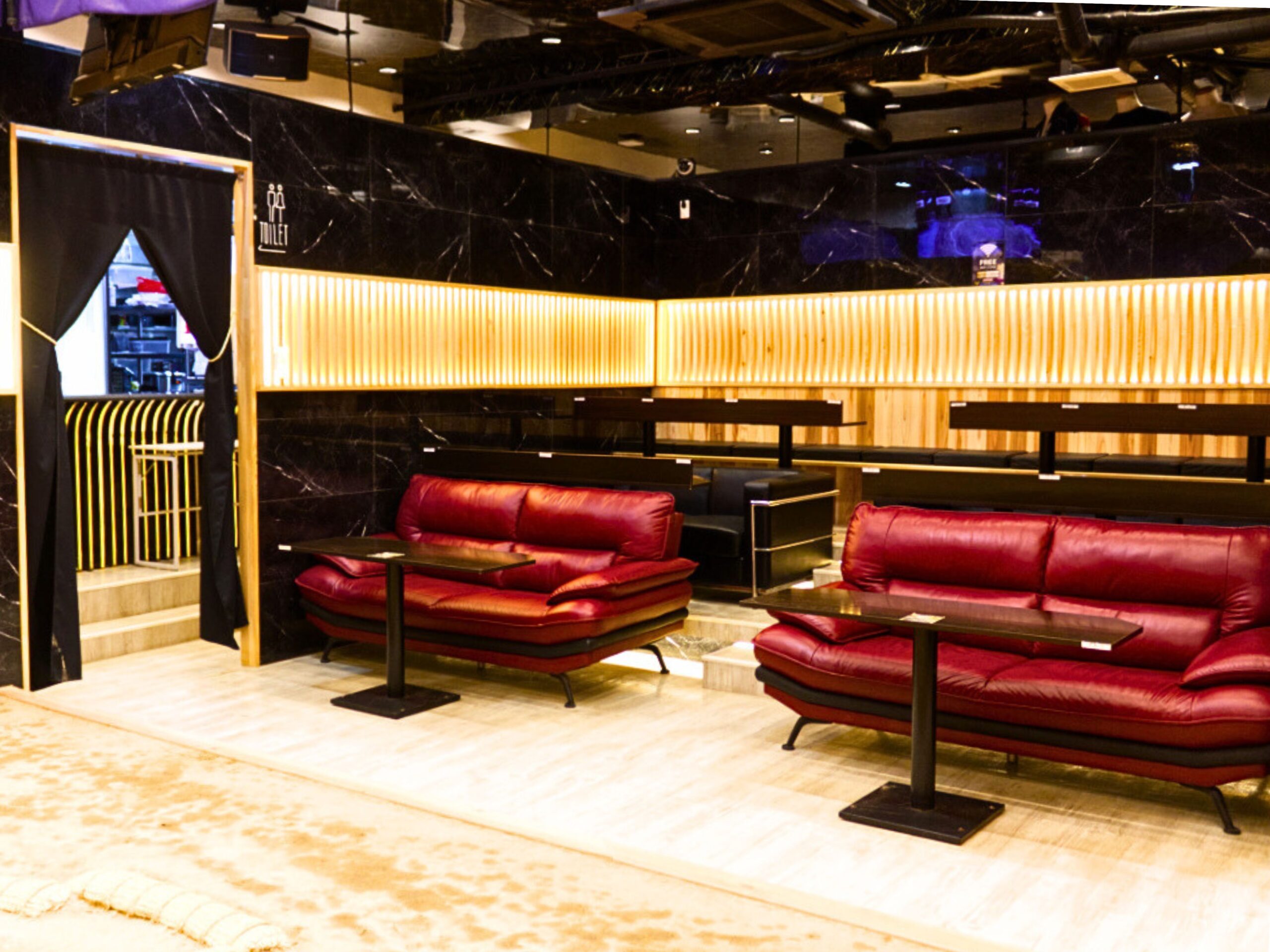
The meal options are significantly richer here, including A5-grade wagyu sukiyaki, crisp tempura, and chanko nabe prepared under the guidance of a former chanko steward. Depending on the seating class—First Class, Business Class, or Economy Class—guests can also enjoy all-you-can-drink whiskey, wine, beer, and soft drinks. With its comfortable sofa-style seating and elevated menu, the Annex offers a more luxurious way to explore sumo culture while maintaining the warm, interactive atmosphere of the main venue.
Private bookings for groups of around fifty people or more are also available.
How to Get to Asakusa Sumo Club from HOTEL TAVINOS Asakusa
From HOTEL TAVINOS Asakusa, it’s an easy 4-minute walk to Asakusa Sumo Club. Head toward the main street in Nishi-Asakusa and continue straight, passing small cafés and neighborhood shops as the area becomes livelier. The venue is on the ground floor of a low-rise building along the main street, marked by clear signage near the entrance.
Whether you’re a longtime fan or learning about sumo for the first time, Asakusa Sumo Club offers a warm, entertaining, and culturally rich introduction to one of Japan’s most iconic traditions. The mix of demonstrations, live matches, audience participation, and chanko nabe makes it an experience that appeals to families, couples, and solo travelers alike. With HOTEL TAVINOS Asakusa just a short walk away, it’s an easy and memorable addition to any day in the neighborhood.
Asakusa Sumo Club
Address: 1F, 2-10-12 Asakusa, Taito-ku, Tokyo
Hours: 12:00 pm – 10:30 pm
Closed: Irregular holidays
Access: 1-minute walk from Tsukuba Express Asakusa Station
Website: https://asakusa-sumo.com
Instagram: https://www.instagram.com/asakusa_sumo_club
Asakusa Sumo Club Annex
Address: B1F, 2-11-7 Asakusa, Taito-ku, Tokyo
Hours: 12:00 pm – 10:30 pm
Closed: Irregular holidays
Access: 2-minute walk from Tsukuba Express Asakusa Station
Website: https://asakusasumo-annex.com
💡Good news for anyone planning a trip to Kyoto!
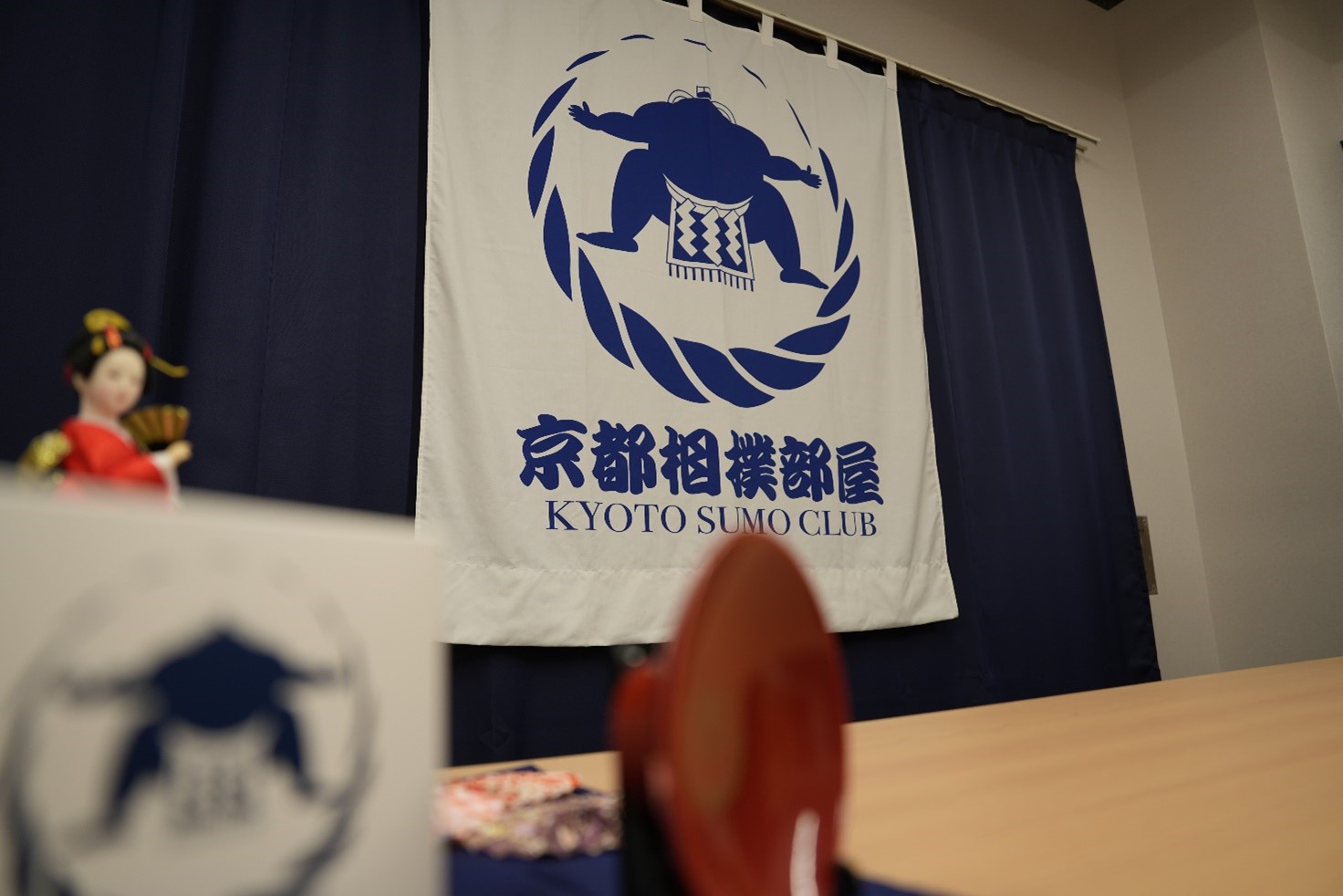
Kyoto Sumo Club opened in November 2025 in the Kawaramachi area, bringing Japan’s national sport to the heart of the city. Located just about a 15-minute walk from HOTEL TAVINOS Kyoto, it offers visitors a rare chance to experience sumo wrestling in Kyoto, especially for those curious about Japanese culture beyond temples and shrines.
Kyoto Sumou Club
Address: Passaggio 5F, 525-1 Higashigawacho, Shinkyogoku Takoyakushi Shimo, Nakagyo-ku, Kyoto
Hours: 12:00 pm – 9:00 pm
Closed: Irregular holidays
Access: 3-minute walk from Hankyu Railway Kyoto Kawaramachi Station
Website: https://asakusa-sumo.com/kyoto/
Writer
Lisa Wallin
A curious sojourner, Lisa Wallin has lived in Japan for about 15 years, along with 7 other countries. She has an insatiable appetite for local narratives, with a focus on regional culture, crafts and food. When not chasing stories, she enjoys coffee, visiting shrines, and exploring the country both with and without her dogs