
Blog
[Hamamatsucho] Get Around Tokyo with Sky Hop Bus, the Hop-On Hop-Off Sightseeing Bus
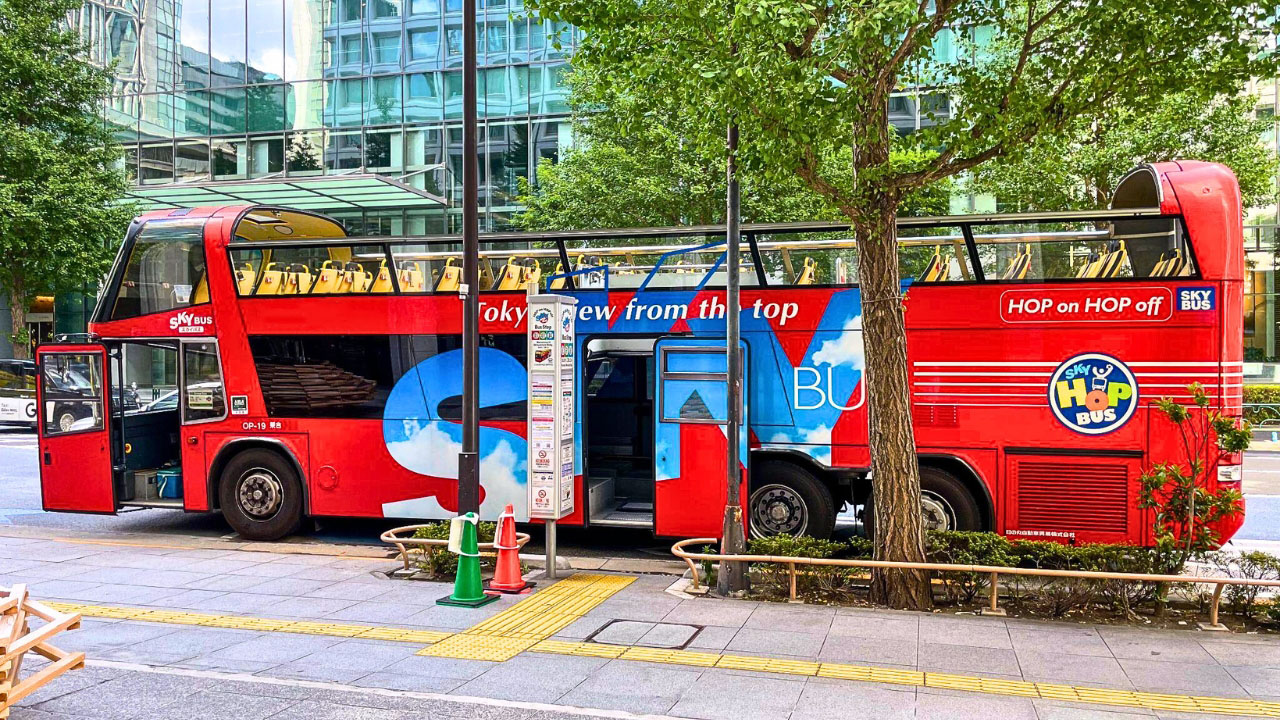
From towering skyscrapers to serene temples, vibrant shopping districts to centuries-old cultural landmarks, Tokyo is home to an overwhelming number of things to see and do. With so much ground to cover and limited time during your trip, figuring out public transit can feel like a challenge in itself. That’s where the Sky Hop Bus comes in—an efficient, flexible way to hit multiple must-see spots without the stress of navigating Tokyo’s complex train system. In this article, we’ll walk you through everything you need to know: where to catch the Sky Hop Bus, what the ticket prices look like, and our review on whether it’s worth adding to your Tokyo itinerary.
Content
Sky Hop Bus: Tokyo’s Hop-On Hop-Off Sightseeing Bus Experience
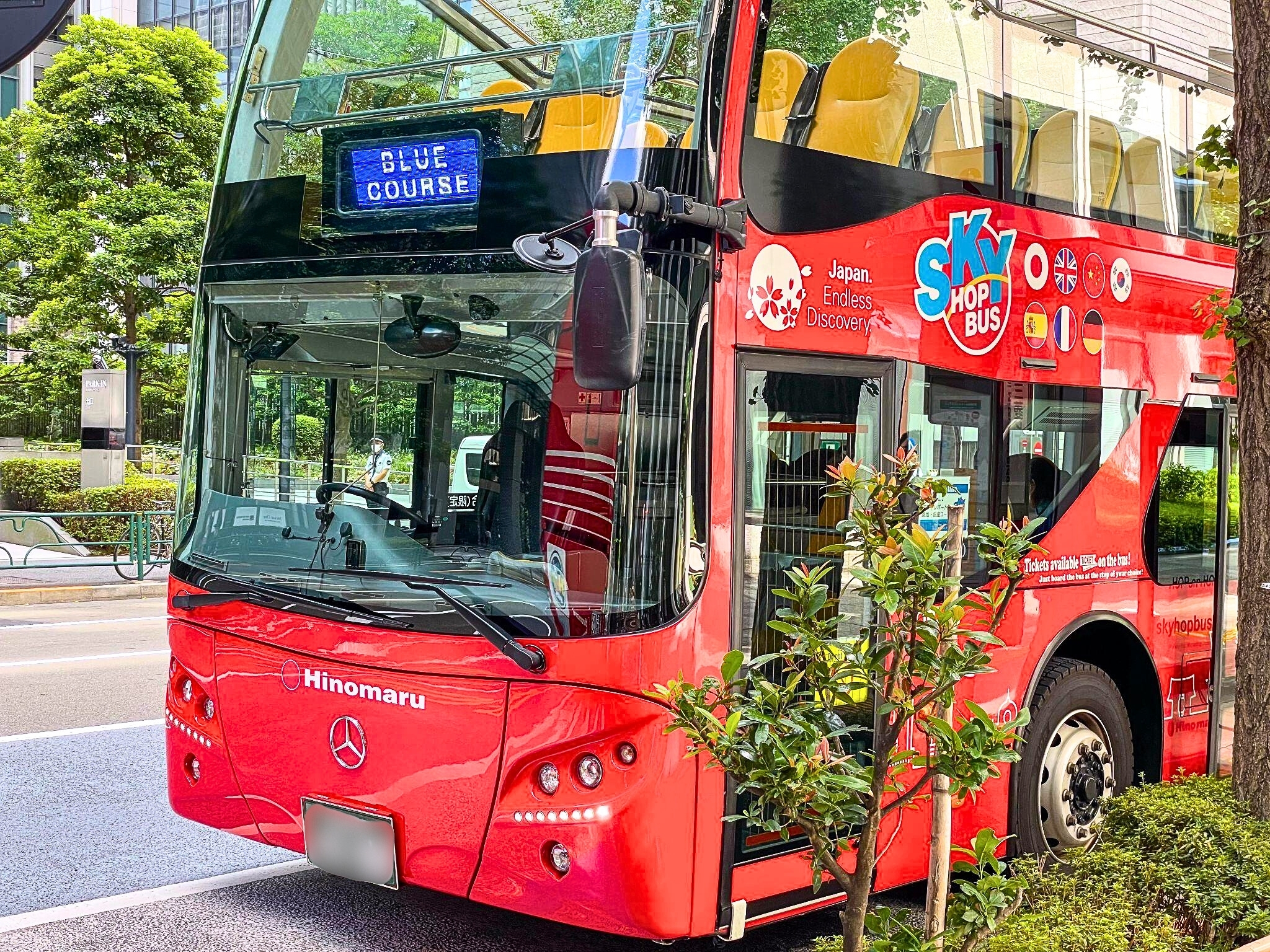
The Sky Hop Bus is a hop-on hop-off sightseeing bus that loops through Tokyo, allowing tourists to get on and off at any stop as many times as they want within a one- or two-day pass period. Best of all, most Sky Hop Buses are double-deckers with open-air top decks which offer sweeping views of the city from a vantage point you won’t get from street level or the subway. Whether you’re cruising past Tokyo Tower or rolling through bustling neighborhoods like Shibuya and Asakusa, the elevated perspective adds a whole new dimension to sightseeing.
📒 Note: The types of buses in service may vary each day.
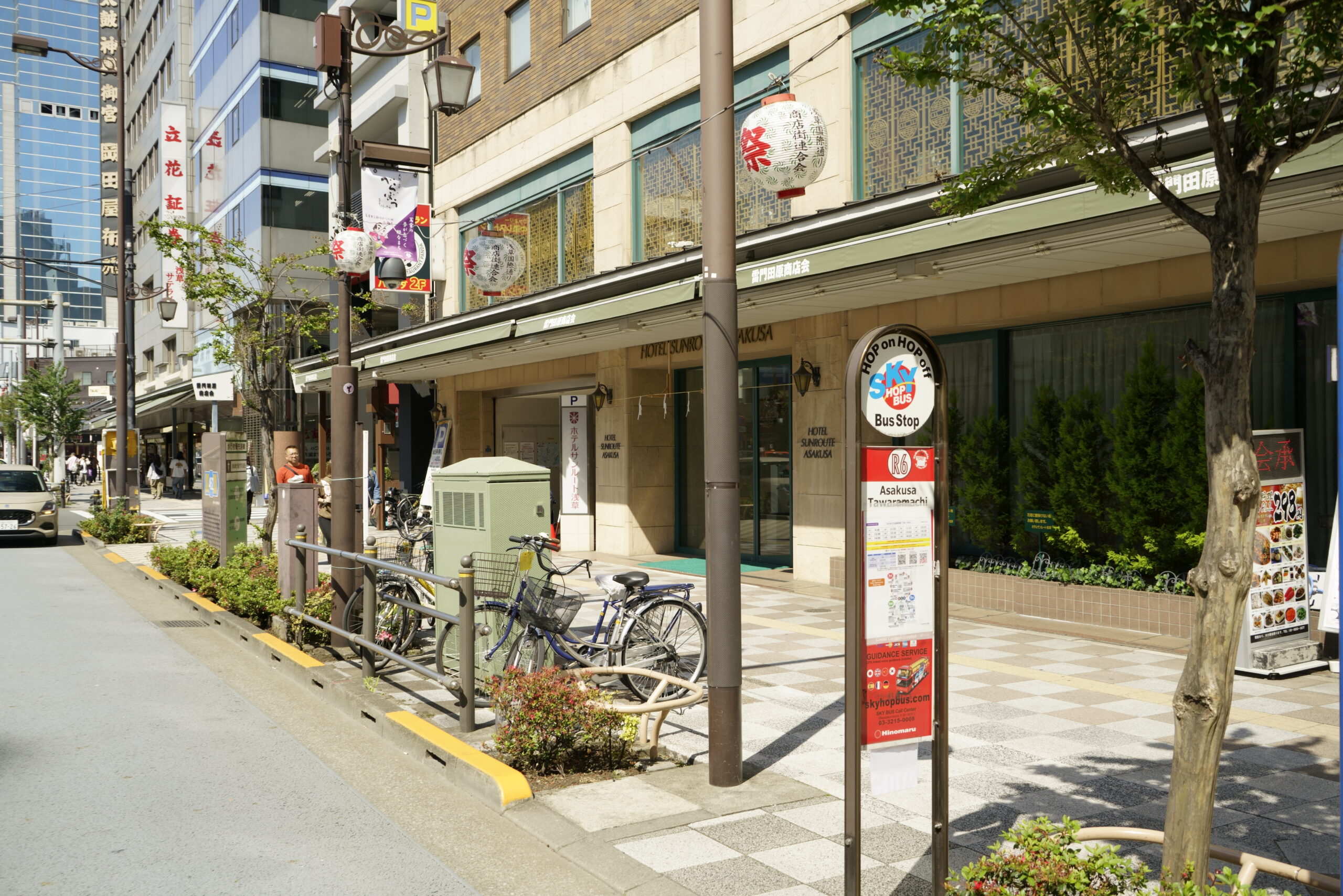
Sky Hop Bus stops are clearly marked throughout the city. The photo above shows the R6 Asakusa Tawaramachi stop on the Red Course.
The Sky Hop Bus service operates on three courses: blue, red and green. Each course covers different parts of the city, and with a total of 19 bus stops, you can hop on and off at your leisure to explore the areas that interest you most. Since you can switch freely between courses, you can customize your sightseeing experience according to your interests and schedule.
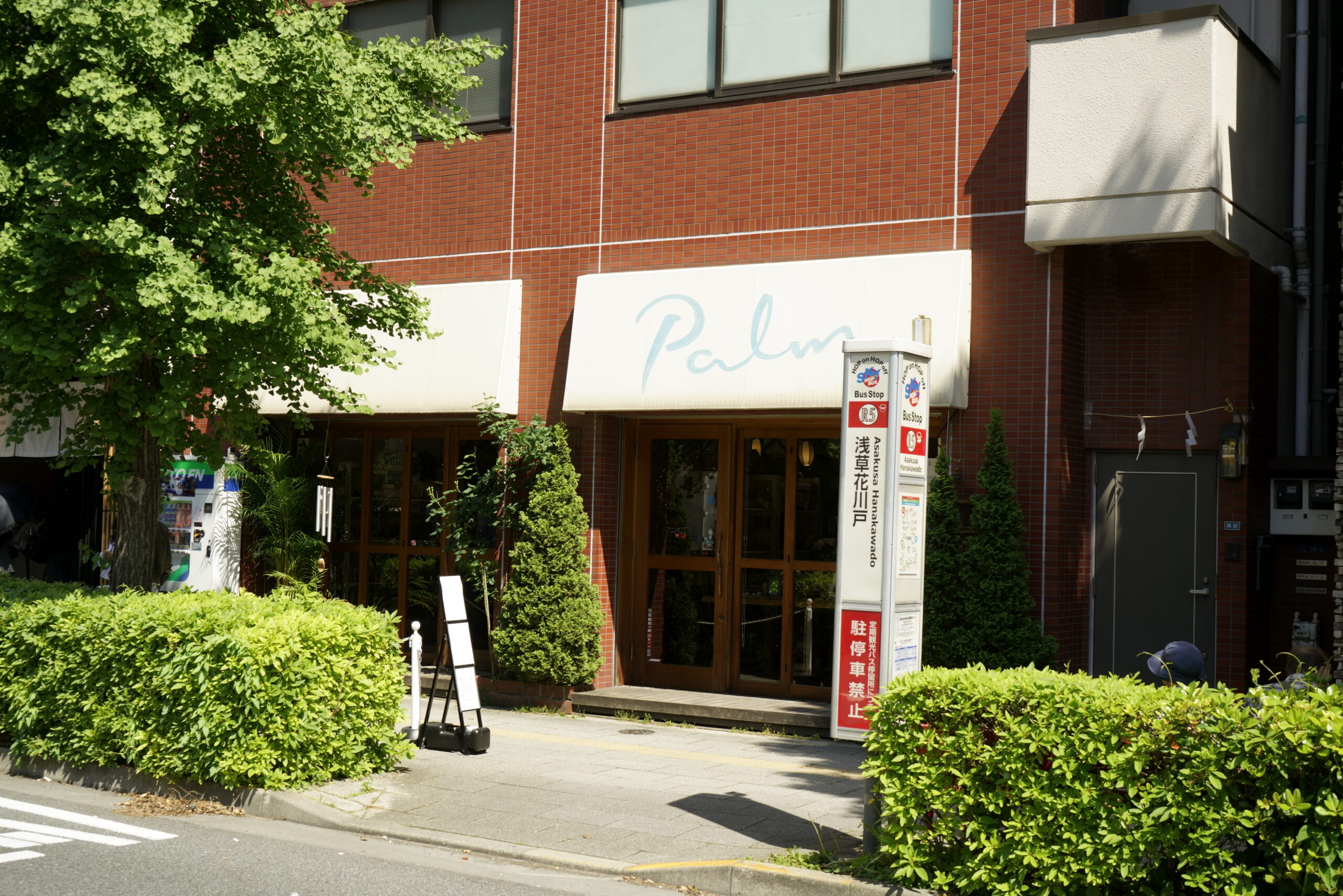
Another Sky Hop Bus stop, pictured at R5 Asakusa Hanakawado on the Red Course.
Major areas covered by each course
Blue course: Tokyo Tower, Tokyo Teleport Station (Odaiba), Tsukiji, Ginza
Red course: Asakusa, TOKYO SKYTREE
Green course: Shinjuku, Shibuya
📅 The timetable for each course is available on the official website.
Navigate Tokyo with Sky Hop Bus: Hop-On Hop-Off Route Map
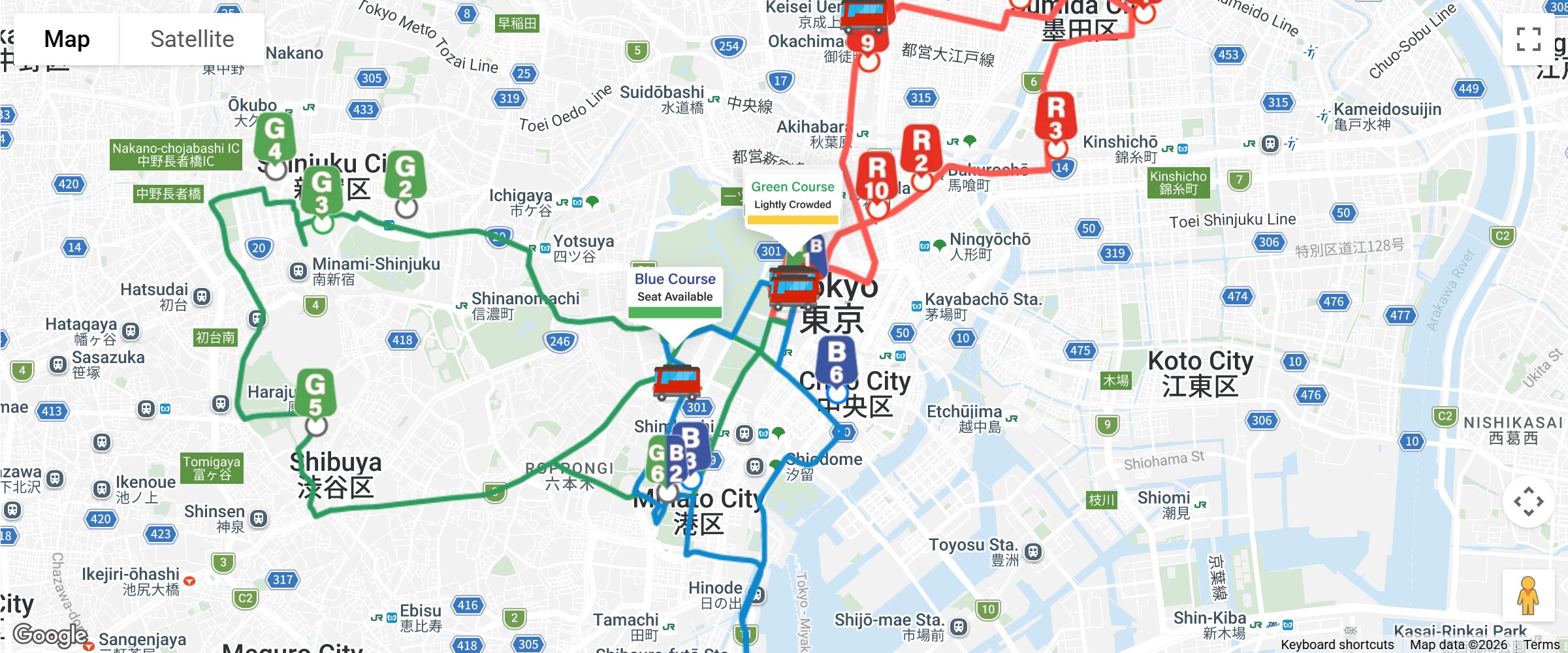
A real-time map showing the operational status of each route is available on the Sky Hop Bus official website.
To get the most out of Sky Hop Bus, start with whichever course catches your eye, then hop to different routes throughout the day.
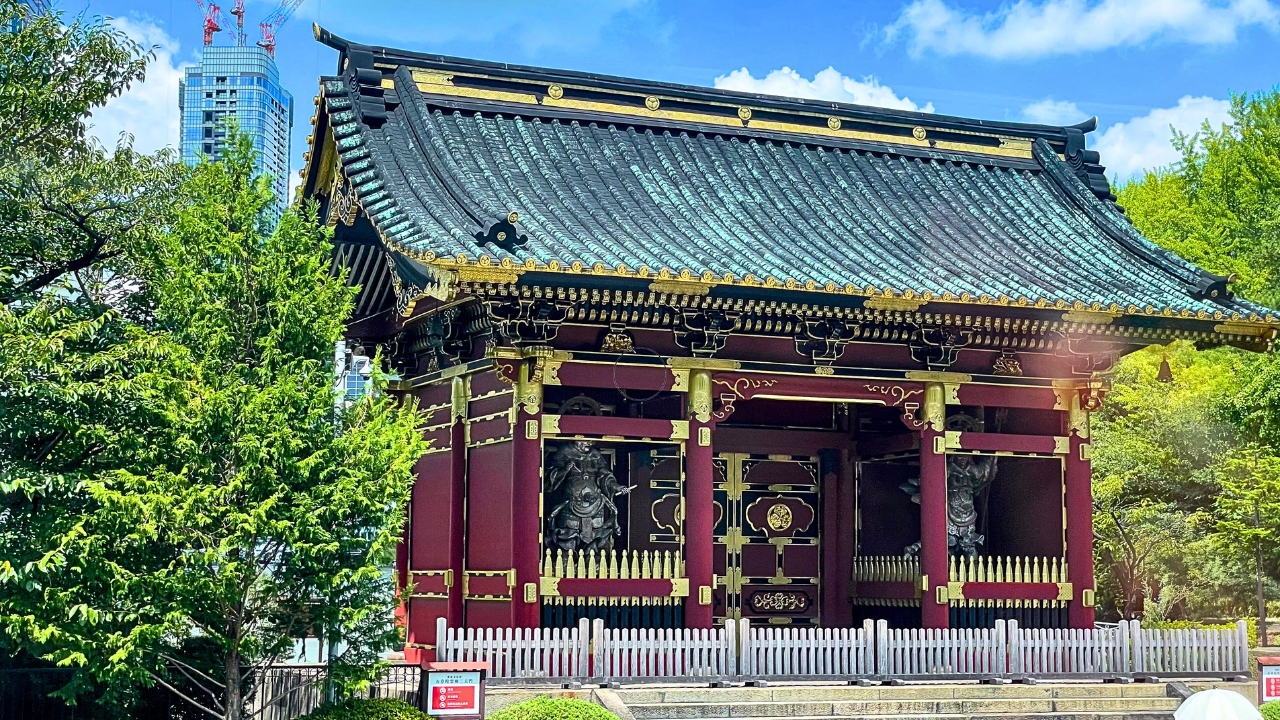
The restored Yusho-in Reibyo Nitenmon Gate at Zojo-ji Temple.
If you’re starting your day from HOTEL TAVINOS Hamamatsucho, the closest Sky Hop Bus stop is “Tokyo Prince Hotel, Zojo-ji Temple” (Blue Course stop B3), about a 20-minute walk from our hotel. The Blue Course hits some of the most iconic Tokyo landmarks: Tokyo Tower, the upscale Ginza shopping district, the bustling outer market of the former Tsukiji Fish Market, and a scenic drive across the Rainbow Bridge to Odaiba. Since the route passes right by Tokyo Tower, it’s also a great idea to stroll over to the tower first, take in the views up close, then hop on the bus to continue your tour from there.
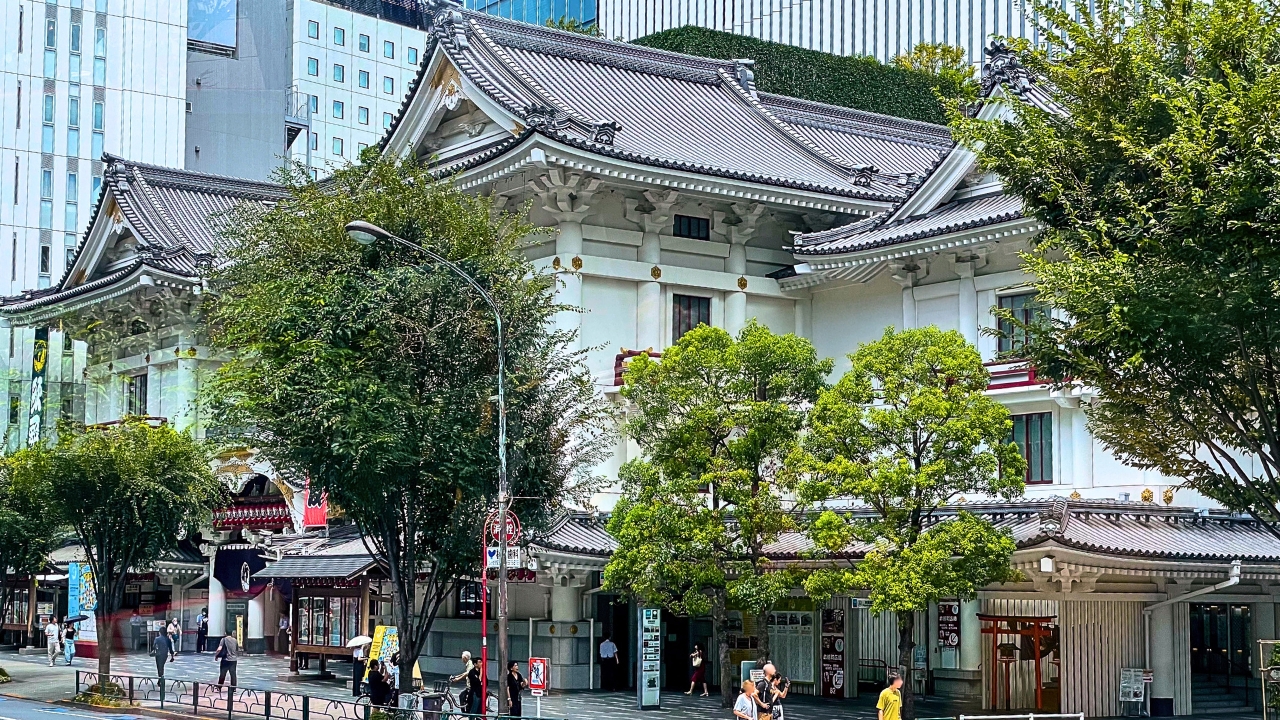
The Blue Course includes a stop in the Ginza area, home to Kabukiza Theatre, the largest Kabuki theater in Japan.
The Red Course, meanwhile, leans into Tokyo’s traditional and pop culture sides. It stops at Ryogoku, the heart of sumo wrestling; TOKYO SKYTREE, the tallest free-standing broadcasting tower in the world; the historic Senso-ji Temple and its famous Kaminarimon Gate in Asakusa; the park-filled neighborhood of Ueno; and Akihabara, the electric hub of anime, manga, and electronics.
The Green Course zeroes in on Tokyo’s busiest modern districts—Shinjuku and Shibuya. Stops include Shinjuku Station, Shibuya City Hall, and Tokyo Tower, before looping back to the business district of Marunouchi.
Sky Hop Bus Review & Tips: Tokyo Tower, Odaiba & Tokyo Station (Blue Course)
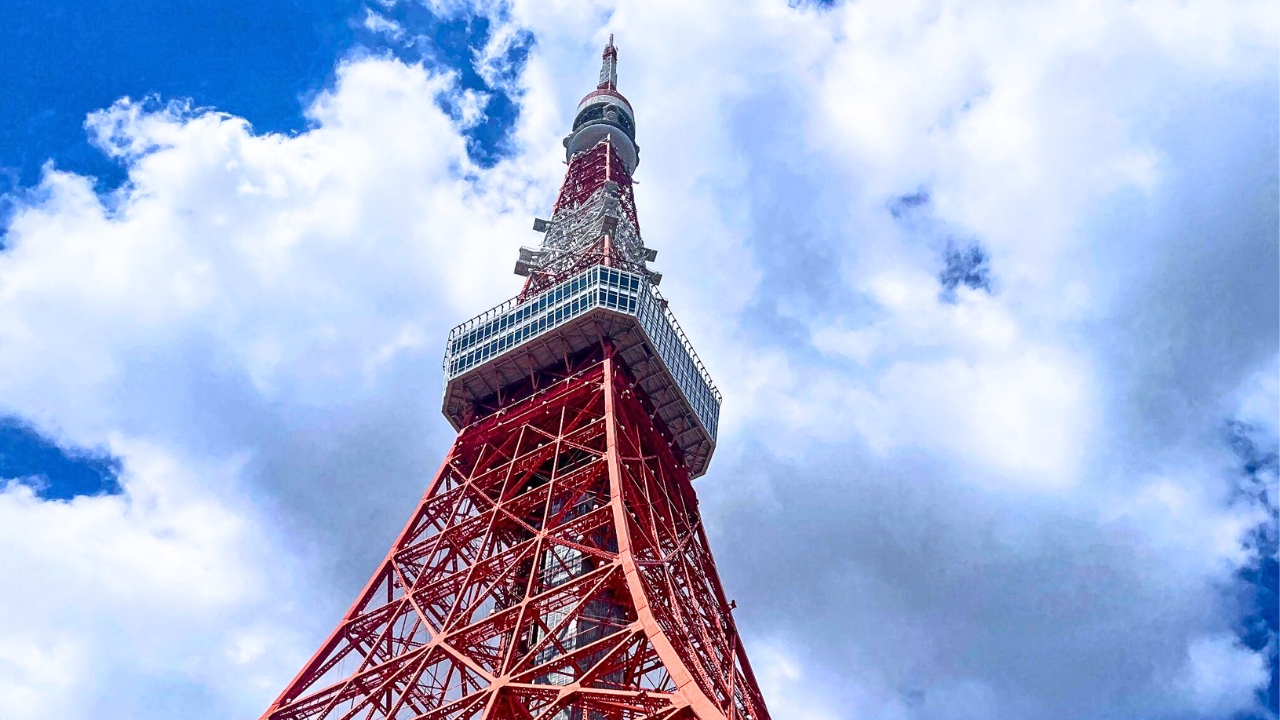
For instance, the full Blue Course loop clocked in at around 70 minutes. One of the first highlights on the route is passing by Tokyo Tower. From the open-roof upper deck, the iconic orange-and-white structure rises up close enough to feel massive, offering a completely unobstructed view that’s tough to capture from street level. It’s one of those quintessentially Tokyo moments that makes the ride worthwhile.
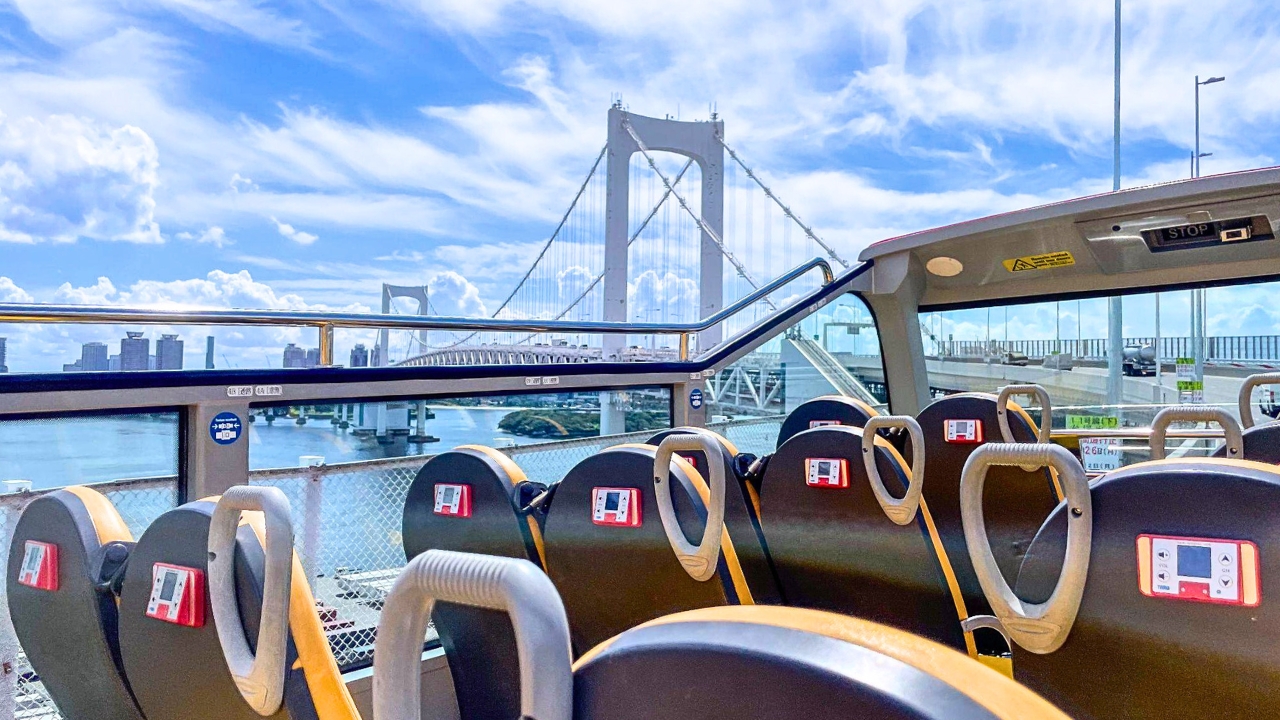
Later in the loop, the bus crosses the Rainbow Bridge toward Odaiba, and the perspective shifts entirely. Suddenly you’re gliding over Tokyo Bay with the city skyline stretched out behind you and the waterfront sprawling ahead—a sweeping, cinematic view that feels like the payoff for sitting up top.
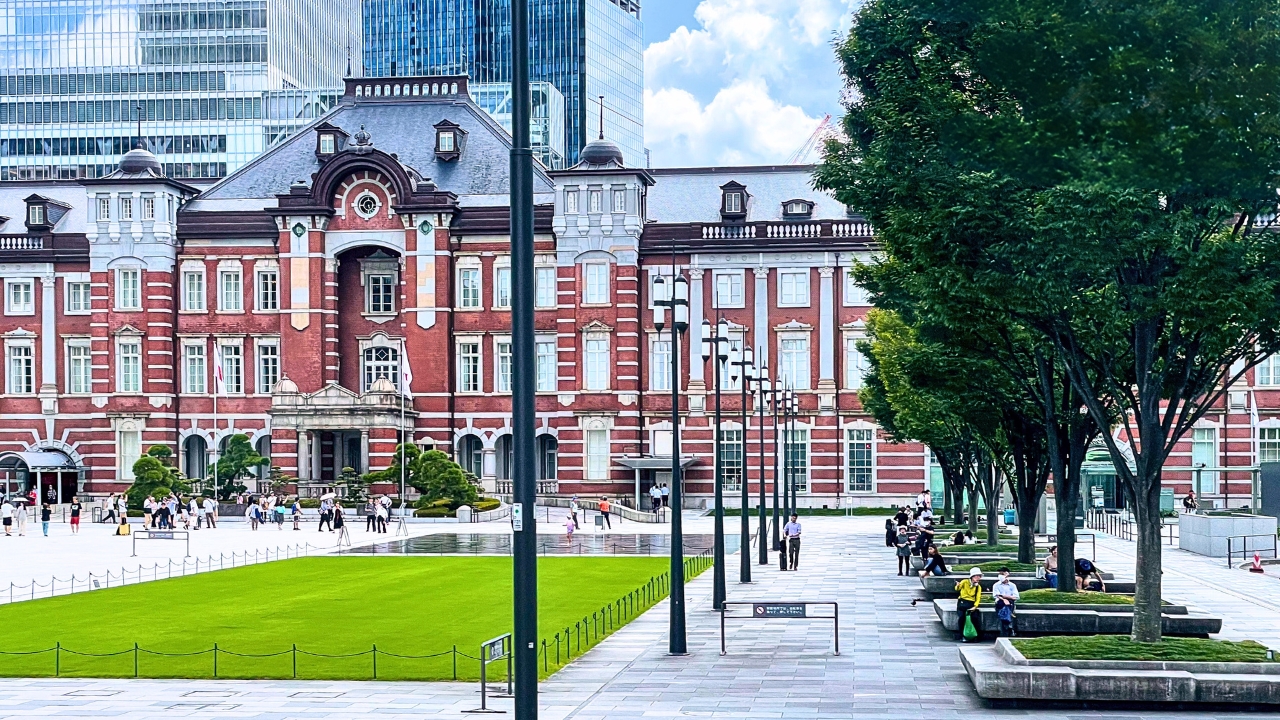
You can also get a great view of the brick façade of Tokyo Station from the bus.
💡Tips for Riding the Sky Hop Bus:
The real draw of the Sky Hop Bus is its open-air upper deck, but sitting up top means you’re fully exposed to the elements. Here are two important tips to make the most of your ride:
- Dress for the weather. Pack sunscreen and a hat in summer, or bundle up with a jacket and scarf during the colder months. Even on mild days, the breeze at speed can be surprisingly brisk.
- Plan for traffic delays. Loop times can vary depending on congestion, especially during rush hour or weekends. If you have dinner reservations or a timed activity afterward, build in extra buffer time just in case.
Enjoy Your Tokyo Bus Tour with Sky Hop Bus’ Audio Guide
The Sky Hop Bus is more than just a convenient way to travel between Tokyo’s top destinations—it’s also a mobile guided tour that brings the city to life.
Audio guidance is available in multiple languages, with two listening options to choose from. The traditional onboard system offers commentary in seven languages: Japanese, English, Korean, Chinese, French, German, and Spanish.
Alternatively, passengers can access an expanded audio guide through their own smartphones, which includes those same seven languages plus Thai, Vietnamese, and Indonesian.
📒Note: Using the smartphone option requires your own device, earphones, and mobile data.
Either way, your journey becomes an informative experience as you learn about Tokyo’s landmarks and uncover fascinating historical stories along the way. The commentary covers everything from well-known icons to lesser-known details—like the intriguing theories behind the name of the Toranomon (“tiger gate”) district or the architectural significance of Tokyo’s government buildings. Even long-time Tokyo residents often find themselves learning something new.
Sky Hop Bus Ticket Prices & How to Buy Tickets
The main terminal for the Sky Hop Bus is located at the Marunouchi Mitsubishi Building, just steps from Tokyo Station. From HOTEL TAVINOS Hamamatsucho, you have two convenient options to get onboard: board at the nearby “Tokyo Prince Hotel, Zojo-ji Temple (B3)” stop, or take a quick ride on the JR Yamanote Line to Tokyo Station if you’d like to admire the station’s stunning 100-year-old red brick façade before hopping on.
Tickets can be purchased at the terminal’s ticket counter, directly from Sky Hop Bus staff on board, or through select travel agencies. You’ll have the option of a one-day or two-day pass—the latter allows unlimited travel across consecutive days, giving you more flexibility to explore at your own pace.
Ticket prices
1-day ticket: adults ¥4,800, children ¥2,400
2-day ticket: adults ¥7,000, children ¥3,500
*Prices as of February 2026
Whether you’re a first-time visitor or a seasoned traveler, the Sky Hop Bus offers an excellent way to explore Tokyo’s vibrant streets and historic sites while making the most of your time in the city.
Sky Hop Bus
Website: https://skyhopbus.com/
Instagram: https://www.instagram.com/skyhopbus/
Facebook: https://www.facebook.com/skyhopbus
YouTube: https://www.youtube.com/@skyhopbustokyokyoto1468
💡 Sky Hop Bus also operates in Kyoto, offering a similar hop-on, hop-off experience tailored to the ancient capital’s cultural landmarks. The Kyoto service runs two routes—Blue and Red—that cover the city’s most iconic sites such as Kinkaku-ji Temple (the Golden Pavilion), Nijo-jo Castle, Nishiki-ichiba Market, and many more. Check out the official site for more details!
Writer
Rachael Aoki
Originally from the East Coast of the United States, Rachael has called Japan home for over a decade. She enjoys discovering destinations that are popular with locals from quaint cafes to hole-in-the-wall eateries and sharing that information with visitors from overseas. She also loves taking trips to onsen and is always up for a trip to Hakone, Kanagawa.