
Blog
Discover Kyoto Like a Local: Join Our Kyoto Free Walking Tours
At HOTEL TAVINOS Kyoto, we believe the best way to experience Kyoto is through the eyes of people who live here and genuinely love this city. That’s why every Wednesday we offer free Local Tours guided by our own staff members—a passionate team of both Kyoto locals and long-time foreign residents who are happy to share their favorite spots, interesting stories, and practical tips with our guests.
Content
Fushimi Inari Taisha Shrine Walking Course

Starting April 2026, our featured route takes you to the iconic Fushimi Inari Taisha, one of Kyoto’s most beautiful and spiritual sites. Tours begin in our hotel lobby (easy and stress-free!) before the group walks together to Kiyomizu-Gojo Station on the Keihan Line—just 6 minutes on foot—for a short train ride to Fushimi Inari Station.
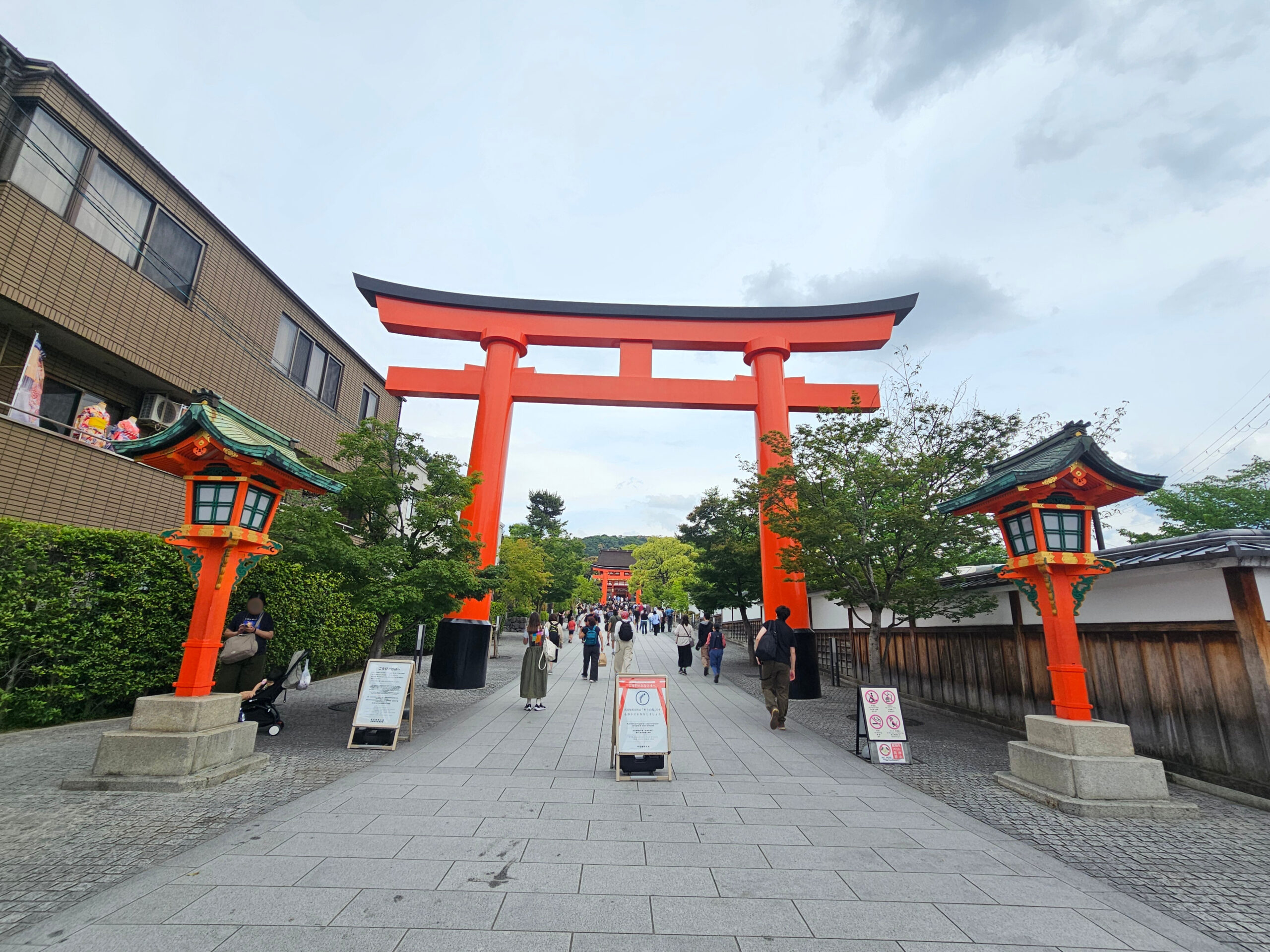
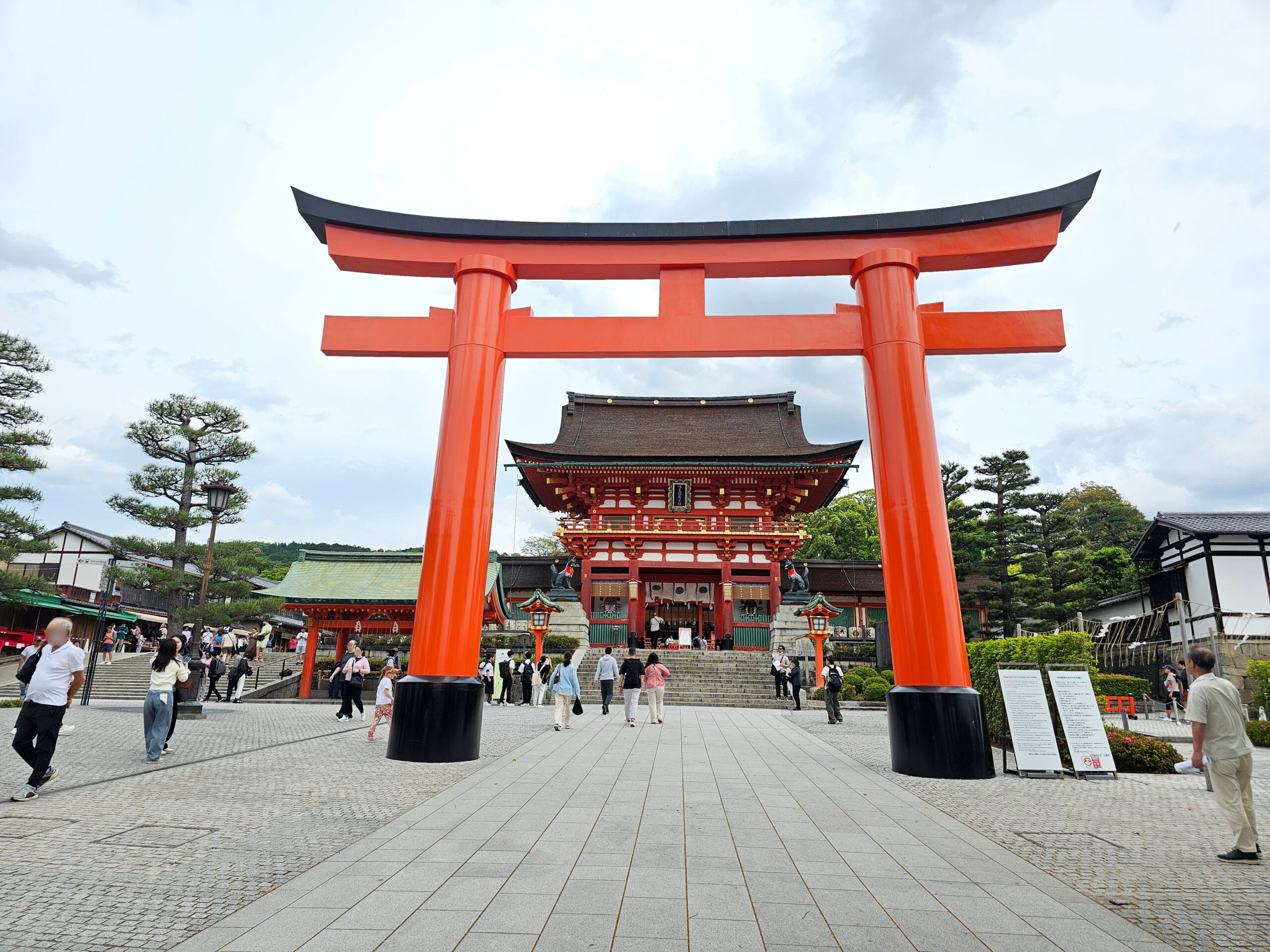
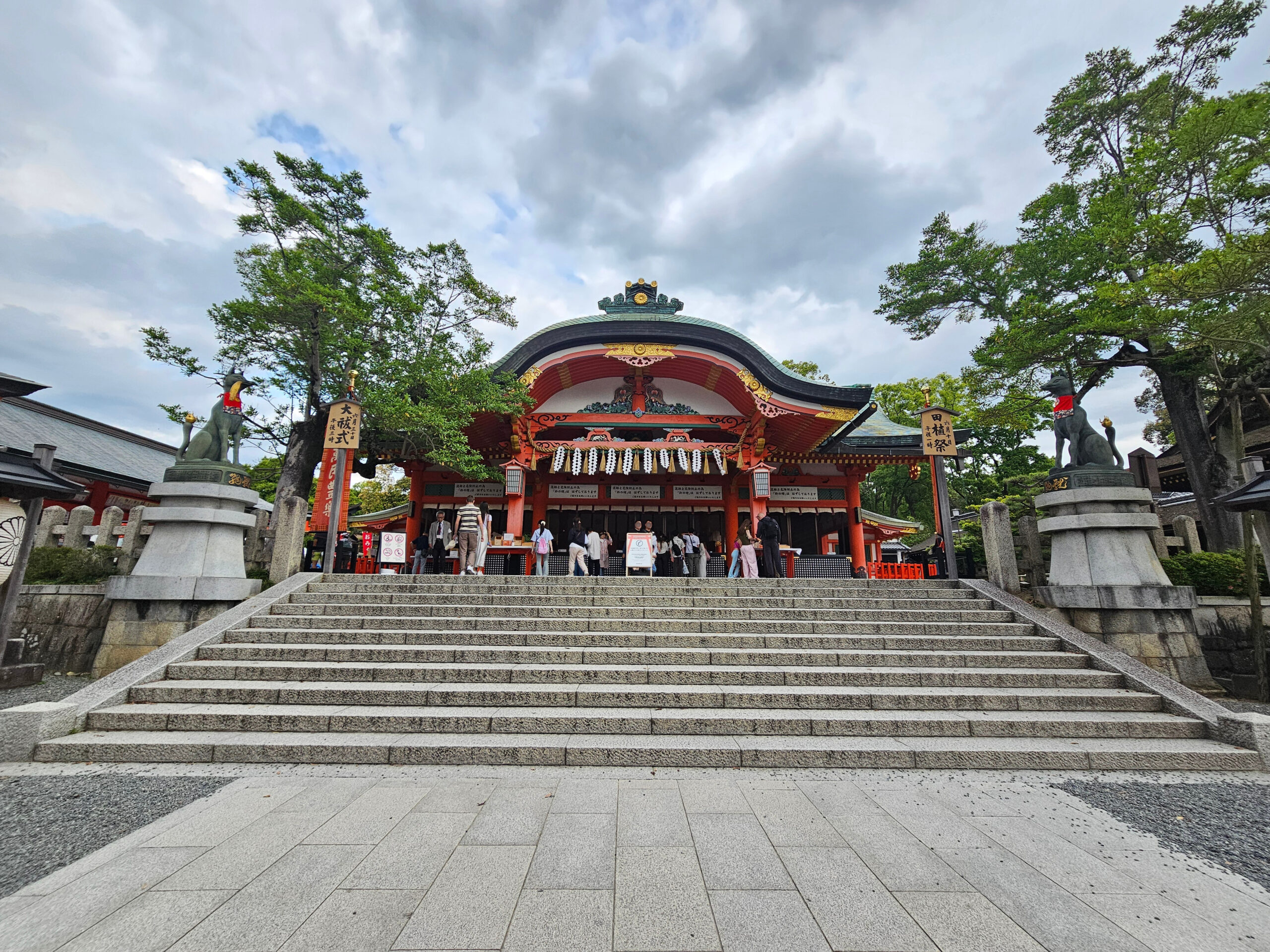
At Fushimi Inari Taisha Shrine, the first landmark is the first torii gate (Daiichi Torii, 第一鳥居), or large torii gate (Ootorii, 大鳥居), which marks the main entrance. From there, the route continues through the omotesando (表参道) walkway and Romon gate (楼門) before reaching the main hall (Honden, 本殿) where visitors are welcome to offer a prayer. Don’t worry if you’re unfamiliar with the customs —our attendants are on hand to help.
How to Pray at Fushimi Inari Taisha
Before praying, it’s customary to purify your hands and mouth with water at temizuya (water basin usually located near torii gates):
- Pick up a wooden ladder with your right hand, scoop water, and pour it on your left hand.
- Switch ladle to your left hand and wash your right hand.
- Return ladle to your right hand, pour water into your left palm, and rinse your mouth (do not bring the ladder directly to your lips)
- Rinse your left hand again, then hold the ladder vertically so the remaining water runs down a handle before returning it.
After the purification ritual, go to the main hall. At shrines, people usually follow the general rule of “two bows, two claps, one bow” (二拝二拍手一拝):
- Place a coin in the offering box (while any coin will do, 5‑yen coins are commonly used and considered auspicious).
- Use the rope to ring a bell to announce your presence to the deity.
- Bow deeply twice.
- Bring your hands at chest level and clap twice.
- Keep your hands together and pray silently.
- Finish with one deep bow.
Here, at main hall, you can soak in the vibrant atmosphere all centered around the worship of Inari Okami, the deity of prosperity, rice, and business success. The shrine remains an active place of devotion to this day, drawing business owners and major corporations alike who come to pray for good fortune.
The Senbon Torii “Thousand Torii Gates” of Fushimi Inari Taisha

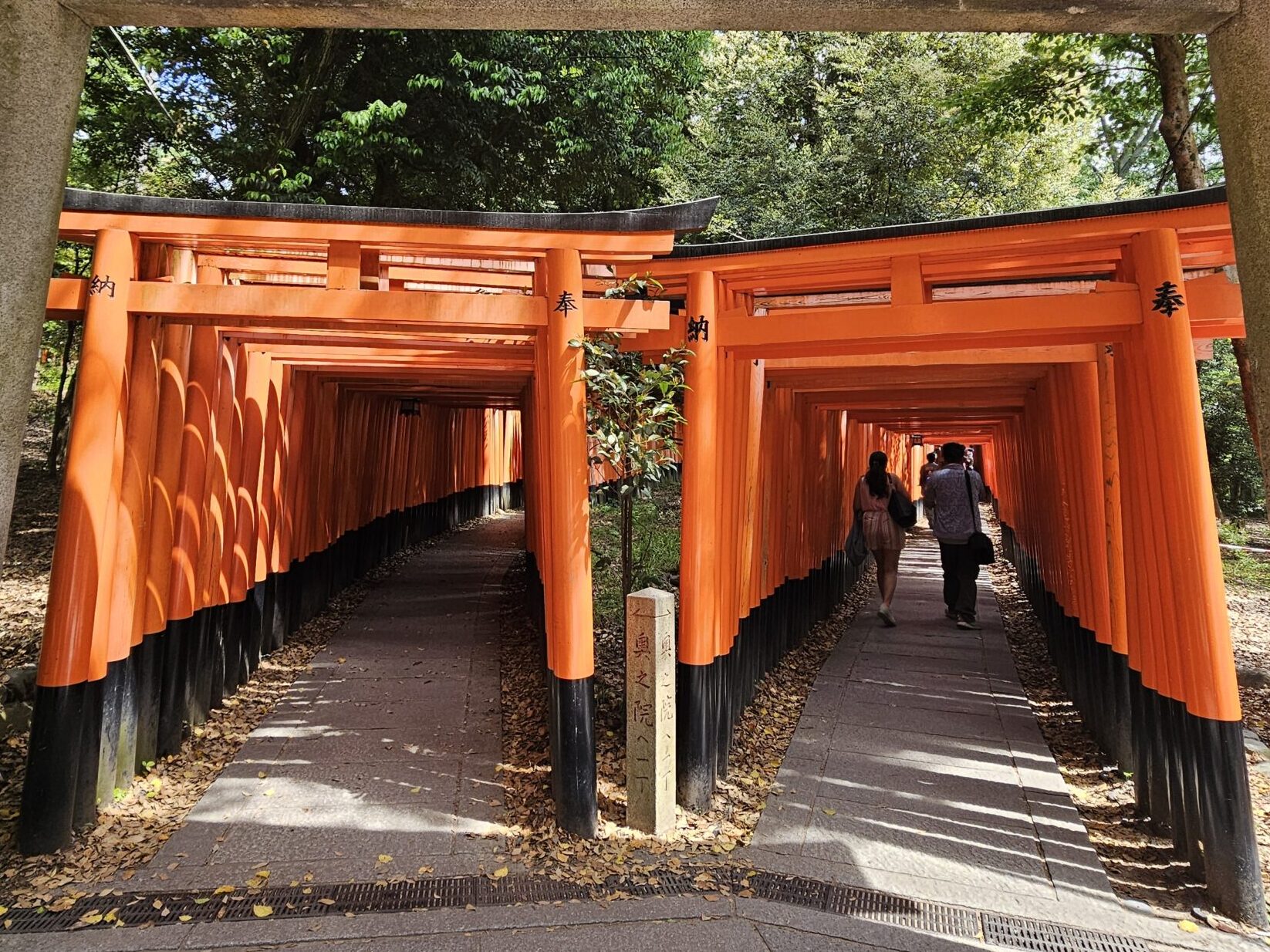
After visiting the main hall, our tour continues further up to the sacred Mt. Inari where the path soon splits to reveal one of Fushimi Inari Taisha’s most famous sights: the Thousand Torii Gates (Senbon Torii, 千本鳥居), a tunnel-like passageway densely lined with vibrant vermilion torii gates donated by visitors and companies over the years as offerings of gratitude or prayers for prosperity.
While the name suggests a thousand gates, new gates are continuously added and older ones are periodically replaced, so the exact number is always changing, which is why you’ll notice some torii gates look bright and new, while others have been weathered by time. That said, the countless rows of vermillion-red torii gates create almost a magical photo opportunity that you won’t want to miss.
The torii gates extend well beyond the Thousand Torii Gates, continuing further up the mountain more sparsely spaced, with the total across the entire mountain range said to reach as many as 10,000.
Make a Wish at the Fortune-Telling Omokaru Stones of Fushimi Inari Taisha Shrine
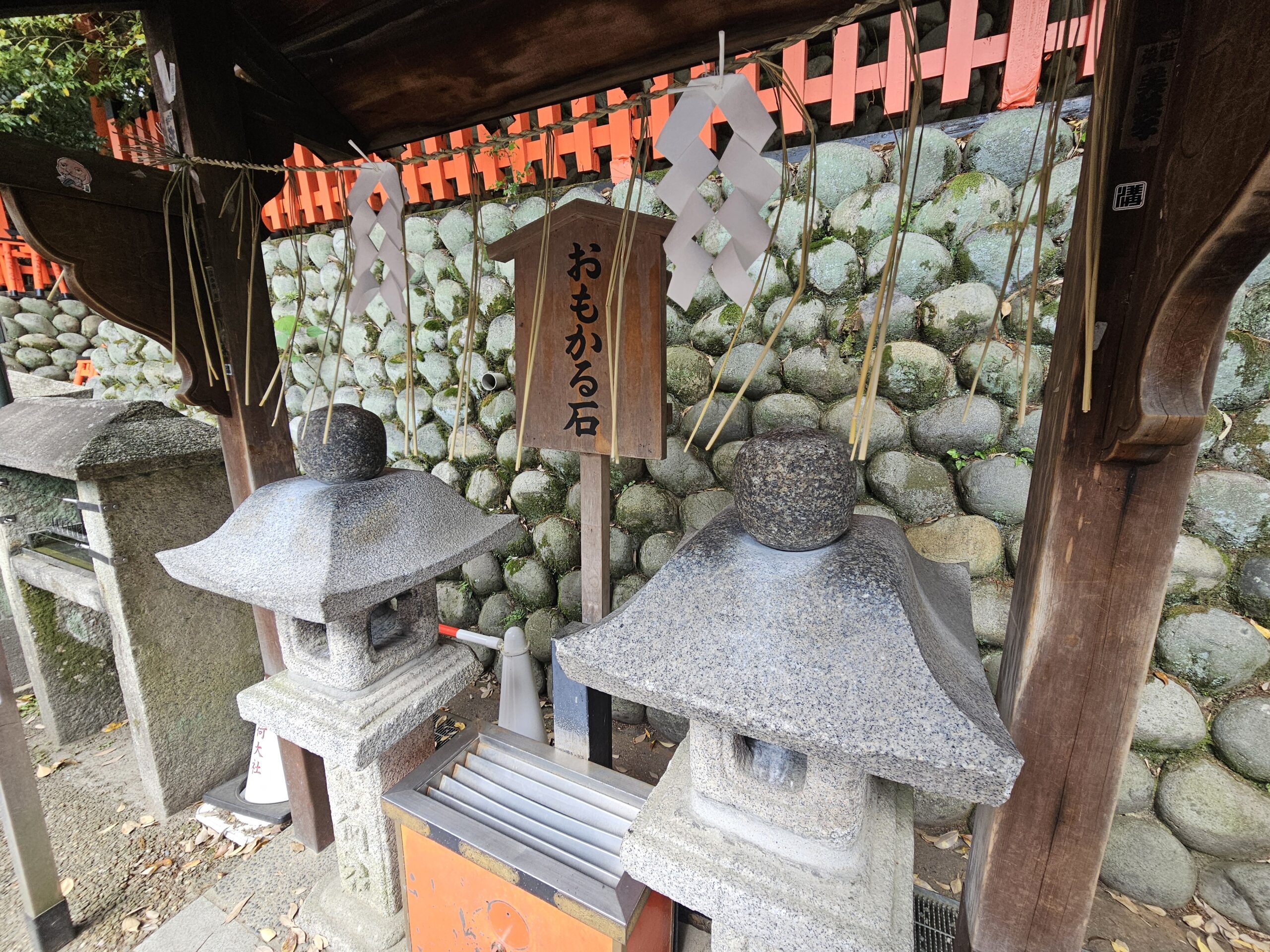
Further up the path sits one of the tour’s playful stops: the Omokaru Stones (omokaru ishi, おもかる石), also known as the “light or heavy stones.” These stones sit atop of traditional stone lanterns and are believed to hold significant spiritual power. The tradition is simple—make a wish, then try to lift one of the stones with both hands. If it feels surprisingly light, your wish is said to come true easily; if heavy, a little more effort and patience may be needed. This fun tradition is always a highlight of our Local Tour and one that makes for great stories to share!

The Peaceful Inari Saryo Café and Fushimi Inari Sando Shopping Street Stroll
Our attendants will also guide you to a charming café called Inari Saryo which is nestled within the shrine grounds. From inside, it offers lovely views of Mt. Inari, a traditional garden, and a nearby river. One of its most popular menu items is the Inari Parfait (¥1,650), a dessert filled with Uji matcha ice cream, red bean paste, crispy rice crackers, and soft shiratama dumplings—a delightful treat!
Finally, we conclude our tour by strolling through the Fushimi Inari Sando Shotengai shopping street just outside the shrine entrance. It’s packed with charming souvenir shops selling fox-themed charms, traditional crafts, and local treats like inari-zushi (sweet tofu pouches with rice) and yatsuhashi (traditional sweets made of glutinous rice flour and sugar). It’s the perfect place to find Kyoto souvenirs or something delicious to bring back as a gift.
More Free Kyoto Local Tours: Gion Walking Course and Kiyomizu-dera Course
Beyond the free Fushimi Inari Taisha guided tour, we offer two additional free tour routes, rotated irregularly to cover different sides of Kyoto from sacred mountain paths to atmospheric historic neighborhoods and panoramic temple views. The exact route shifts based on the season, weather, guest interests, and staff recommendations, ensuring no two stays at HOTEL TAVINOS Kyoto look the same.
Gion Walking Course
This course takes you deep into the historic streets of Gion, Kyoto’s famous geisha district. We’ll pass through the picturesque Hanamikoji Street, a cobblestone street lined with beautifully preserved traditional wooden machiya houses, where the atmosphere still carries a strong sense of old Kyoto.
The Gion Walking course also includes two important landmarks:
- Yasaka Shrine: one of Kyoto’s most important shrines and the home to the month-long Gion Festival in summer.
- Yasui Konpiragu Shrine: a well-known spiritual power spot in Kyoto where many visitors come to pray for the strength to leave behind unwanted relationships and open the door to new, positive ones.
Kiyomizu-dera Course
This course takes you to Kiyomizu-dera—literally “Pure Water Temple”—one of Kyoto’s most iconic temples. Located on the hillside of Mt. Otowa in the Higashiyama mountain range, Kiyomizu-dera offers stunning views over the city from its Kiyomizu Stage, a massive wooden veranda jutting out over the steep cliffside. Built entirely from Japanese cypress and assembled without a single nail, it stands as a true architectural masterpiece.
Below the main hall lies the Otowa Waterfall—the source of pure water that gives the temple its name. The waterfall is divided into three streams, each said to carry a different blessing: success in academic pursuits, fulfillment in love, and health and longevity. Visitors can drink directly from the streams using long-handled cups.
How Our Free Kyoto Local Tours Work:
- Tours are free for our guests. However, participants are responsible for public transport fees and entrance fees (if required).
- The tours usually last from 1.5 to 2 hours (excluding travel time) and are conducted in small groups (or even private, depending on the day).
- Tours depart from the hotel lobby, and the group heads to the station together. Simply sign up at the front desk by the day before.
- Comfortable walking shoes are recommended.
Side Note
From July to September*, our guided Local Tours are temporally suspended. Instead, we offer self-guided audio tours during this period. Simply scan a QR code with your smartphone and explore Kyoto at your own pace.
*Exact dates may vary slightly each year.
The current Local Tour rotation can be checked on our official website, HOTEL TAVINOS Kyoto’s Instagram page, or simply by asking at the front desk.
Writer
D.M.
Member of HOTEL TAVINOS team, sharing local insights and stories to help guests explore and enjoy the area.