
Blog
Chopstick Making Japan: Make Your Own Chopsticks in Tokyo

Chopsticks are one of the simplest yet most essential parts of Japanese food culture. Used every day across the country, they are also deeply personal objects, shaped by weight, texture, material and feel. For travelers looking for a creative cultural activity in Asakusa, Chopstick Making Tokyo offers a relaxed, hands-on workshop where participants can make their own wooden chopsticks and take them home as a practical, one-of-a-kind souvenir. Best of all, this beginner-friendly experience is located just a short walk from Senso-ji Temple, making it easy to add to a day of sightseeing around Asakusa.
Content
What is Chopstick Making Tokyo in Asakusa?
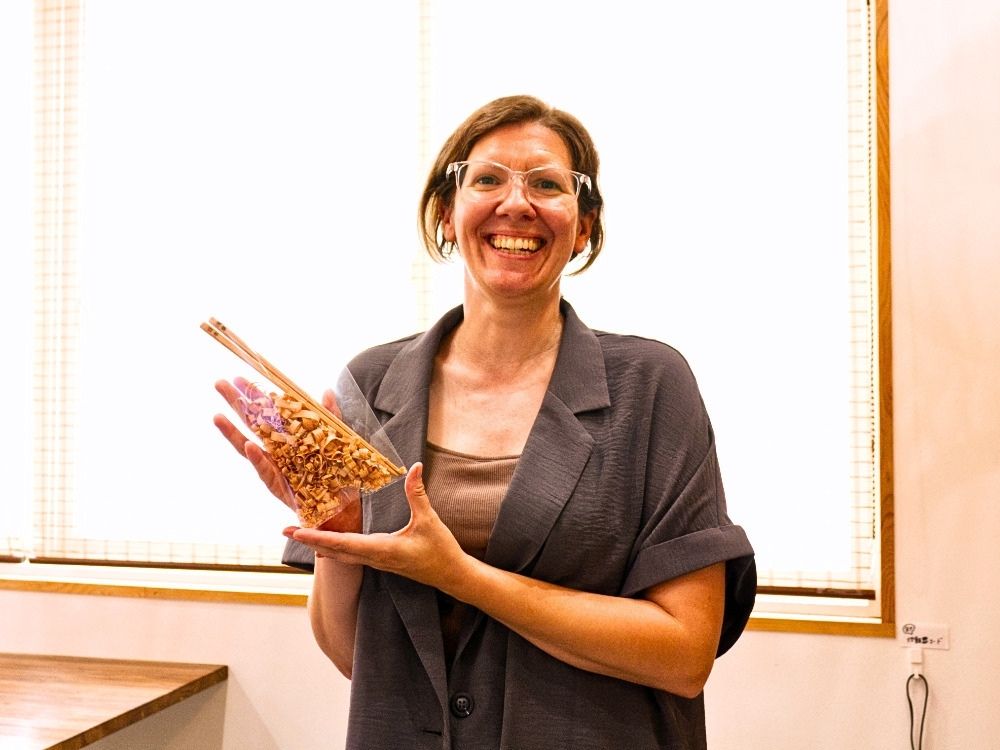
Located in Tokyo’s historic Asakusa district, Chopstick Making Tokyo is a hands-on craft workshop where visitors get to make their own authentic chopsticks using Japanese wood, simple tools, and traditional finishing techniques.
The approximately 60-minute session opens with an engaging introduction to Japanese craftsmanship and food culture, touching on the history of chopsticks, the differences between Japanese and other Asian styles, and basic dining etiquette. From there, English-speaking instructors walk participants through every step of the process — from selecting the wood to shaping, sanding, oiling, and personalizing the finished pair — to make your own pair of chopsticks.
Part of what makes the workshop appealing is that no prior woodworking experience is required, yet the end result is genuinely useful — a handmade pair of chopsticks can easily find its way into everyday life back home, making it both a personal keepsake and a meaningful reminder of Japanese culture.
Choosing the Right Wood for Your Handmade Chopsticks
One of the most enjoyable parts of making chopsticks from scratch is choosing the wood. Participants can compare sample chopsticks made from five distinctive materials, testing their weight, color, texture and scent before deciding which type best suits them. Some woods are light and fragrant, while others are dense, firm or more challenging to shape.
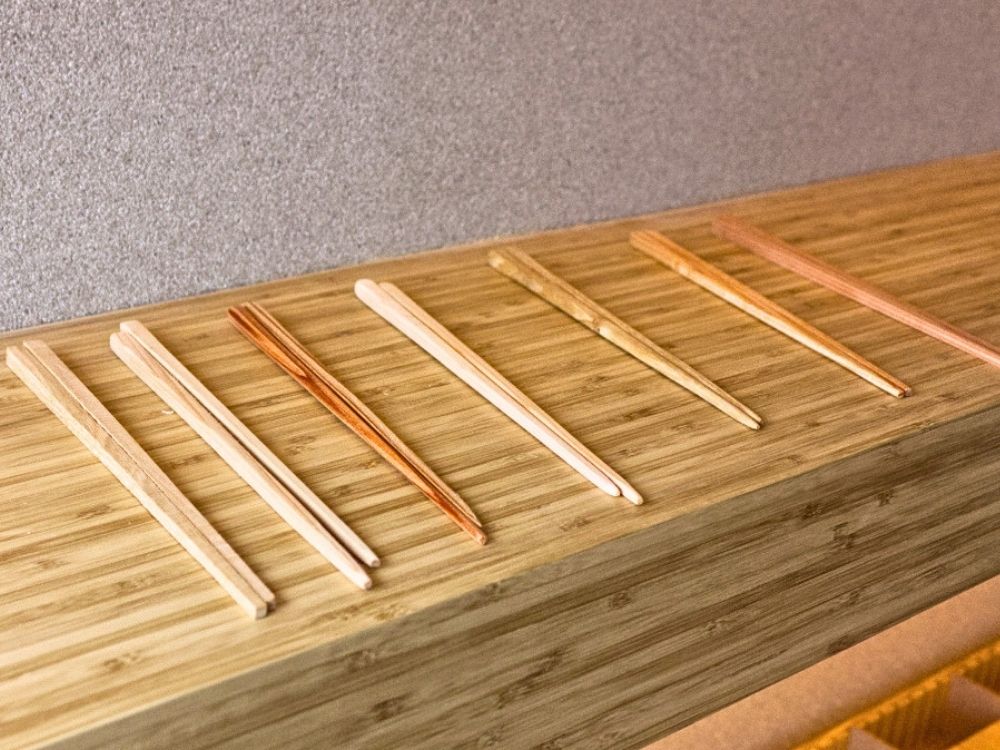
Standard options include woods such as:
- Tochi (Japanese horse chestnut): Soft, warm look. Pale tone and gentle feel make it an elegant choice, though it requires a little patience when shaping. Often used for traditional bowls and teaware.
- Hinoki (Japanese cypress): Smooth, pale and highly aromatic. Closely associated with Japanese shrines, temples and baths.
- Kiso Hinoki: A prized cypress from the Kiso region. Offers a similarly refined fragrance and is especially easy for beginners to work with.
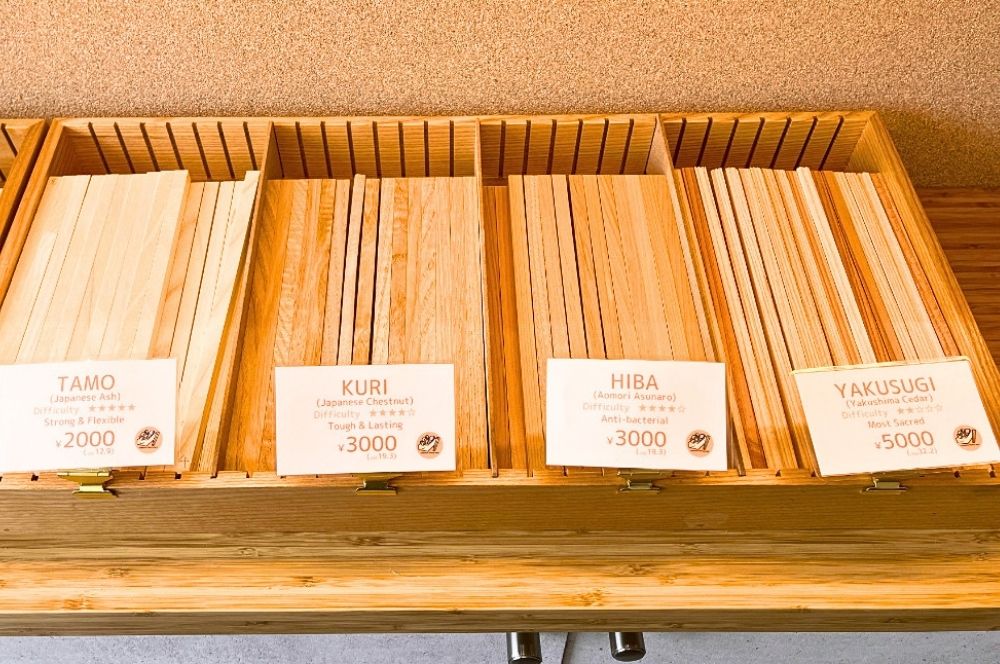
Depending on availability, participants may also be able to choose from premium woods for an additional fee:
- Tamo (Japanese ash): Feels heavier and sturdier in the hand. Often used in furniture and sporting goods such as baseball bats thanks to its strength and flexibility.
- Kuri (Japanese chestnut): Rich color and excellent durability, making it a traditional choice for buildings, furniture and objects designed to last.
- Hiba (especially Aomori hiba): Distinct fragrance. Valued for its resistance to moisture and insects, which is why it has long been used in baths and buildings in northern Japan.
Among them, the most special option is Yakusugi, a cedar associated with Yakushima in Kagoshima Prefecture, the UNESCO World Heritage island known for its ancient forest landscape. Available only in limited quantities, yakusugi has a striking grain and a sense of rarity that makes it feel more like a keepsake than an everyday item.
*The chopsticks pictured in this article are made from yakusugi.
*Wood types may vary depending on the season and availability.
A Chopstick Making Experience with English-speaking Staff
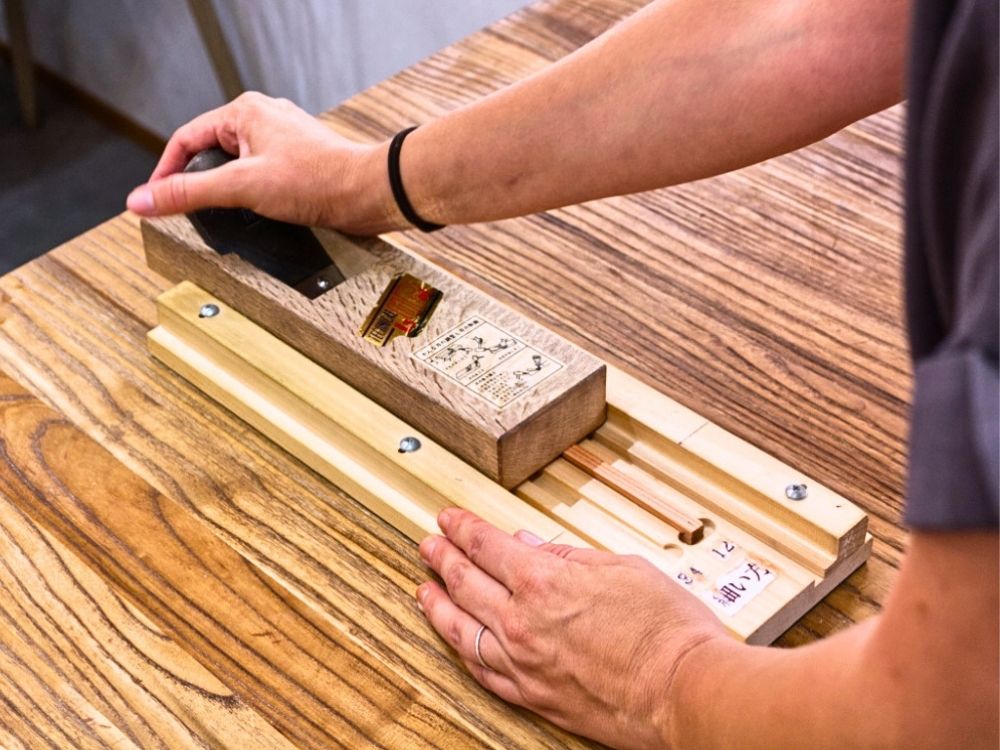
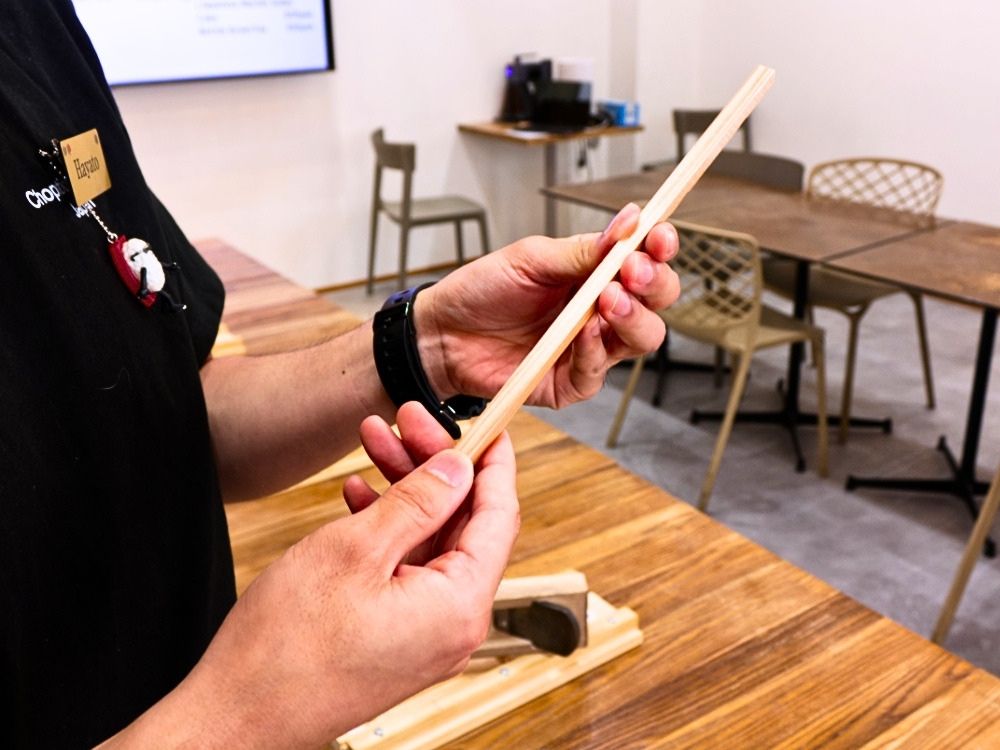
Once the wood is chosen, the instructor checks the grain of the pair and helps participants mark the sticks so they can shave and sand them evenly. From there, the hands-on work begins.
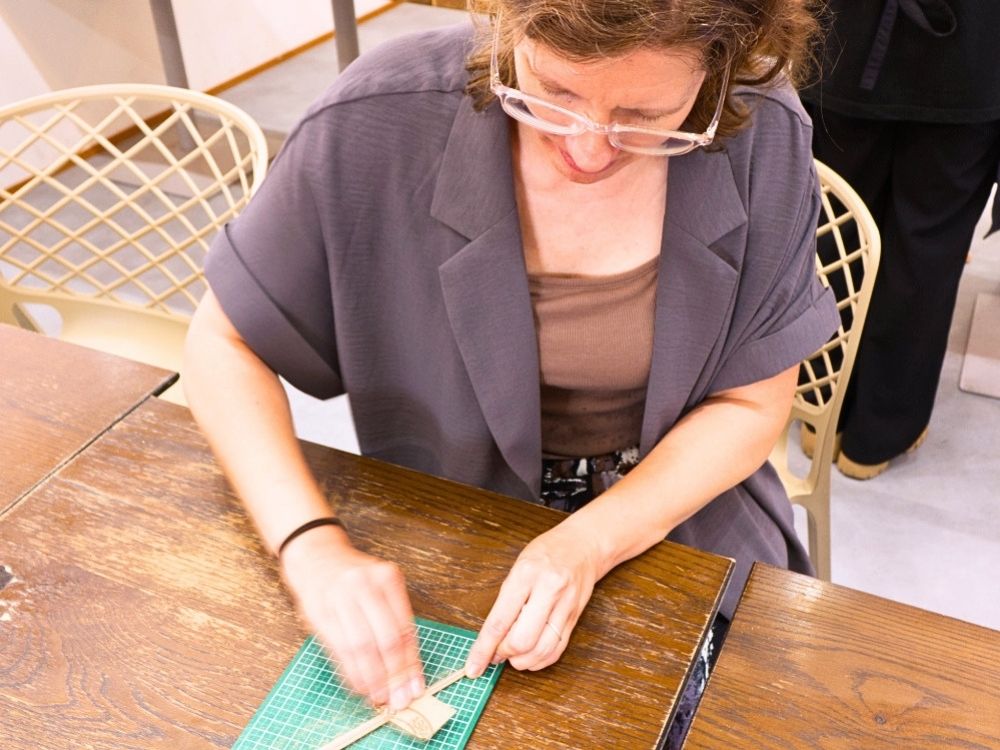
The process is simple enough for beginners but still satisfying. Participants gradually shape the wood, smooth the edges and round the tips so the chopsticks feel comfortable to hold. The sanding step is especially calming: a quiet, focused task where the wood slowly transforms under your hands.
After the chopsticks are shaped, they are dipped in oil and carefully wiped down to bring out the natural grain. Participants should wait about three days before using them, giving the finish time to set properly. Until then, they can be kept as a reminder of the workshop — and perhaps the anticipation makes the first meal with them even more enjoyable.
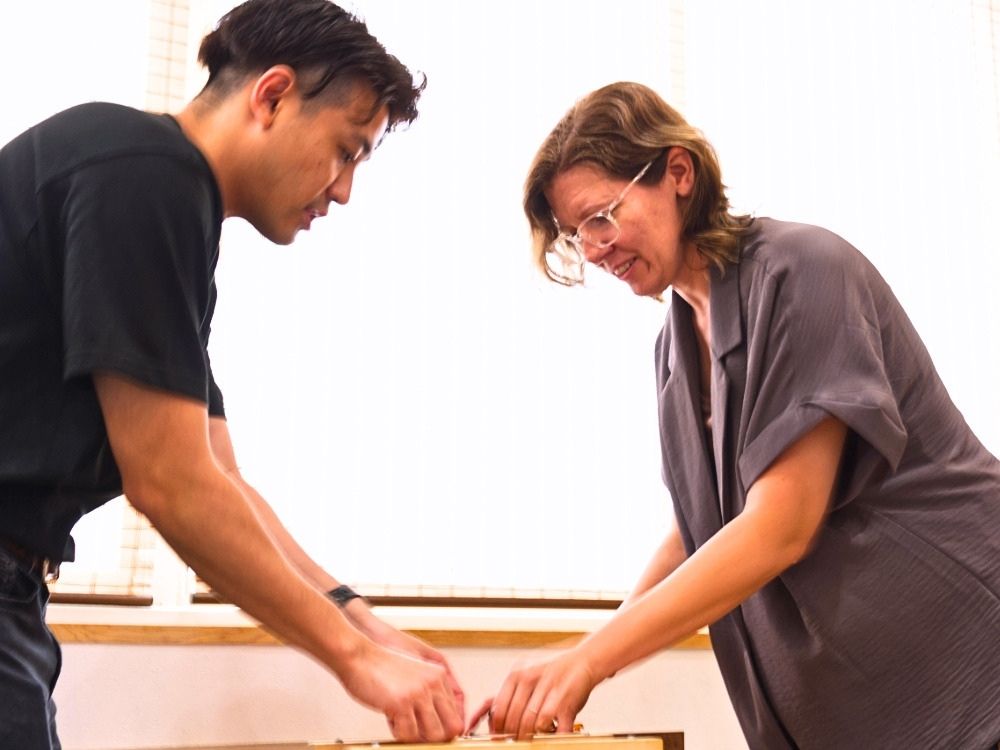
The instructors are a big part of what makes the experience memorable. They keep the atmosphere friendly, clear and easy to follow, offering help without making the class feel too formal. Whether joining solo, as a couple, with friends or as a family, participants can enjoy the workshop at their own pace while learning a little more about Japanese craftsmanship along the way.
Personalizing Your Chopsticks with Custom Engravings and Add-Ons
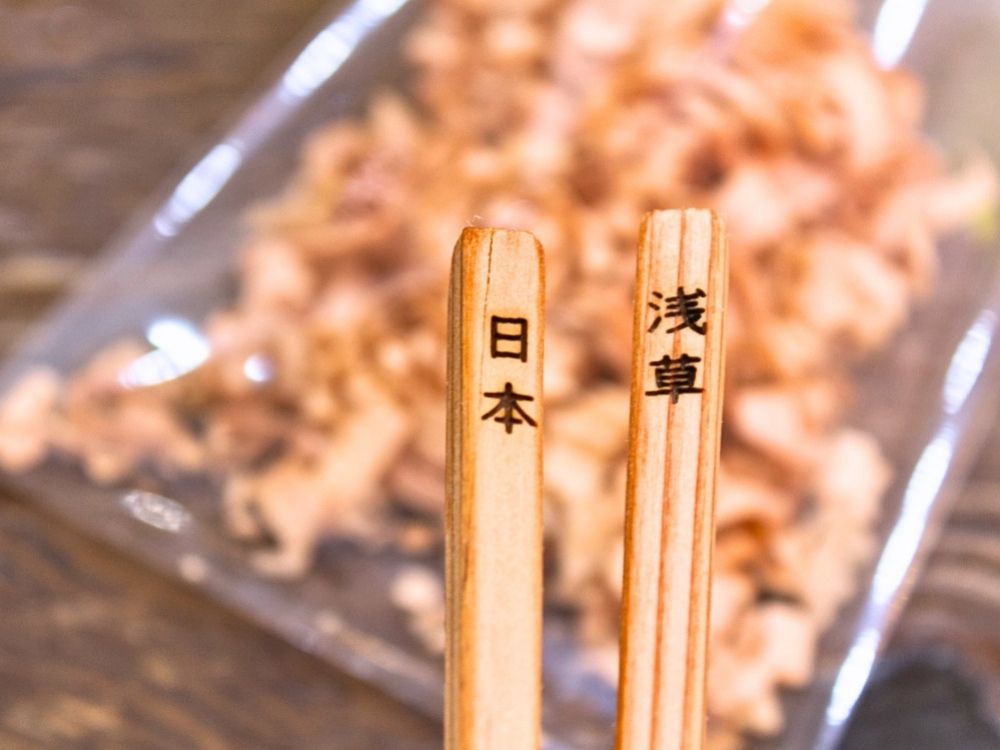
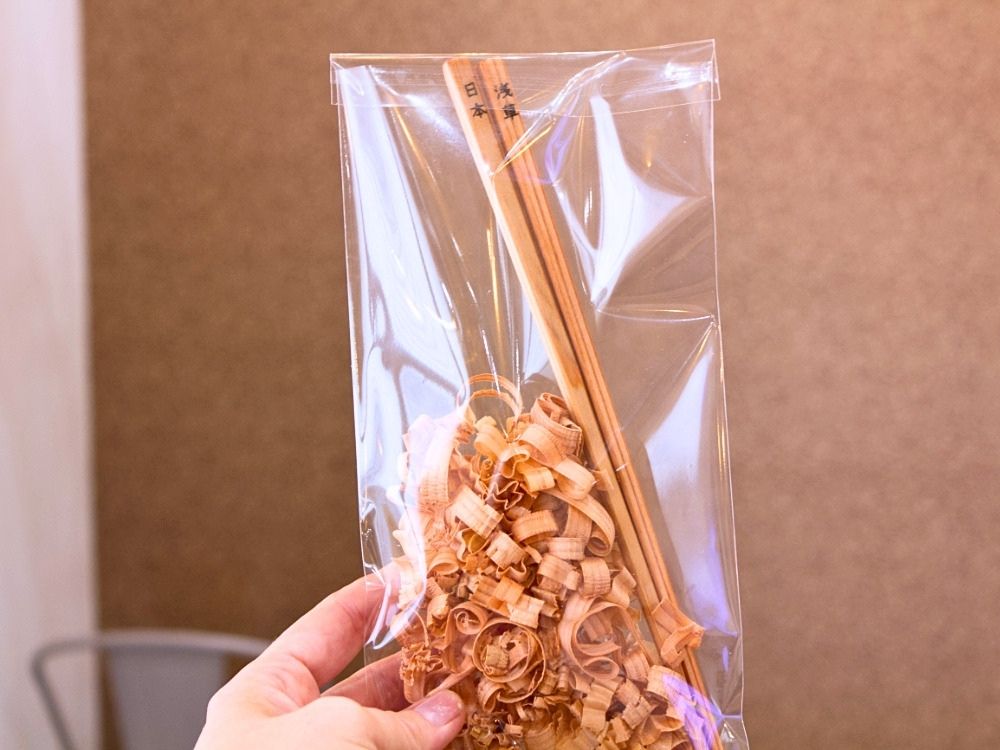
For an additional fee of ¥1,500, guests can add a personalized engraving. Many visitors choose their name, the date of their visit, or the year of their trip to Japan as a way to commemorate the experience. The pair pictured above, for example, features the Japanese kanji characters for “Japan” and “Asakusa.” Staff can also help suggest Japanese characters for names, making the final design feel even more personal.
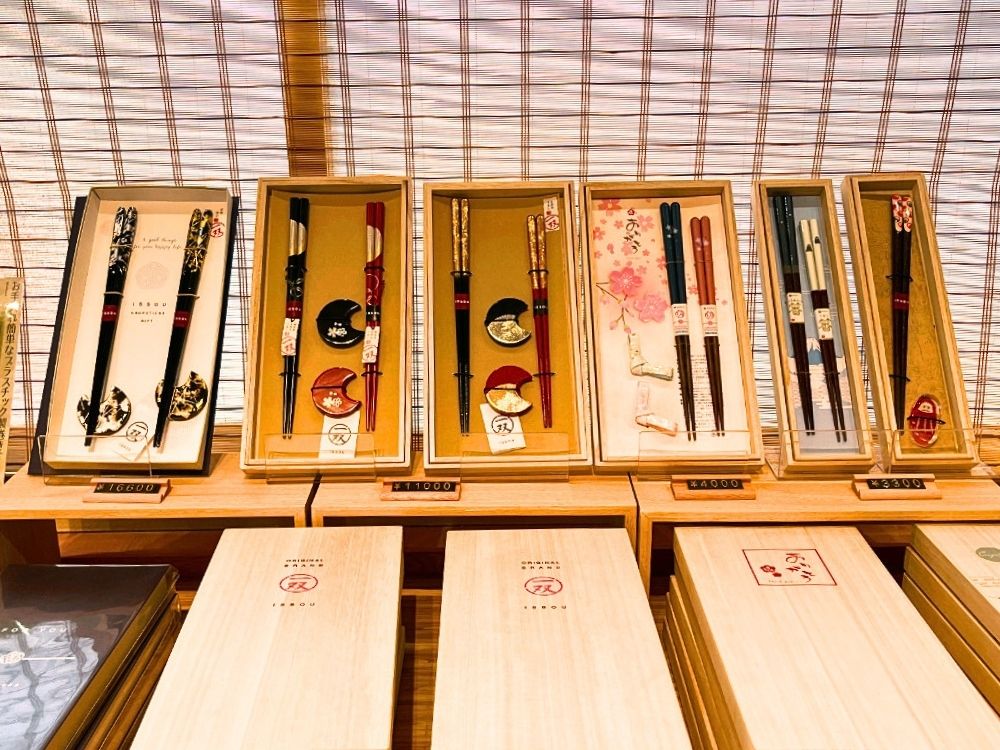
Depending on availability, wooden boxes may be available for the pair made during the workshop, turning the finished chopsticks into an even more polished souvenir or gift. The studio also sells luxury chopstick sets, including beautifully finished designs made with techniques such as lacquerware and gold leaf. For travelers who want to bring home something extra — or pick up a gift without worrying about size, weight or breakage — these sets offer a compact and elegant option.
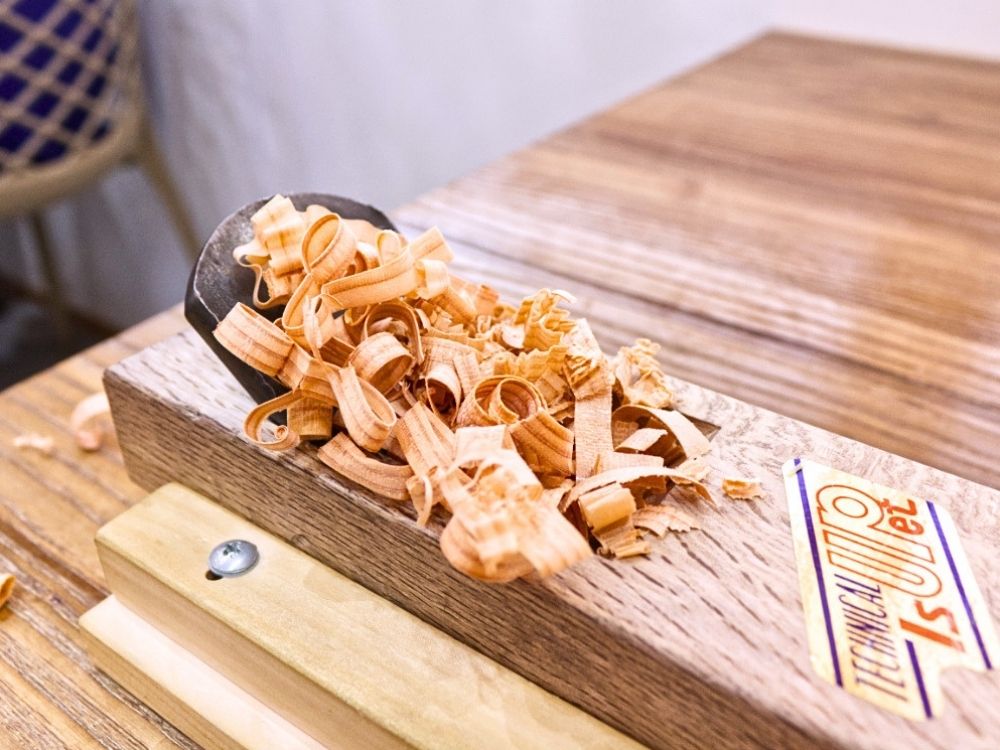
Guests can take home the wood shavings, which are especially fragrant when using woods such as hinoki or sugi. Placed in a small pouch, they can be used as a natural scent sachet for a drawer, bag or room.
How to Reserve Your Chopstick Making Tokyo Class: Price & Times
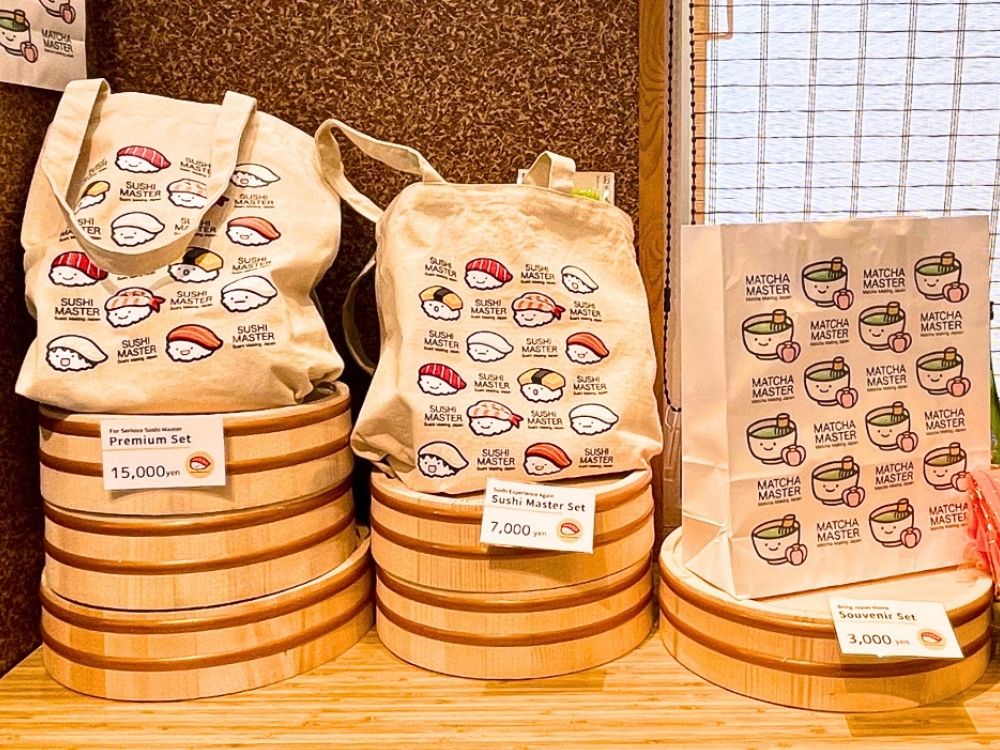
Chopstick Making Tokyo classes are held several times a day, with sessions currently listed every hour between 10:00 am and 6:00 pm. Each class takes approximately one hour.
The standard class is priced at ¥2,000 per person and includes English-speaking local staff, all materials and crafting tools, and the handmade chopsticks to take home. Premium wood upgrades, engraving and wooden boxes are available on-site for an additional fee depending on availability.
Reservations can be made through the official Chopstick Making Japan website. Same-day bookings may be possible depending on availability, though booking in advance is recommended for weekends, holidays or groups. Guests are asked to arrive five minutes before the class starts, and late arrivals of more than 15 minutes may be treated as cancellations.
How to Get to Chopstick Making Tokyo from HOTEL TAVINOS Asakusa
Chopstick Making Tokyo is located at a block directly opposite Kaminari-mon Gate. The workshop takes place on the eighth floor of the same building that houses the company’s other Japanese cultural experiences, including Sushi Making Tokyo.
From HOTEL TAVINOS Asakusa, the studio is about a 12-minute walk toward the Kaminari-mon and Asakusa Station area. It is also just a few minutes on foot from Asakusa Station, which is served by the Tokyo Metro Ginza Line, Toei Subway Toei Asakusa Line, and Tobu Skytree Line, making it easy to pair the class with a visit to Senso-ji Temple, Nakamise-dori, or the Sumida River.
The building can be slightly easy to miss at first. Look for the Relink Kaminarimon Building near the Kaminarimon area, then take the elevator up to the eighth floor for Chopstick Making Japan.
Chopstick Making Tokyo
Address: 8/F Relink Kaminarimon Building, 2-17-9 Kaminarimon, Taito-ku, Tokyo
Hours: classes are available every hour from 10:00 am to 5:00 pm
Price: ¥2,000 per person
Closed: check the official booking calendar
Access: about a 3-minute walk from Asakusa Station
Website: https://chopstickmakingjapan.com/
Writer
A curious sojourner, Lisa Wallin has lived in Japan for about 15 years, along with 7 other countries. She has an insatiable appetite for local narratives, with a focus on regional culture, crafts and food. When not chasing stories, she enjoys coffee, visiting shrines, and exploring the
country both with and without her dogs.