
Blog
[Hamamatsucho] Discover Hamamatsucho, Tokyo with Free Private Local Tours by HOTEL TAVINOS
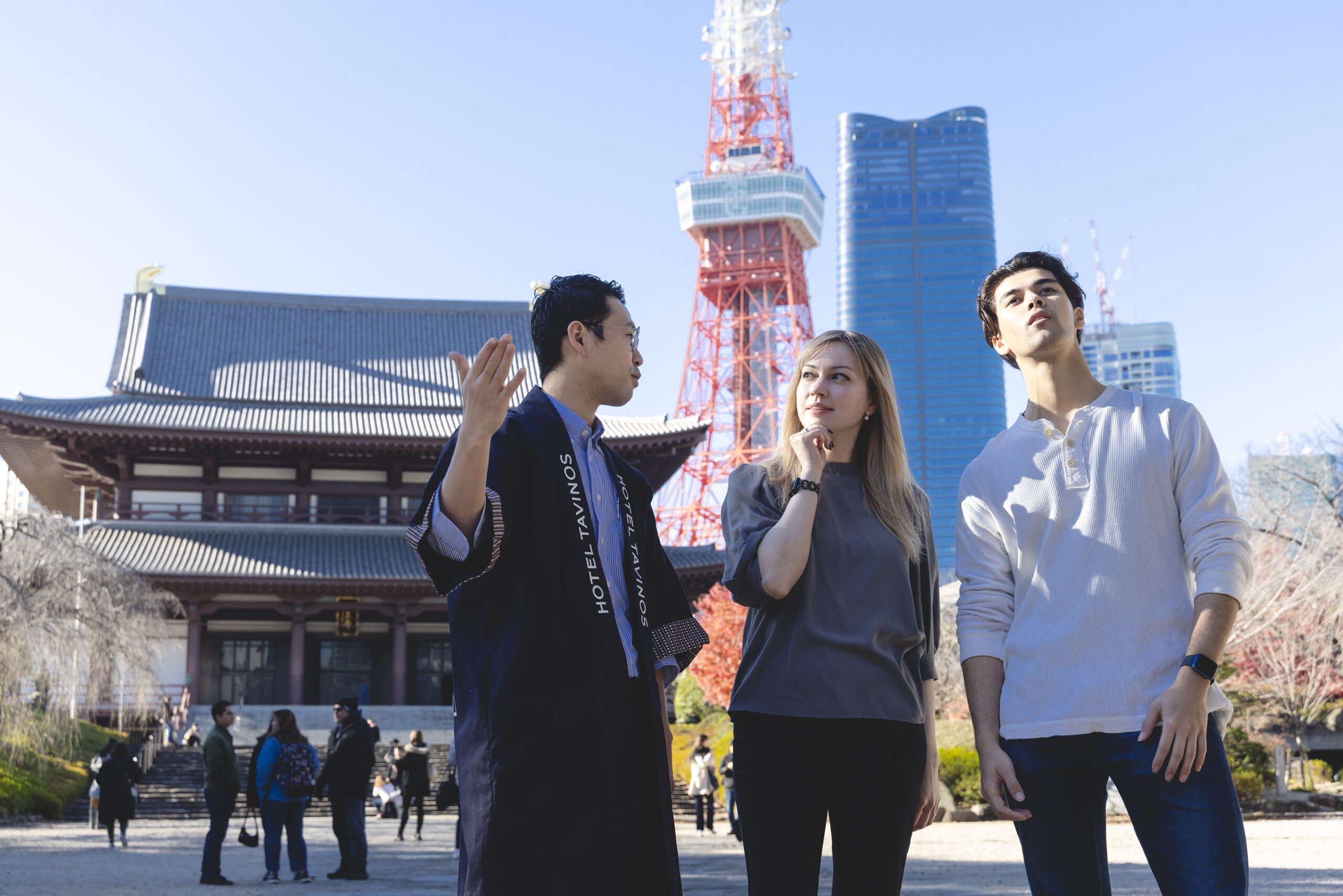
Staying in the Hamamatsucho area in Tokyo means you are perfectly located to explore the city with ease. With direct access to Haneda Airport (Tokyo International Airport) and excellent train and monorail connections, Hamamatsucho is a perfect transportation hub and a convenient base for travelers. However, that’s not all to it. Its neighborhood is also home to Tokyo Tower, one of the most recognizable Japanese landmarks, along with historic temples, peaceful gardens and parks which make it an ideal place to explore on foot.
To help our guests experience it firsthand, every Saturday, HOTEL TAVINOS Hamamatsucho offers free Local Tours , exclusively for those staying with us. It is a relaxing walking activity that focuses on exploring the area’s charm and its power spots. Designed by our hotel, these Local Tours are led by our own attenders and move at an easy pace, with plenty of time to explore and take photos without feeling rushed.
Content
What are Power Spots? Spiritual and Sacred Places in Japanese Culture
Whether you are a first-time traveler to Japan or an experienced visitor, you have probably heard of the term “power spot” (pawa supotto). These places are believed to have special energy that can bring good luck, spiritual cleansing, and even help with healing. While it may sound too mysterious at first, it is actually an essential part of Japanese culture that many people engage with regularly.
While the term “power spot” itself is a wasei-eigo (Japanese expressions that borrow English words, but don’t really exit in standard English), the custom of visiting places with high spiritual energy has existed since the Edo period (1603-1868). Just like now, people in the past visited spiritually significant places to recharge, relax, or simply enjoy a peaceful moment at an ancient temple, shrine, or in nature.
In Japan, it’s quite common to see power spots’ rankings or recommendations in travel guides and magazines. They are often considered as must-visit places for locals and visitors.
Some of the most famous power spots in Japan include iconic Mount Fuji, Fushimi Inari Taisha Shrine in Kyoto, Meiji Jingu Shrine in Tokyo, and Todai-ji Temple in Nara.
In heavily urbanized areas like Hamamatsucho, power spots often hide among high-rise buildings and busy traffic, reminding their visitors that spiritual and daily life in Japan are deeply connected and often exist side by side.
Shrines & Temples in Hamamatsucho, Tokyo: Highlights from Our Local Tours
Now that you know what power spots are and why they play such an important role in Japanese culture, let us introduce you to three popular shrines and temples we focus on during our weekly Local Tours on Saturdays: Zojoji Temple, Atago Jinja Shrine and Shiba Daijingu Shrine. All of them are located in a walkable distance from our hotel, right in the neighborhood of Hamamatsucho.
Zojoji Temple
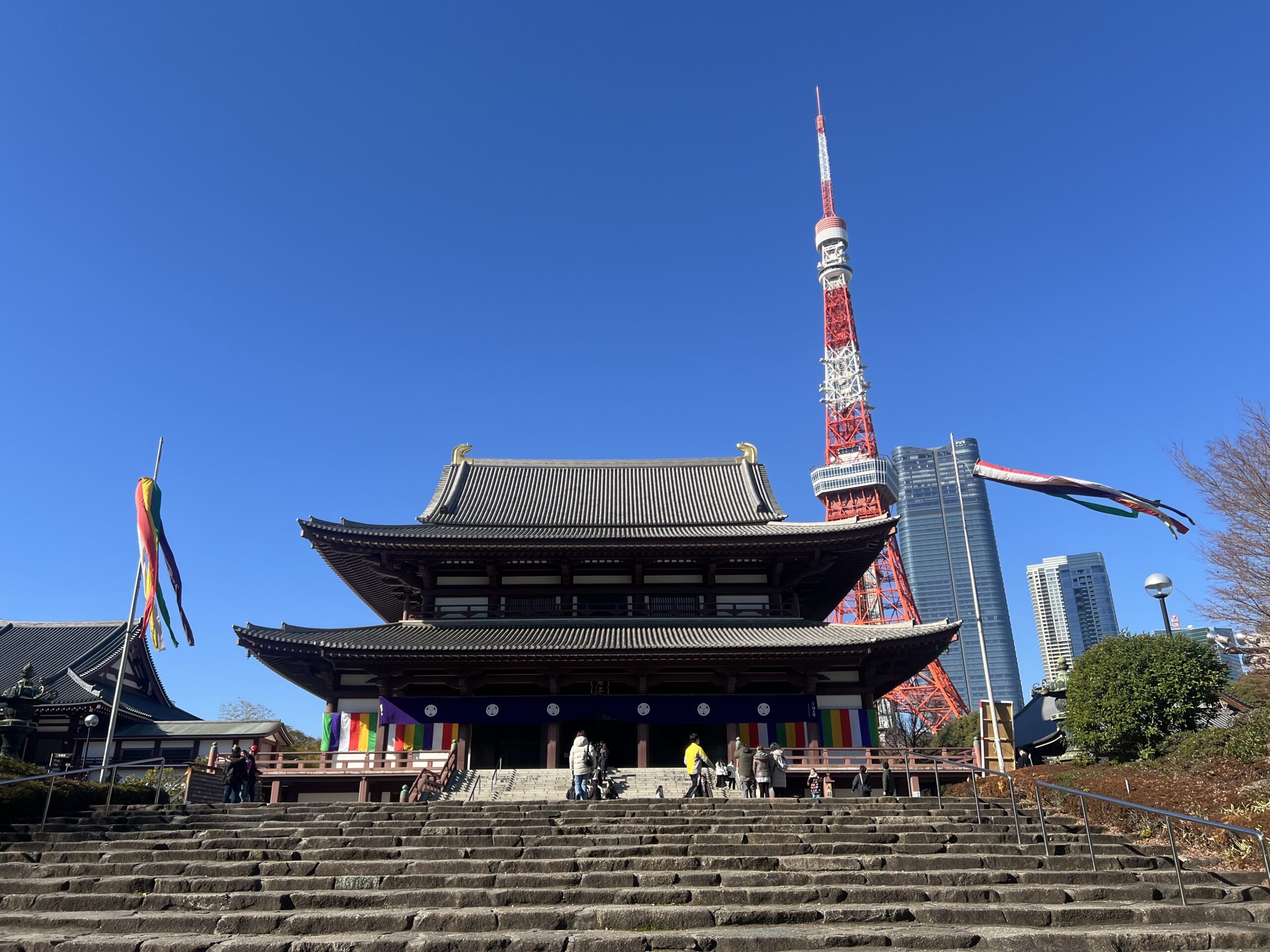
One of the biggest highlights of our tour is Zojoji Temple. Founded in 1393, it is the main temple of the Jodo (Pure Land) Buddhist sect in the Kanto region. It also serves as the burial ground for many shoguns of the Tokugawa family that ruled Japan during the Edo period.
Nowadays, Zojoji Temple serves both as place of worship and a must-see cultural landmark in Tokyo, as it offers a striking contrast between traditional temple grounds and the modern Tokyo Tower rising in the background.
A Cultural Insight📝
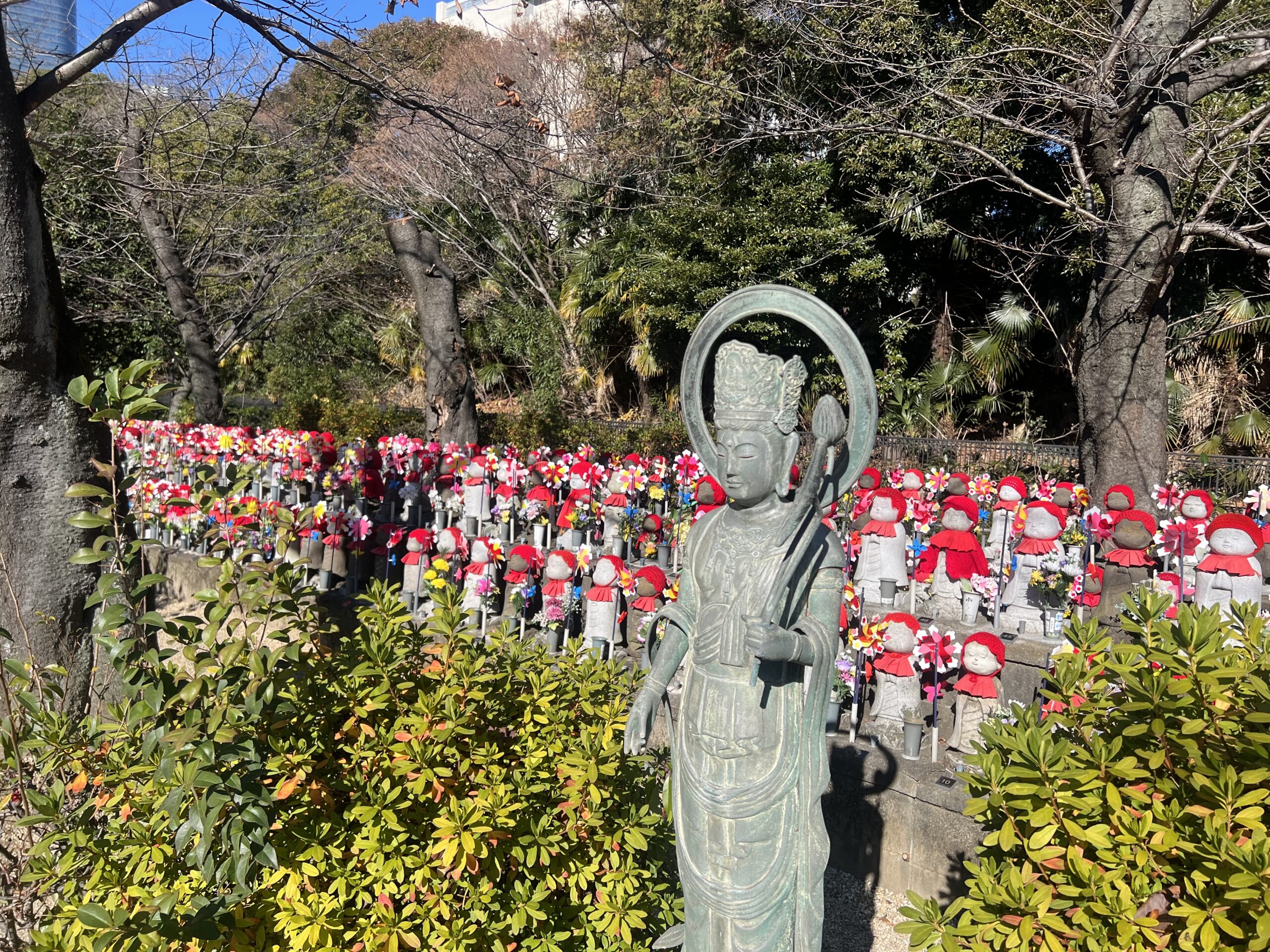
On the temple grounds you can notice rows and rows of small stone statues adorned with red hats or children’s clothes. These are statues of Jizo, a bodhisattva that is believed to be the guardian of children, particularly those that were unborn or have passed away, and can be often found in temples, along roads, or in cemeteries.
Atago Jinja Shrine
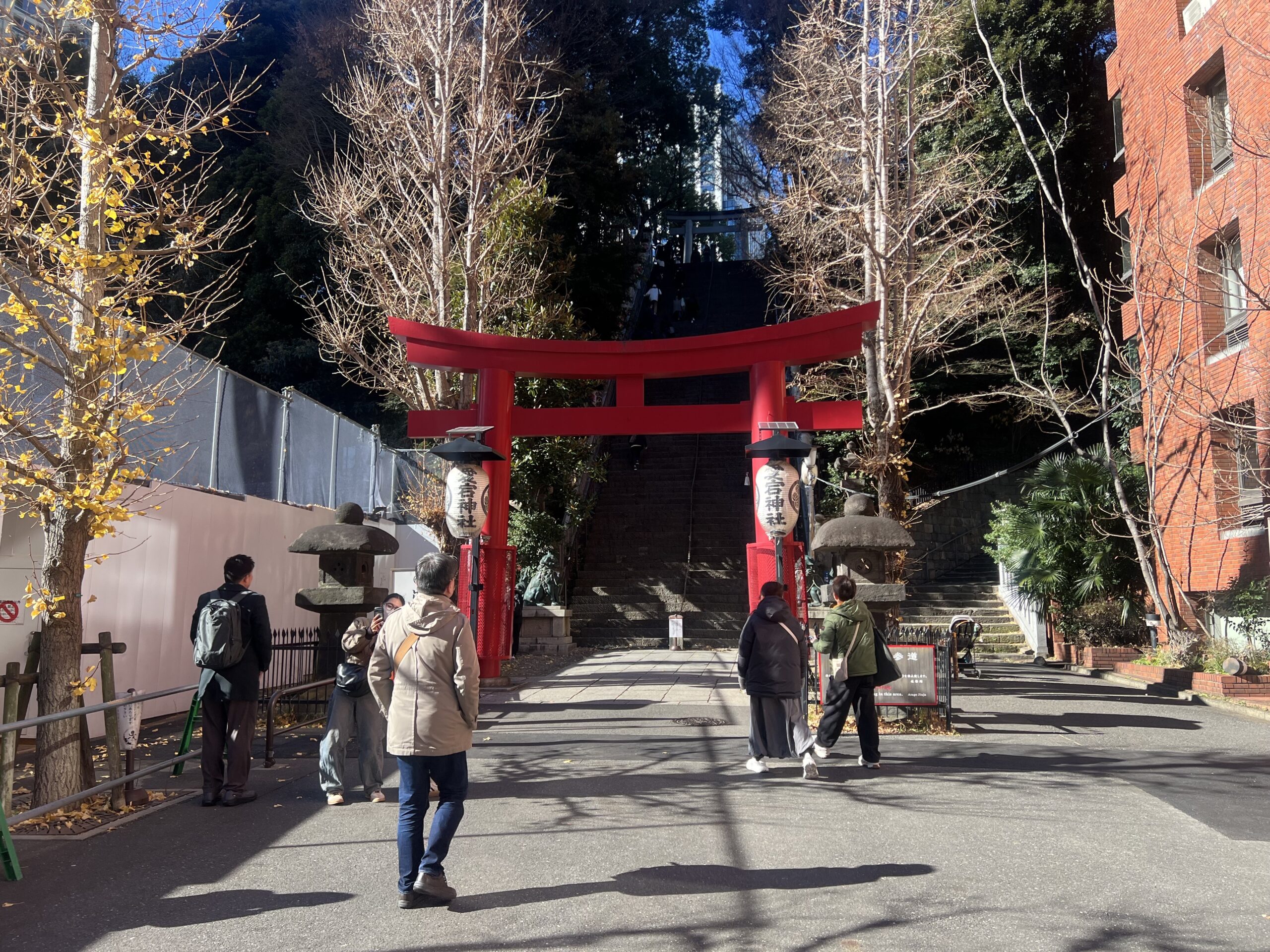
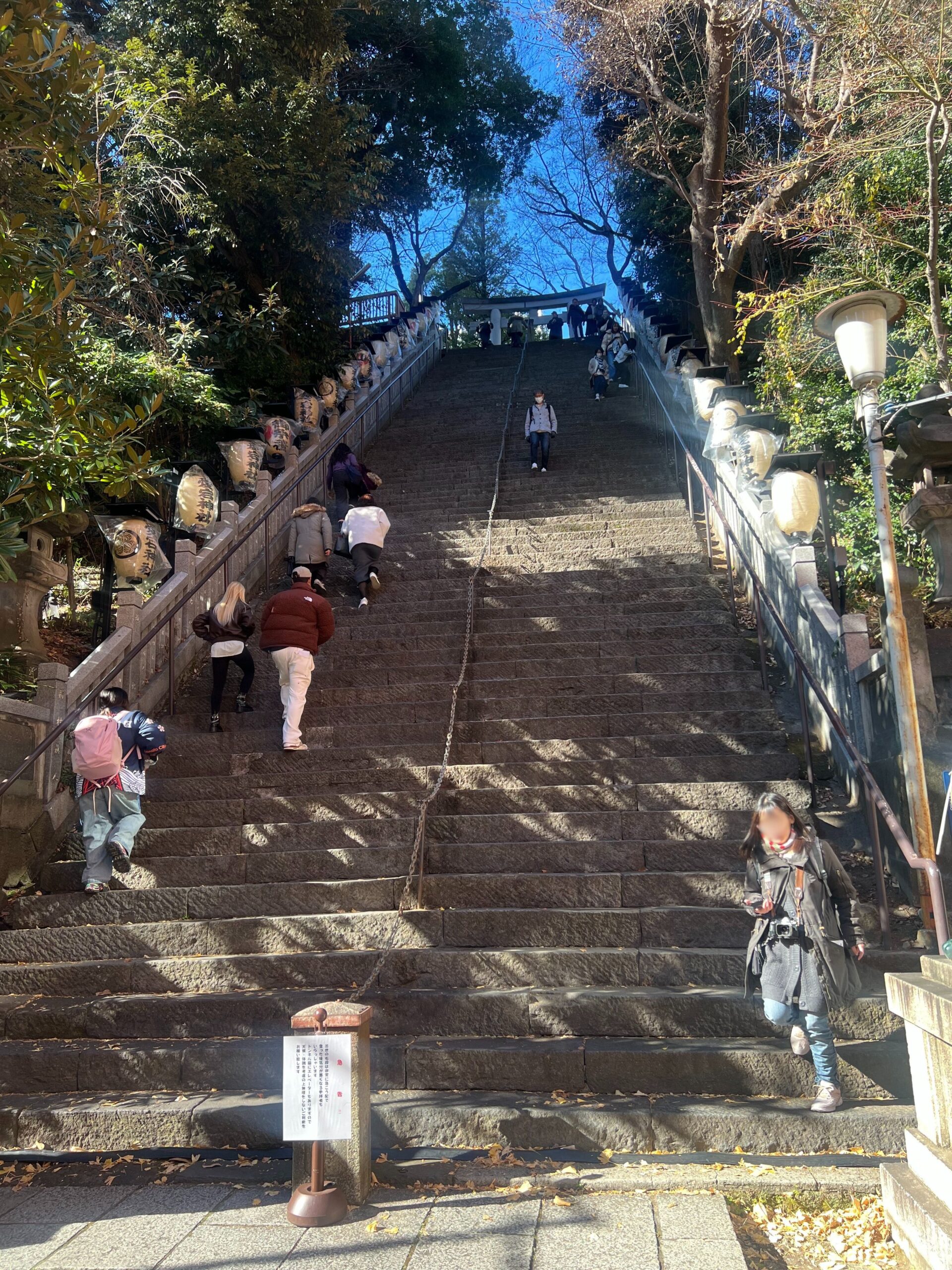
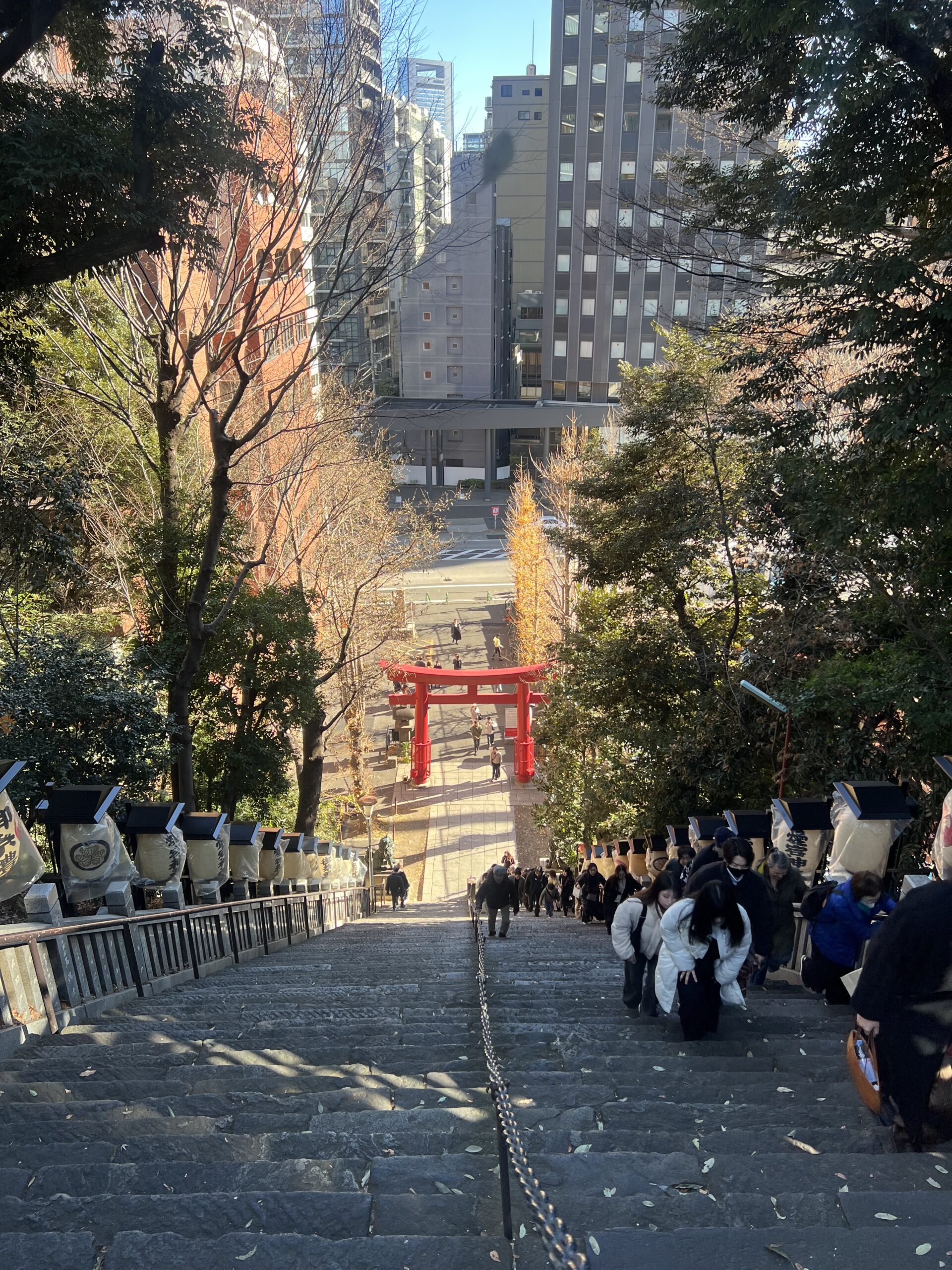
Continuing on, we make our way to Atago Jinja Shrine. Located on a hill, 26 meters above sea level, this shrine was built in 1603 under the order of Tokugawa shogunate founder, Tokugawa Ieyasu, to protect Edo (modern Tokyo) from fires. Located on the highest natural point in Tokyo’s 23 wards, in the past, this shrine offered a striking view of the city below.
In modern times, tucked between towering buildings, Atago Jinja Shrine feels like a peaceful oasis in the heart of the city. Stepping through the torii gate and reaching the shrine requires climbing its famous steep staircase, known as Stone Steps of Success. Locals believe that overcoming this challenge will bring good fortune and success in one’s life, making Atago Jinja Shrine a popular destination for tourists and locals alike.
Useful Tip💡
An elevator is also available for visitors who prefer not to use the stairs.
Shiba Daijingu Shrine
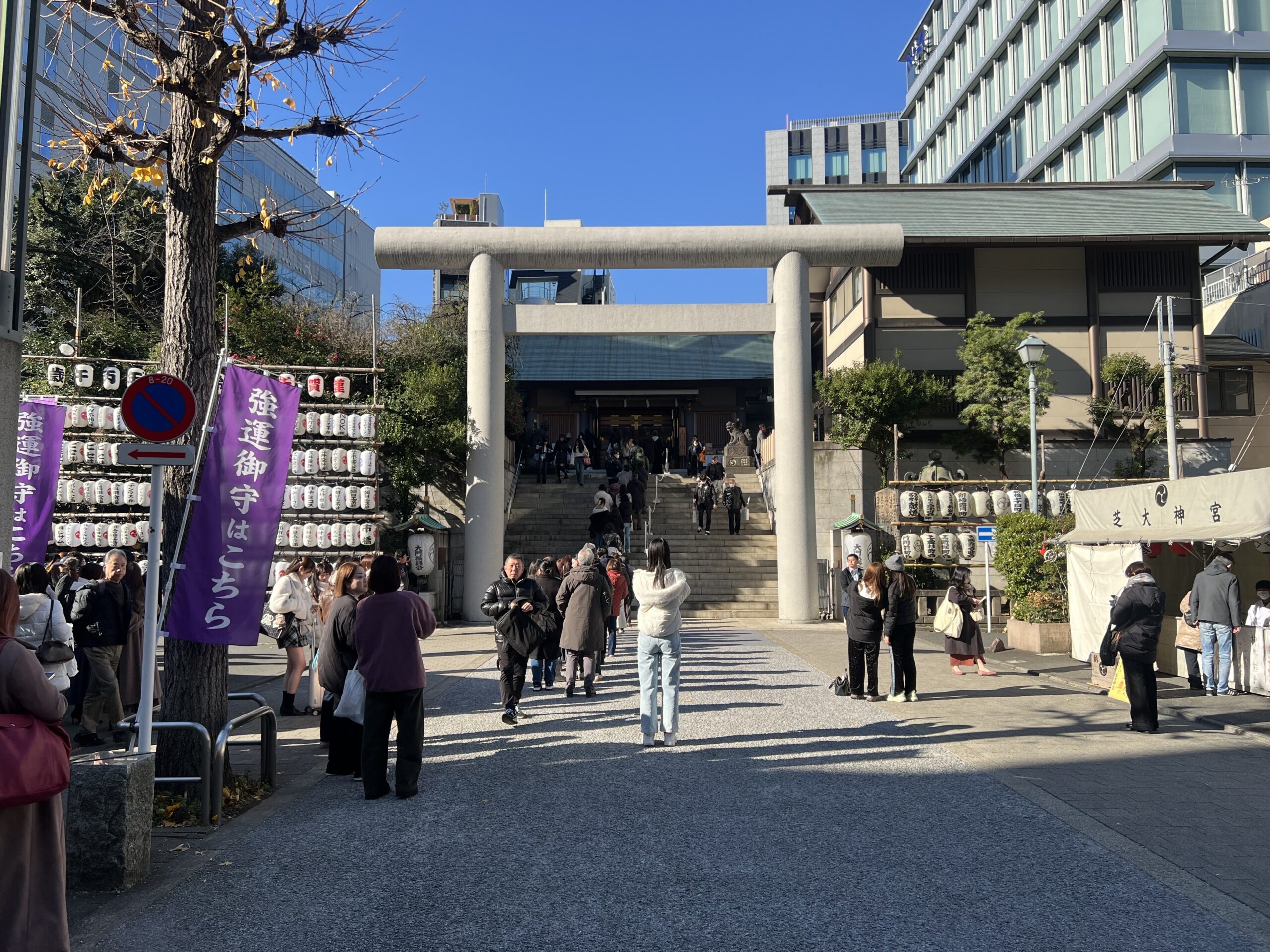
Another stop on the tour is Shiba Daijingu Shrine. It is one of the most ancient shrines in Tokyo, with more than 1,000 years of history. The deities enshrined here are the same deities enshrined in the famous Ise Jingu (Ise Grand Shrine) in Mie Prefecture: Amaterasu no Omikami, the Sun Goddess and highest deity in Japanese mythology, and Toyouke no Omikami, the deity of food and grain. Because of this, Shiba Daijingu Shrine is sometimes referred to as “Ise of Kanto.”
Known as a powerful spiritual site, Shiba Daijingu Shrine is believed to protect from evil and bring good luck and blessings in love. It is a popular choice for weddings and hatsumode , a long-standing Japanese tradition of visiting Shinto shrines or Buddhist temples during the New Year’s holidays.
What is the Difference Between a Shrine and a Temple?
Although shrines and temples can seem alike at first glance, they are actually two different types of places of worship with separate belief systems.
Shrines are the places where deities or spiritual beings are worshipped. They are associated with Shinto, an indigenous religion in Japan, and usually have torii gates at their entrances that serve as a boundary line between sacred grounds and the secular world. The central path of a torii gate is believed to be used by deities, so it is customary to leave it unobstructed and enter and exit slightly to the left or right of the gate.
Temples are places of worship for followers of Buddhism, which was introduced to Japan in the 6th century through Korea. They typically have images of Buddhas and other enlightened beings. Unlike shrines, temples do not have torii gates.
Many temples have incense burners, where visitors can put purchased incense sticks. The rising smoke is believed to have healing properties, and it is customary to fan the smoke toward parts of the body for purification or healing.
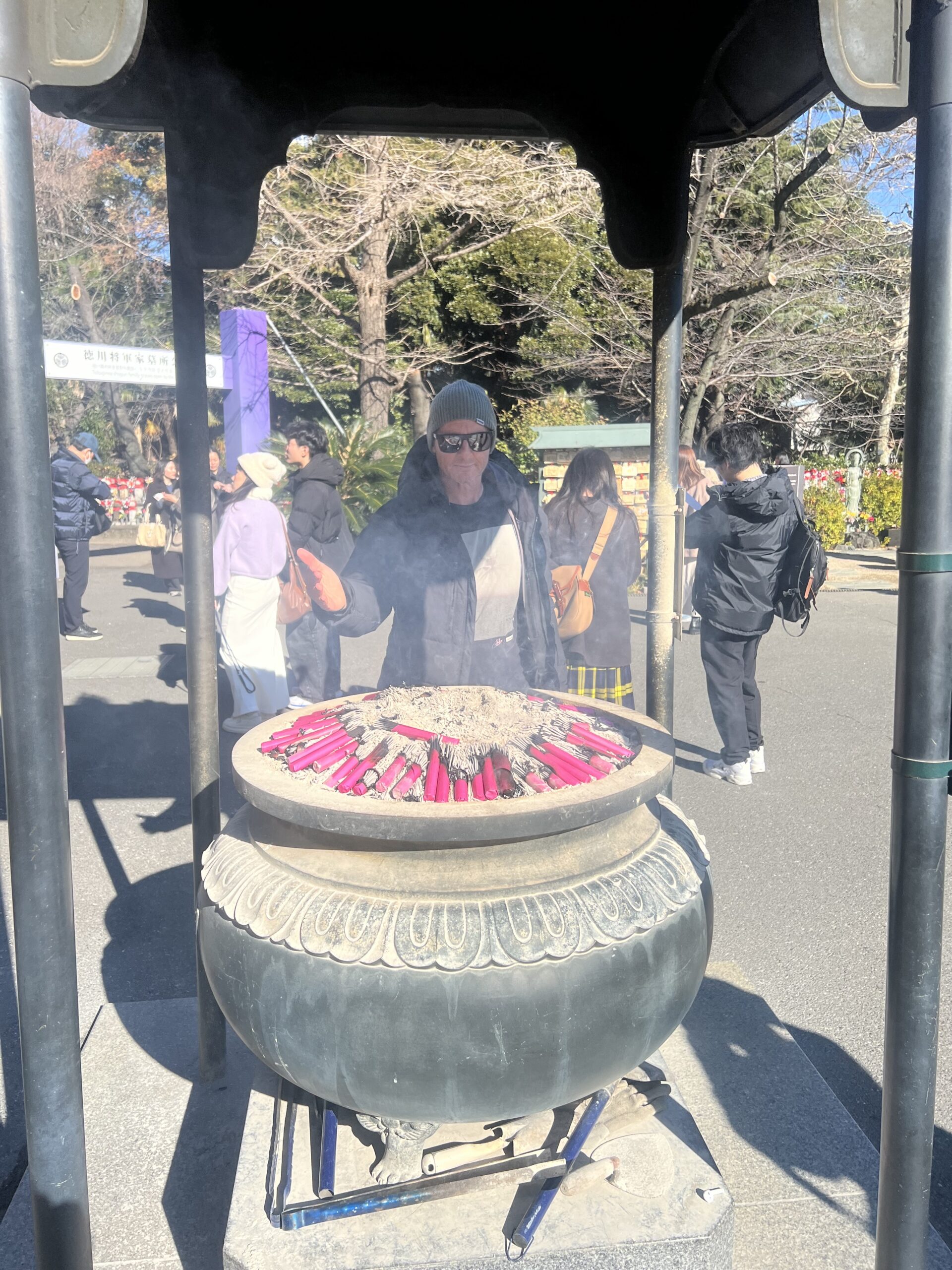
Prayers also differ between shrines and temples. At shrines, prayers are usually offered after bowing and clapping to get the deity’s attention and show your respect before making a request or expressing gratitude. In temples, prayers tend to be quieter and more contemplative. Hands are usually brought together in front of the chest silently, without clapping, emphasizing inner reflection and focus.
Experiencing Shrines & Temples in Tokyo with HOTEL TAVINOS Hamamatsucho
Power spots are not only places to visit; they are places to contemplate and feel. Temples and shrines offer their own atmosphere and rituals, and experiencing them side by side can be an interesting way to understand how spirituality and beliefs coexist with everyday life in Japan.
Held in both English and Japanese, our weekly Local Tours on Saturdays guide our guests through places significant to locals and offer a glimpse into the culture and traditions of the Hamamatsucho area.
Writer
D.M.
Member of the HOTEL TAVINOS team, sharing local insights and stories to help guests explore and enjoy the area.