
Blog
8 Best Things to Do in Arashiyama, Kyoto: Bamboo Grove, Temples and More
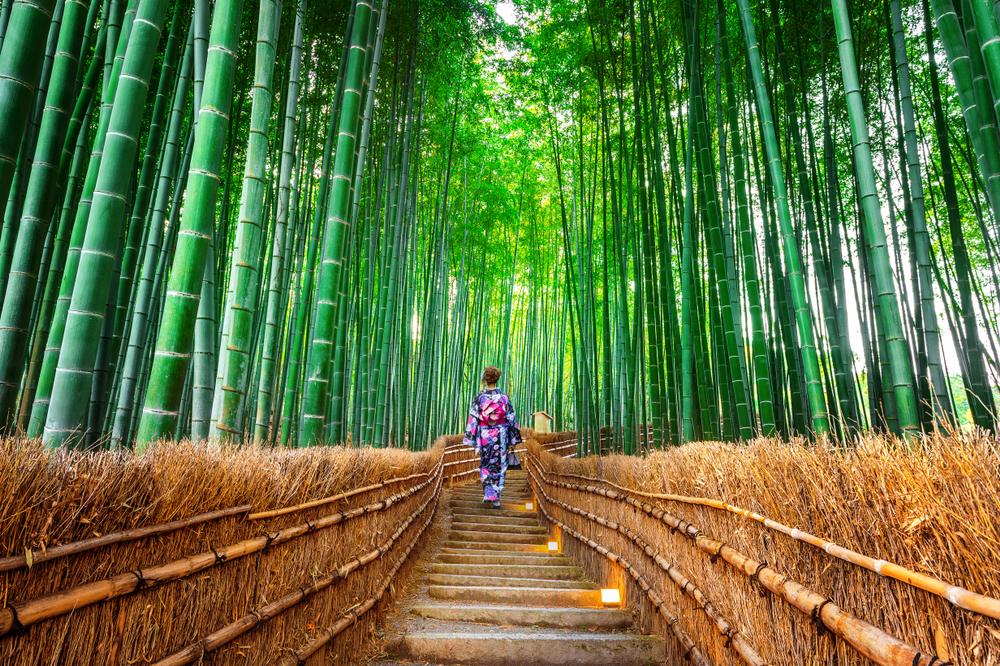
Set against the forested hills of western Kyoto, Arashiyama is one of the city’s most rewarding sightseeing districts. The Arashiyama Bamboo Grove (or Arashiyama Bamboo Forest) may be its best-known landmark, but the area also brings together historic shrines and temples, Zen gardens, a mountainside monkey park, a scenic railway, and a traditional river journey. This guide covers eight of the best things to do in Arashiyama, with practical advice on timing, transport, crowd avoidance, and planning a half-day or full-day visit.
Content
Where Is Arashiyama in Kyoto, and What Is It Known For?
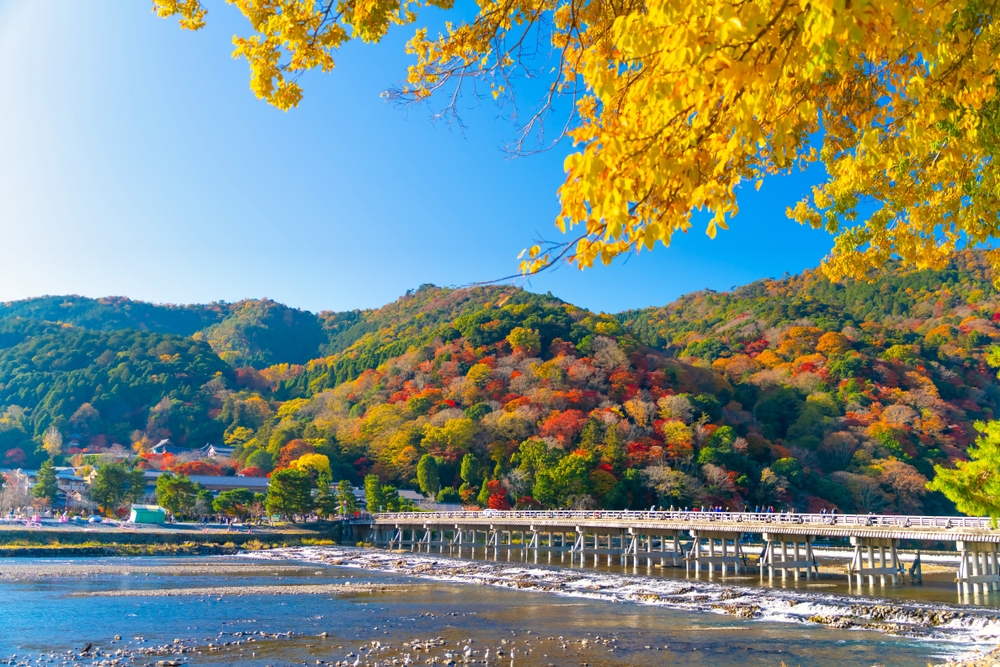
Arashiyama lies in western Kyoto City, around 20 to 30 minutes by train from central districts, depending on your starting point and service. The main sightseeing area is framed by wooded mountains and the Katsura River, with the Arashiyama Bamboo Grove, Tenryu-ji Temple, Togetsu-kyo Bridge, and Arashiyama Monkey Park all within the wider Arashiyama district.
Seasonal change is central to Arashiyama’s appeal. Cherry blossoms soften the riverbanks in spring, fresh greenery fills the hills in early summer, autumn colors spread across the mountains, and winter brings a quieter, more open landscape. The bamboo remains green throughout the year, but the light and weather can make each visit feel different.
That said, nature is only part of the experience. The Sagano Romantic Train follows the Hozukyo Gorge between Saga and Kameoka, while the Hozugawa River Boat Ride returns downstream through the gorge. Together with the temples, gardens, and walking routes around the river, these experiences make Arashiyama suitable for either a focused half-day visit or a full-day excursion.
8 Must-Visit Places in Arashiyama, Kyoto
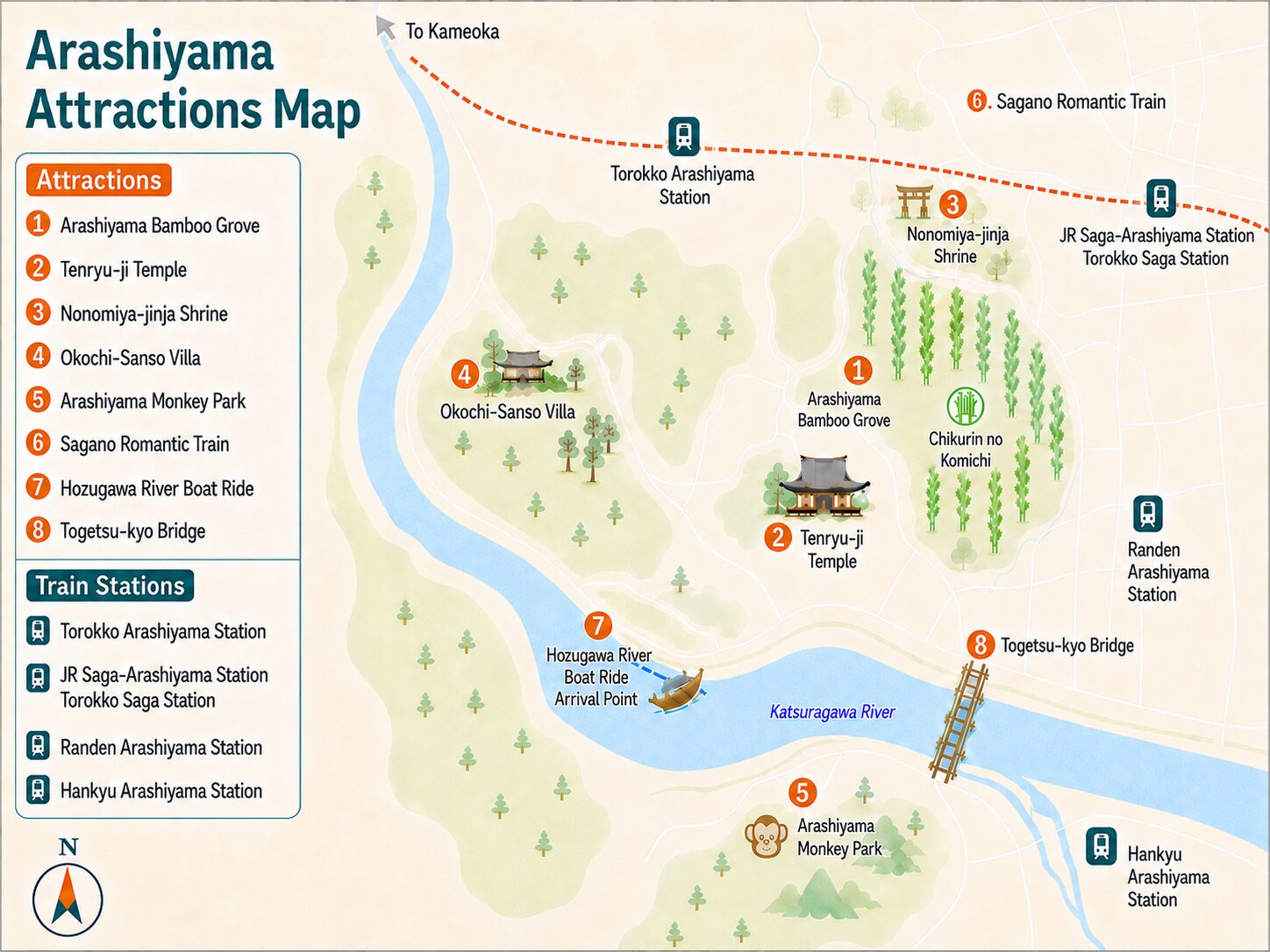
*Map not to actual scale
The eight spots below cover Arashiyama’s best-known landmarks. Most are close enough to each other, while the Sagano Romantic Train and Hozugawa River Boat Ride extend out toward the Kameoka area, both of which require a bit more time and advance planning.
- Arashiyama Bamboo Grove (Arashiyama Bamboo Forest)
- Tenryu-ji Temple
- Nonomiya-jinja Shrine
- Okochi-Sanso Villa (Okochi-Sanso Garden)
- Arashiyama Monkey Park
- Sagano Romantic Train
- Hozugawa River Boat Ride (Hozugawa Kudari)
- Togetsu-kyo Bridge
1. Arashiyama Bamboo Grove (Arashiyama Bamboo Forest)
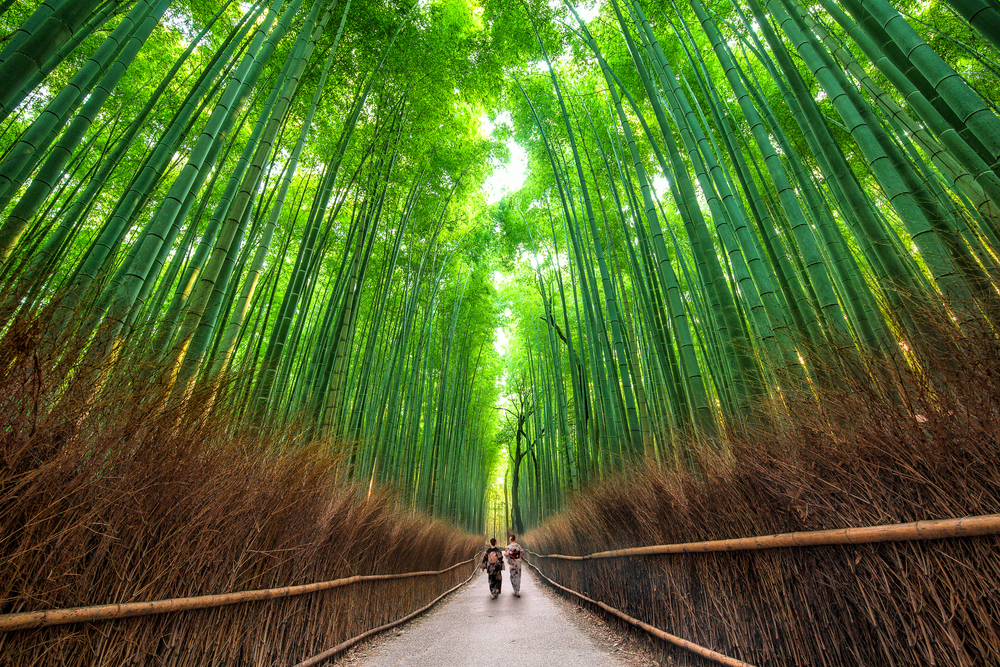
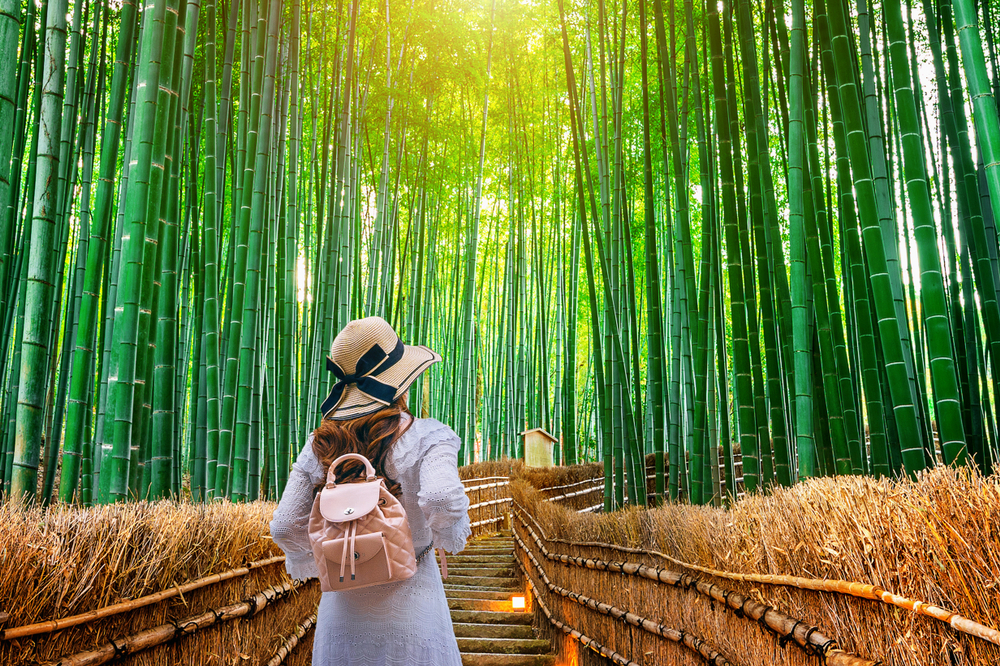
The Arashiyama Bamboo Grove ranks among Kyoto’s most recognizable sights, with towering bamboo lining the paths through the Sagano area.
The grove is best explored via two well-known walking routes. The first, Chikurin no Komichi — literally the “Path of Bamboo” — is an approximately 400-meter path that serves as the main and most popular route, running from the area around Nonomiya Shrine toward Tenryu-ji Temple and Okochi Sanso Garden. Towering bamboo stalks line both sides of the path, forming an emerald corridor that shifts in atmosphere as sunlight filters through the canopy above.
The second, Chikurin no Sansakuro, or the “Bamboo Forest Trail,” is a separate city-managed walking trail north of Nonomiya Shrine. Unlike the Chikurin no Komichi, this trail is generally open from 9:00 am to 5:00 pm and may close without notice for management reasons. The main path is relatively short, while the secondary trail offers a more relaxed pace for visitors who want to linger a little longer. With walking tours, rickshaw rides, and kimono rentals available nearby, building a full day around the grove and its surroundings is easy.
⏰Plan to spend: 1 hour
What Is the Best Time to Visit the Arashiyama Bamboo Grove?
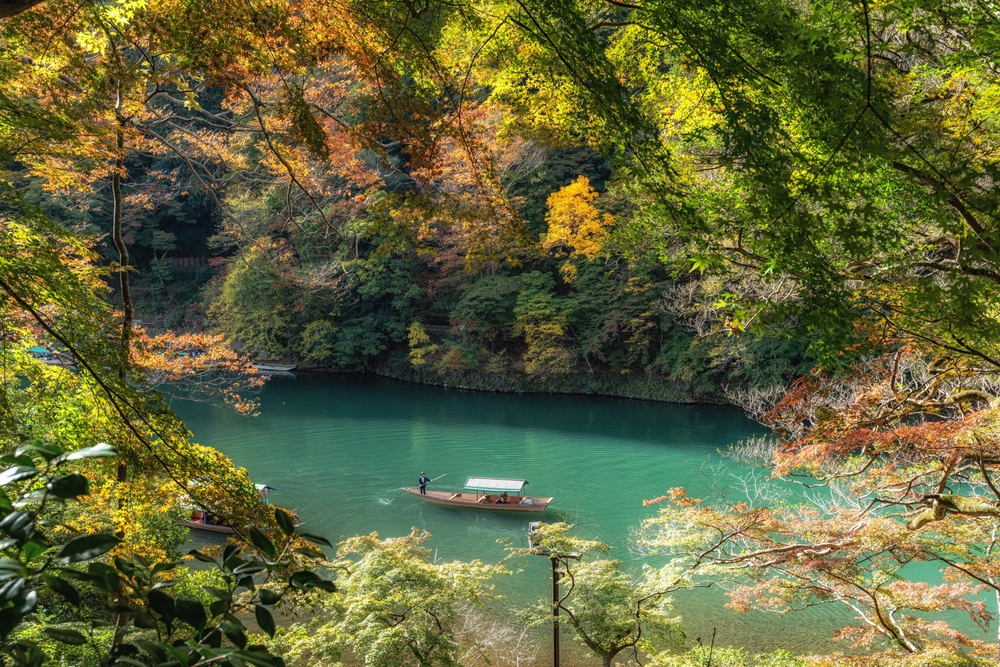
Arashiyama Bamboo Grove tends to get busy during the daytime, even on weekdays, and crowds peak noticeably during public holidays, cherry blossom season, and autumn foliage season. Arriving before 7 am is one of the best ways to beat the rush or take crowd-free photos, and it’s a practical choice for those hoping to cover several attractions in a single day.
The main Chikurin no Komichi is a public path and can be accessed at any hour. Late afternoon can be another option when the area tends to quiet down from the midday peak, though nearby temples, gardens, and the separate Chikurin no Sansakuro trail may be approaching or past their closing times.
Visiting after dark is not recommended unless a seasonal illumination event is taking place, as most paths are unlit at night.
How Long Does It Take to Walk Through the Arashiyama Bamboo Grove?
Walking the main bamboo path takes around 20 to 30 minutes, depending on crowds and photo stops. However, budget one to two hours, or even half a day if the plan includes nearby stops such as Tenryu-ji Temple, Nonomiya-jinja Shrine, or Arashiyama Monkey Park.
Keep in mind that crowds during peak seasons can noticeably slow the pace.
2. Tenryu-ji Temple
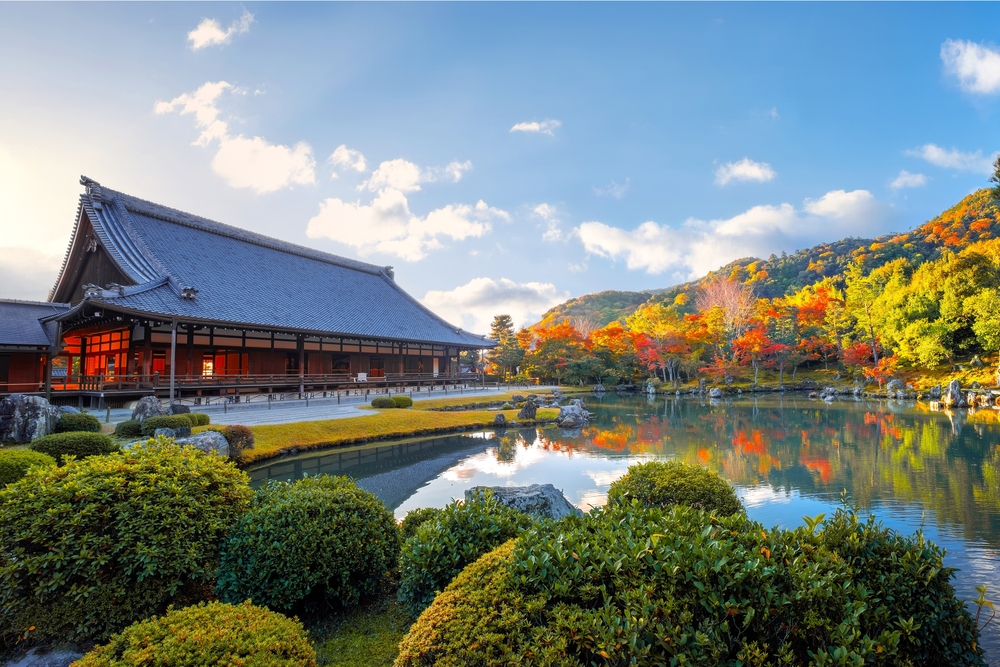
Tenryu-ji Temple is Arashiyama’s leading Zen temple and a designated UNESCO World Heritage Site, offering a natural complement to the nearby bamboo grove with its traditional architecture, landscaped gardens, and mountain scenery.
The main highlight is Sogenchi Teien (Sogen Pond Garden), a 14th-century garden that incorporates the nearby Arashiyama hills through the technique of borrowed scenery. The pond, rock arrangements, maples, and mountain backdrop create a composition that changes subtly across the seasons.
Because an exit from the temple grounds leads toward the bamboo grove, the two sites are easy to visit in sequence. Allow about 45 to 60 minutes for the garden and temple buildings. Shigetsu, the temple’s vegetarian restaurant, serves shojin ryori, traditional Zen Buddhist vegetarian cuisine. Availability and reservation requirements should be checked in advance.
⏰Plan to spend: 1 hour
Tenryu-ji Temple
Address: 68 Susukinobaba-cho, Saga-Tenryuji, Ukyo-ku, Kyoto-shi
Hours: 8:30 am – 5:00 pm
Website: https://www.tenryuji.com/en/
3. Nonomiya-jinja Shrine
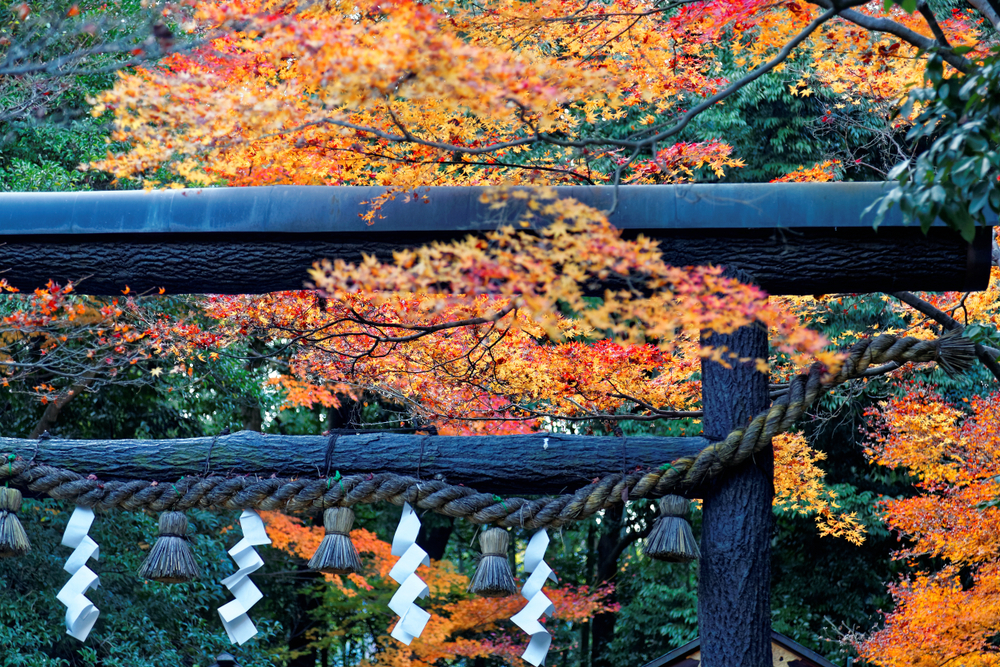
Nonomiya-jinja Shrine is another cultural stop worth adding to an Arashiyama itinerary. One of its most distinctive features is the kuroki no torii, a black gate made from unbarked timber, paired with brushwood fencing that gives the compact grounds an older, more secluded feel. The shrine is especially popular among visitors who come to pray for good relationships, marriage, and family wellbeing.
Located just north of the bamboo grove, it is an easy stop between the main path and the routes toward Okochi Sanso Garden.
⏰ Plan to spend: 15 – 30 minutes
Nonomiya-jinja Shrine
Address: Sagano Miyamachi 1, Ukyo-ku, Kyoto-shi
Hours: 9:00 am – 5:00 pm
Website: https://nonomiya.com/eng.html
4. Okochi Sanso Villa (Okochi-Sanso Garden)
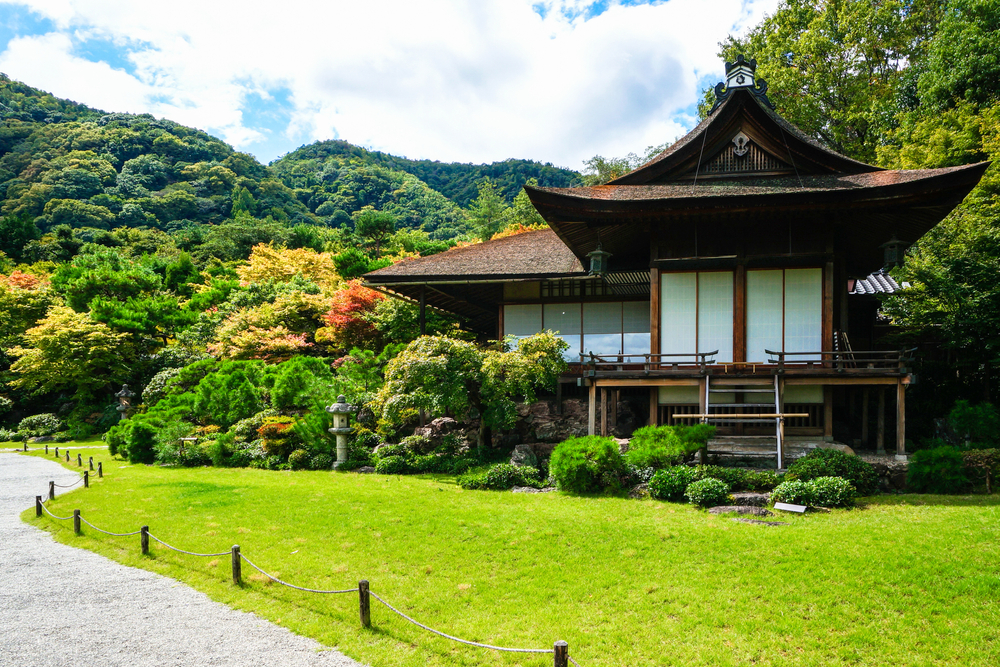
Okochi Sanso Villa sits at the upper end of the Arashiyama Bamboo Grove on the slopes of Mount Ogura. It was created as the private retreat of Denjiro Okochi, a major Japanese film actor of the Showa period, and is now open to visitors as a landscaped garden and architectural site.
A circular walking route passes through carefully planted gardens and viewpoints overlooking Kyoto and Hozukyo Gorge. The grounds include traditional buildings and carefully framed viewpoints, while the changing elevation creates a quieter, more spacious experience.
Adult admission is ¥1,000 and includes matcha green tea and a Japanese sweet. Since the grounds require paid admission and sit just beyond the main public path, they often feel calmer than central Arashiyama.
⏰ Plan to spend: 45 minutes – 1 hour
Okochi Sanso Villa
Address: 8 Saga Ogurayama Tabuchiyama-cho, Ukyo-ku, Kyoto-shi
Hours: 9:00 am – 5:00 pm
5. Arashiyama Monkey Park
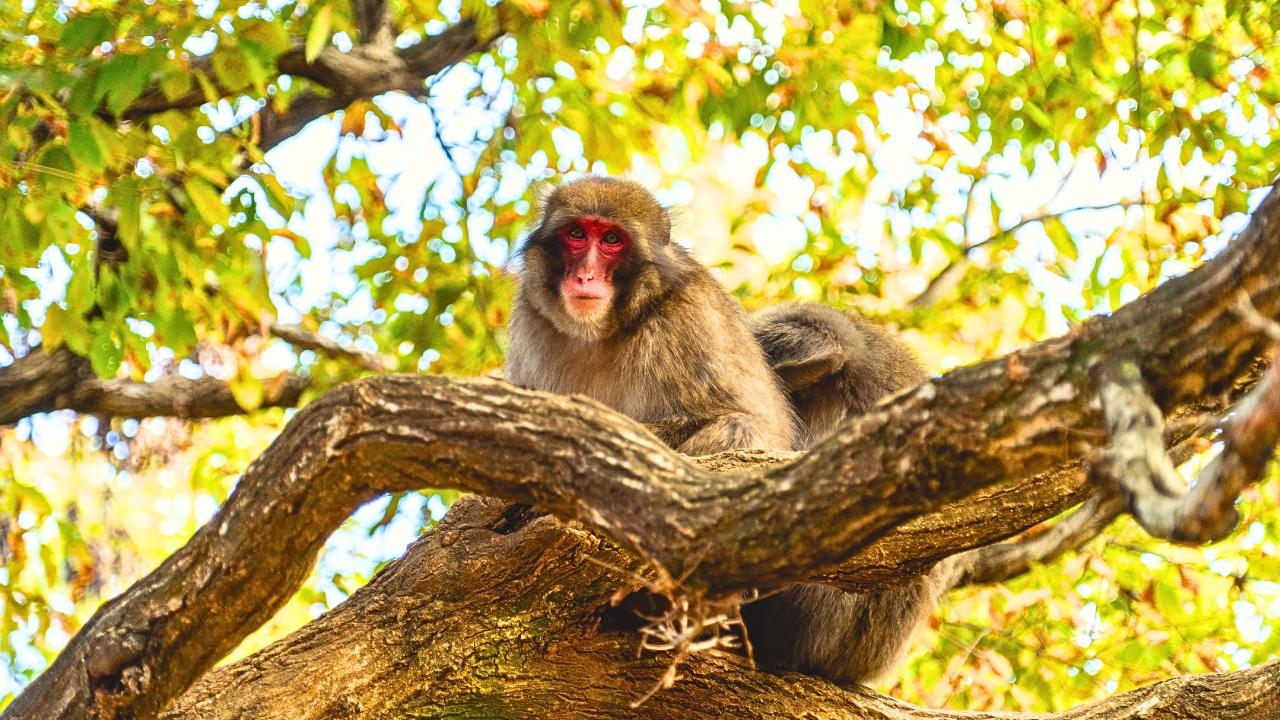
Arashiyama Monkey Park offers the chance to observe wild Japanese macaques on a forested mountainside, with broad views across Kyoto from the observation area.
At the summit, around 120 monkeys move freely through an open area rather than being confined to cages. Visitors can expect to see them lounging on the ground, perching in trees, chasing each other, or grooming their companions, offering an up-close look at the social dynamics and natural hierarchy of a wild troop. Accustomed to human presence, the monkeys will often wander right across the path, creating an intimate wildlife encounter that feels nothing like a zoo.
The entrance sits near the southern end of Togetsu-kyo Bridge, where a forested uphill trail leads to the observation area at the summit. The climb is manageable for most visitors, though comfortable shoes are strongly recommended — especially after rain or during the hotter months.
⏰Plan to spend: 1 – 2 hours
Arashiyama Monkey Park
Address: 61 Nakao Shita-cho, Arashiyama, Nishikyo-ku, Kyoto-shi
Hours: 9:00 am – 4:00 pm
Website: http://www.monkeypark.jp/eng-index.html
Instagram: https://www.instagram.com/arashiyama_monkeypark/
6. Sagano Romantic Train
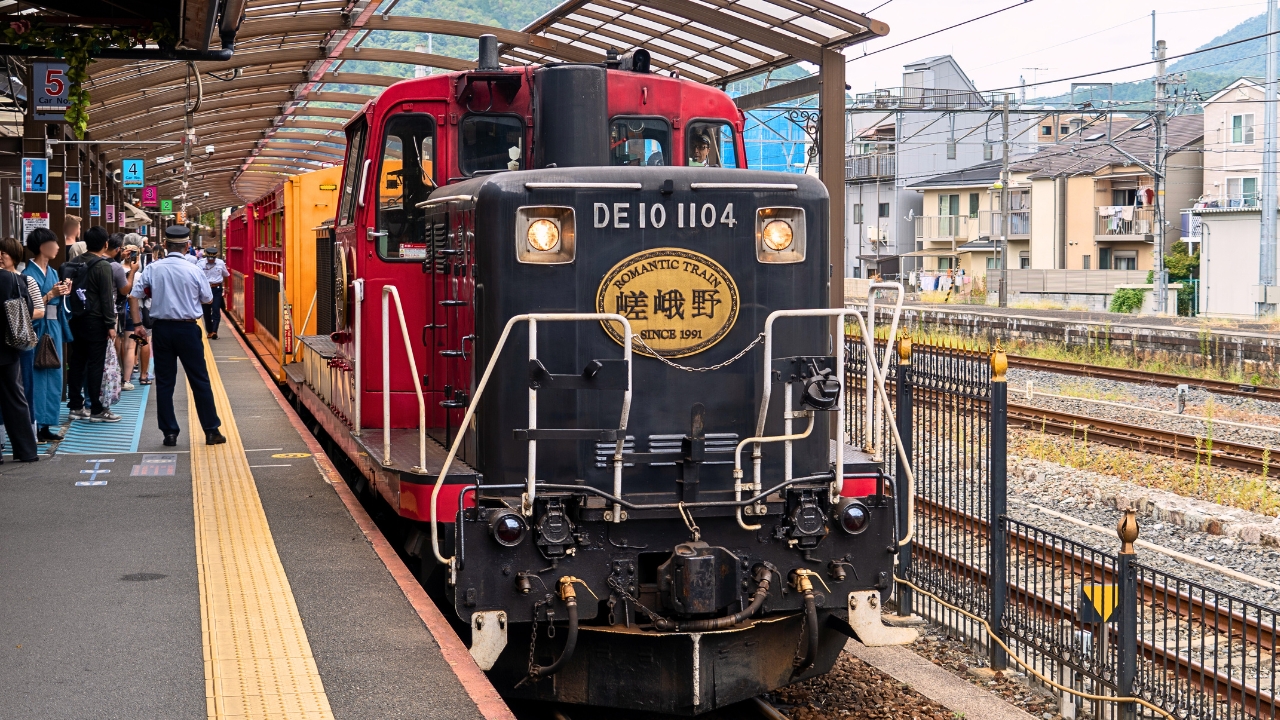
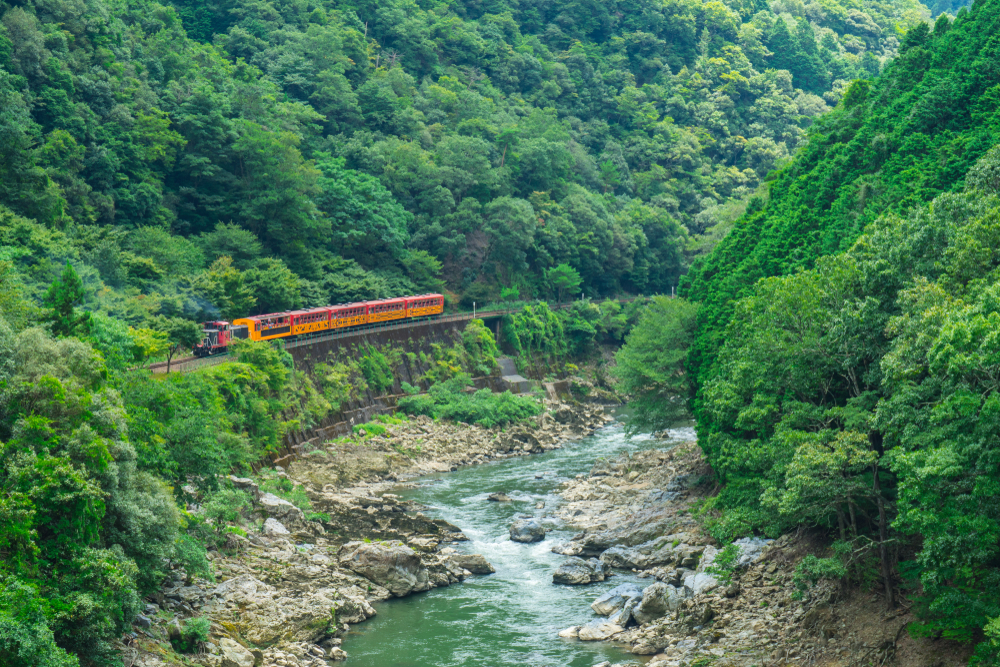
The Sagano Romantic Train is a sightseeing railway that runs for about 7 kilometers through the Hozukyo Gorge between the Saga-Arashiyama and Kameoka areas. The full journey takes approximately 25 minutes, with views of cherry blossoms and fresh greenery in spring, dense summer vegetation, autumn foliage, and occasional winter scenery.
The line serves four stations: Torokko Saga, Torokko Arashiyama, Torokko Hozukyo, and Torokko Kameoka. A popular full-day plan is to ride from Torokko Saga to Torokko Kameoka and return to Arashiyama on the Hozugawa River Boat Ride, allowing you to see the gorge from both the railway and the river.
💡 Pro tip: Services operate on a seasonal calendar, and reserved seats can sell out during spring and autumn. Check the official operating schedule and book as soon as your travel date is confirmed.
⏰Plan to spend: About 25 minutes for the train journey; allow extra time for boarding and transfers
Sagano Romantic Train
Website: https://www.sagano-kanko.co.jp/en/
Facebook: https://www.facebook.com/sagano.torokko
Instagram: https://www.instagram.com/saganoromantictrain_1114
7. Hozugawa River Boat Ride (Hozugawa Kudari)
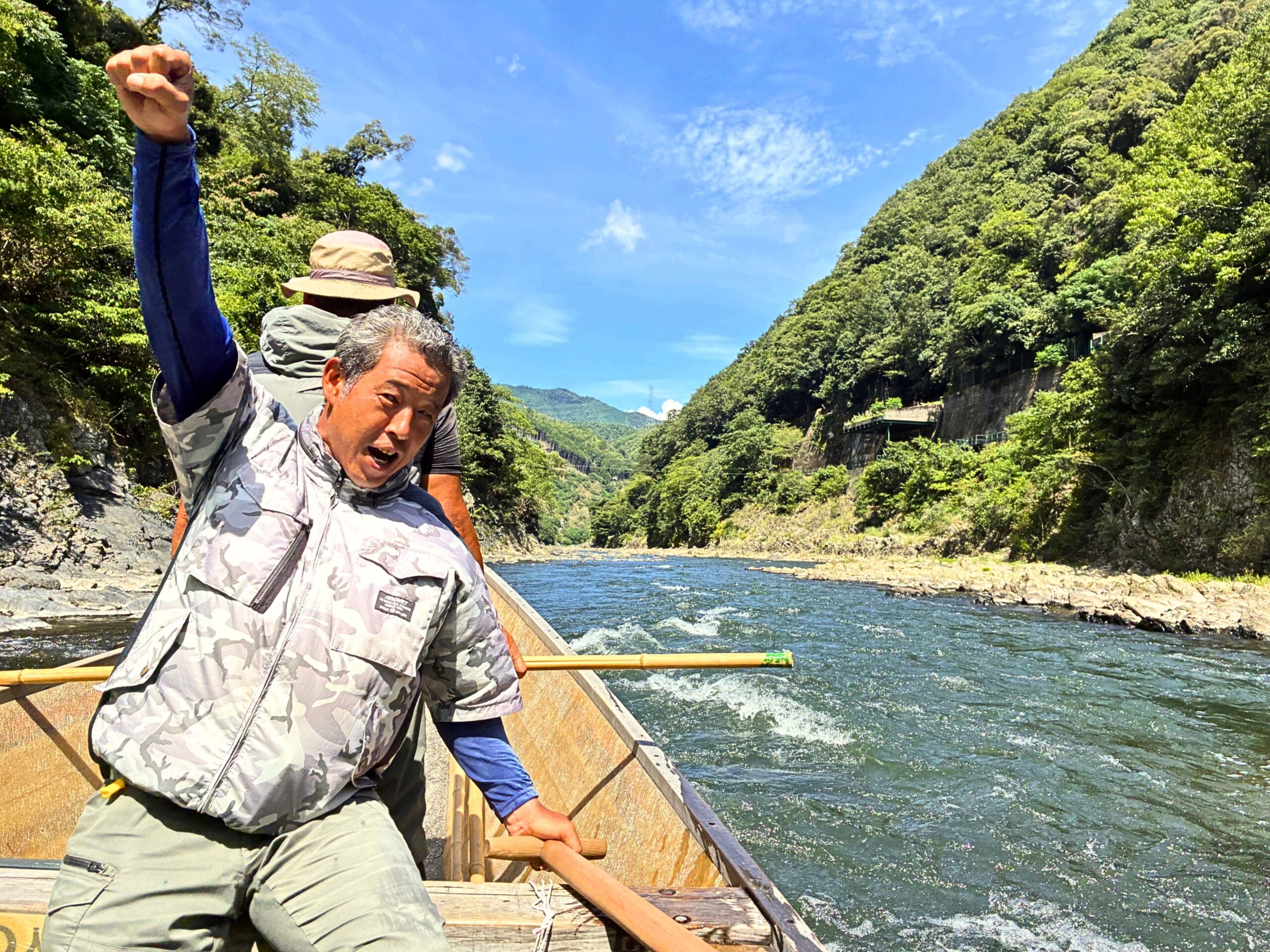
The Hozugawa River Boat Ride, or Hozugawa Kudari, is a roughly 16-kilometer downstream journey from Kameoka to Arashiyama through Hozukyo Gorge. The trip usually takes around two hours, though actual journey time can vary with river conditions. Along the way, the boat passes quiet pools, faster currents, large rock formations, and seasonal scenery.
Each boat is operated by a three-person crew, with one boatman handling the bamboo pole, another rowing at the front, and a third steering from the rear. Their precise teamwork is accompanied by lively commentary about the river’s history, legends, and natural surroundings.
Along the route, passengers can see Koayu-no-taki, as well as pole marks and rope grooves left by generations of boatmen. The historic towpaths and Daihikaku Senko-ji Temple also reflect the river’s long role as a transport route before it developed into a sightseeing experience.
⏰Plan to spend: About 2 hours for the boat journey, plus transfer and waiting time
Hozugawa River Boat Ride (Hozugawa Kudari)
Website: https://www.hozugawakudari.jp/
Instagram: https://www.instagram.com/hozugawakudari/
8. Togetsu-kyo Bridge
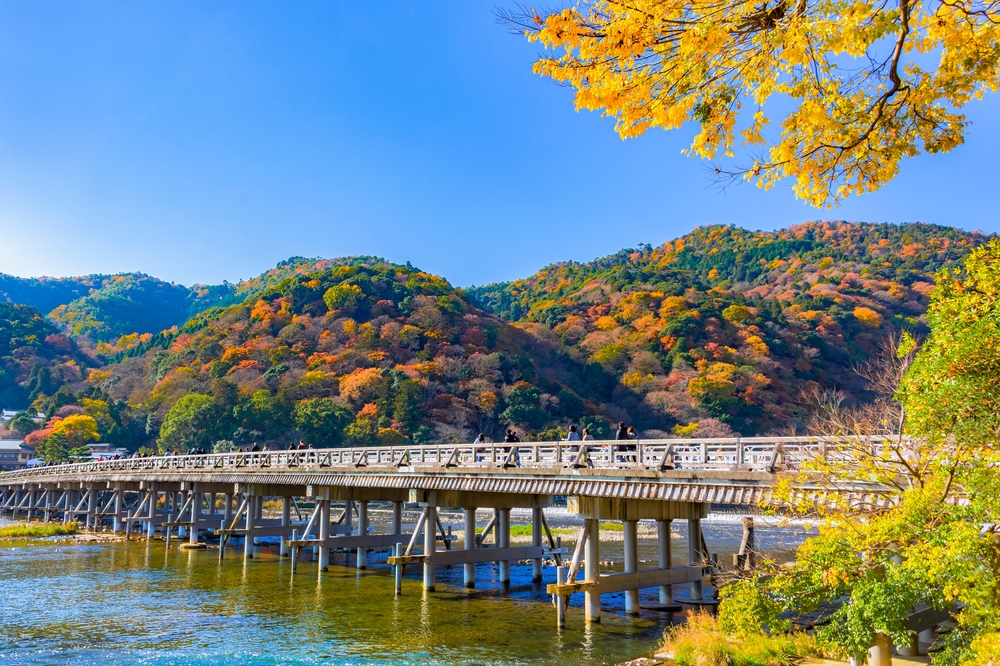
Togetsu-kyo Bridge is Arashiyama’s central landmark, crossing the Katsura River against a backdrop of wooded mountains. It is also a useful orientation point: Tenryu-ji Temple and the Bamboo Grove are north of the river, while the entrance to Arashiyama Monkey Park is on the southern side.
The bridge and its immediate approaches become crowded around midday. For wider photographs and a calmer riverside walk, continue a short distance away from the main shopping street; the view changes with the light, weather, water level, and season.
⏰Plan to spend: About 30 minutes
Togetsu-kyo Bridge
Address: Tenryuji-susukinobaba-cho, Ukyo-ku, Kyoto-shi
How to Plan a Half-Day or Full-Day Trip to Arashiyama
With eight major attractions spread across the river and hillside, an Arashiyama visit is easiest to plan by grouping nearby sights rather than treating the area as a checklist.
The Arashiyama Bamboo Grove, Tenryu-ji Temple, Nonomiya-jinja Shrine, and Okochi Sanso Villa form a walkable cluster north of the river. Togetsu-kyo Bridge connects this area with Arashiyama Monkey Park on the southern hillside, while the Sagano Romantic Train and Hozugawa River Boat Ride follow fixed schedules and require the most advance planning.
For a first visit, prioritize the central landmarks and leave time for walking, photographs, and crowd-related delays. A full day or a return visit makes it easier to add the scenic railway, river journey, monkey park, or a slower garden visit without rushing.
How Long Should You Spend in Arashiyama?
- 3 – 4 hours for Arashiyama Bamboo Grove, Tenryu-ji Temple, Nonomiya Shrine, and Togetsu-kyo Bridge
- 5 – 6 hours when adding either Okochi Sanso Garden or Arashiyama Monkey Park
- 8 – 10 hours when combining the Sagano Romantic Train with the Hozugawa River Boat Ride and central sightseeing
How to Get to Arashiyama from Central Kyoto
Arashiyama is accessible from central Kyoto via three railway lines:
- Arashiyama Station (Hankyu Railway)
- Arashiyama Station (Keifuku Electric Railroad “Randen”)
- Saga-Arashiyama Station (JR West)
Worth noting is that each station is operated by a different railway company and sits in a different part of the district, so the best option really depends on your starting point and where you’re headed first.
- From Kyoto Station: Take the JR Sagano Line to JR Saga-Arashiyama Station. Rapid services take about 11 minutes; local services generally take around 15 – 20 minutes.
- From Kyoto-Kawaramachi Station: Take the Hankyu Kyoto Line to Katsura Station and transfer to the Hankyu Arashiyama Line. Typical journeys take about 25 – 30 minutes, depending on the connection.
For travelers looking for a more historic streetcar experience, Randen, operated by Keifuku Electric Railroad, is a charming alternative. Its Arashiyama Main Line runs from Shijo-Omiya Station to Arashiyama Station, with street-running sections that offer a slower, more intimate glimpse of everyday Kyoto life. From Kyoto-Kawaramachi Station, take the Hankyu Kyoto Line to Omiya Station, walk to Shijo-Omiya Station, and board the Randen from there.
📒Note: Torokko Saga Station on the Sagano Scenic Railway sits adjacent to JR Saga-Arashiyama Station and serves as the starting point of the scenic train journey, but not the main access point from Kyoto city center. The next stop, Torokko Arashiyama Station, is roughly a 20-minute walk away, near the Bamboo Grove and Okochi Sanso Garden.
Train Access from Central Kyoto to Arashiyama: Routes and Travel Times
| Station | Route and Line(s) | Approximate Travel Time |
| JR Saga-Arashiyama Station | Kyoto Station ↓ JR Sagano Line JR Saga-Arashiyama Station | About 11 min by rapid train About 15 – 20 min by local train |
| Hankyu Arashiyama Station | Kyoto-Kawaramachi Station ↓ Hankyu Kyoto Line Katsura Station ↓ Hankyu Arashiyama Line Arashiyama Station | About 25 – 30 min |
| Randen Arashiyama Station | Kyoto-Kawaramachi Station ↓ Hankyu Kyoto Line Omiya Station ↓ Walk to Shijo-Omiya Station ↓ Randen Arashiyama Main Line Randen Arashiyama Station | About 30 – 35 min |
Other Essential Tips for Visiting Arashiyama
Wear Comfortable Walking Shoes
Arashiyama involves more walking than many visitors expect. The bamboo grove, temples, stations, and riverfront are spread across the district.
Arashiyama Monkey Park also requires a sustained uphill walk, so supportive footwear is especially important in hot or wet weather.
Use Trains Instead of Buses During Busy Periods
Roads around Arashiyama can become congested on weekends and during cherry blossom and autumn foliage seasons. Rail travel is generally more predictable for reaching and leaving the district.
Respect Local Streets, Temples, and the Bamboo Grove
Arashiyama is a major visitor destination, but it also contains active temples, residential streets, and local businesses. Stay on public paths, avoid blocking narrow streets for photographs, do not touch or carve the bamboo, take litter with you, and follow posted instructions.
Check Official Schedules and Operating Conditions
Temple and garden hours, scenic train services, and boat operations can change with the season, weather, maintenance, or river conditions. Recheck official websites shortly before your visit, especially if the train or boat is central to your itinerary.
Where to Stay in Kyoto for an Arashiyama Trip
The best place to stay depends on whether Arashiyama is the main focus or just one stop on a broader Kyoto itinerary. For those mixing Arashiyama with other parts of the city, basing yourself in central Kyoto generally makes for smoother travel overall. Two popular options are the Kyoto Station area and the Kawaramachi area — the former offers the fastest direct JR connection to Arashiyama, while the latter serves as a well-rounded base for both daytime sightseeing and evening outings.
Kyoto Station Area: Best for Direct JR Access
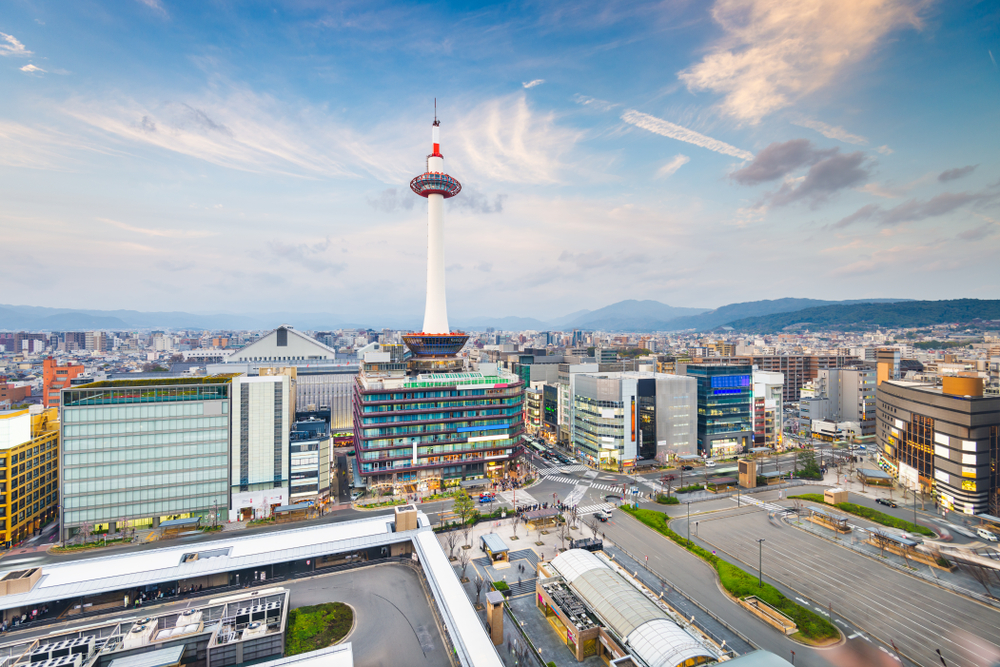
The Kyoto Station area is the go-to choice for travelers who want the simplest journey to JR Saga-Arashiyama Station, easy access to rail day trips, or straightforward luggage and airport connections to Kansai International Airport. It’s a practical transport base, though it tends to be less lively in the evening compared to Kyoto’s more central dining districts.
Kawaramachi Area: Best All-Round Base for a Multi-Day Kyoto Trip
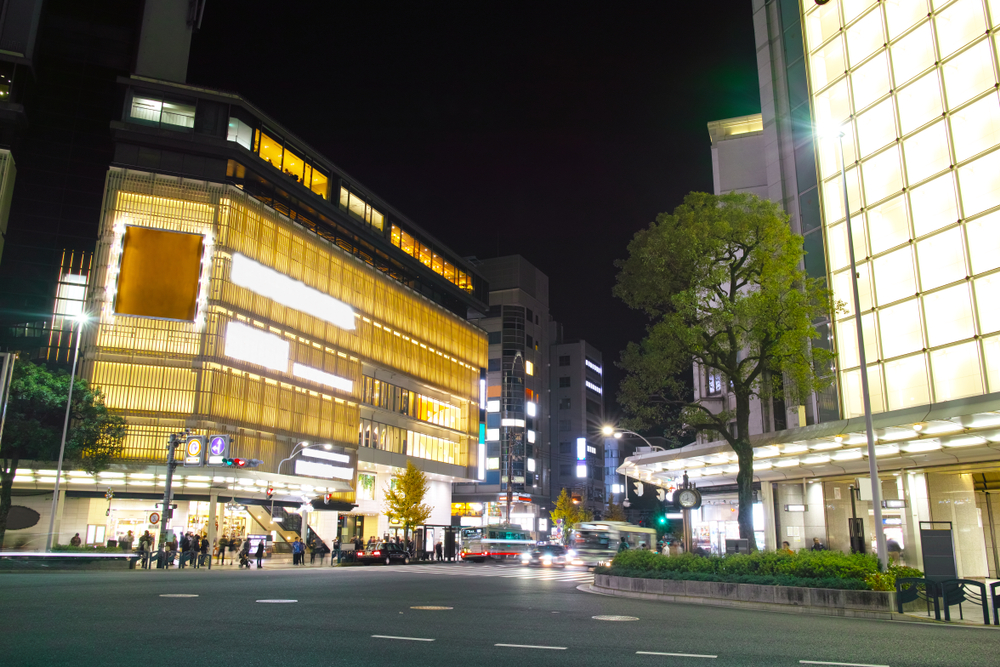
Kawaramachi is a smart base for travelers who want easy access to Arashiyama without sacrificing the buzz of city life — restaurants, shopping, nightlife, and leisurely walks along the Kamo River are all right on the doorstep. The area also puts some of Kyoto’s most iconic destinations within easy reach, including Yasaka Shrine, Hanamikoji Street, and the Gion district.
HOTEL TAVINOS Kyoto: Your Kawaramachi Travel Base
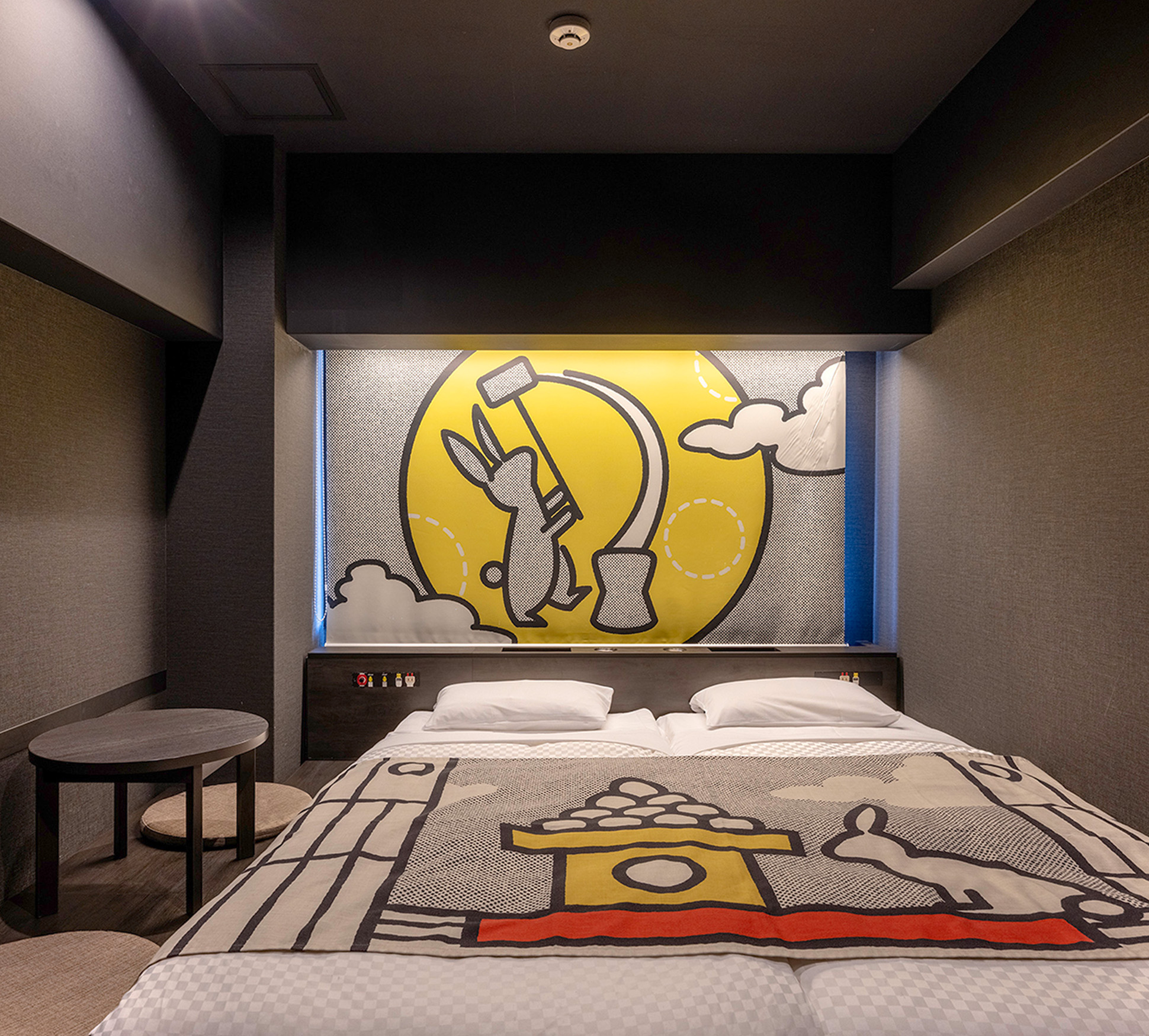
Conveniently situated in the Kawaramachi area, HOTEL TAVINOS Kyoto makes an ideal base for exploring the city. The hotel sits within a 10-minute walk of Kyoto Kawaramachi Station, a 3-minute walk from Kiyomizu Gojo Station, and a 7-minute walk from Gojo Station, putting Hankyu, Keihan, and subway connections all within easy reach. From there, Gion, Nishiki Market, and the Kiyomizu-dera Temple area are all just a short trip away — perfect for filling out the rest of a Kyoto itinerary.
Find out what HOTEL TAVINOS Kyoto has to offer and book at the best price.